
Trump Threatens Tariffs on Countries That Don’t Back US Takeover of Greenland
The president says he is concerned that Greenland could fall into Russian or Chinese hands.
President Trump is turning to a familiar threat in his effort to win control of Greenland — tariffs.
Mr. Trump suggested at the White House on Friday that he would consider imposing new tariffs. He made the statement during an unrelated event about rural health after noting threats he had made to European countries over pharmaceutical imports.
“I may do that for Greenland too,” President Trump said. “I may put a tariff on countries if they don’t go along with Greenland, because we need Greenland for national security. So I may do that.”
Mr. Trump has repeatedly claimed that ownership of Greenland is a national security priority. Denmark and European allies have pushed back, saying the semi-autonomous territory is not for sale.
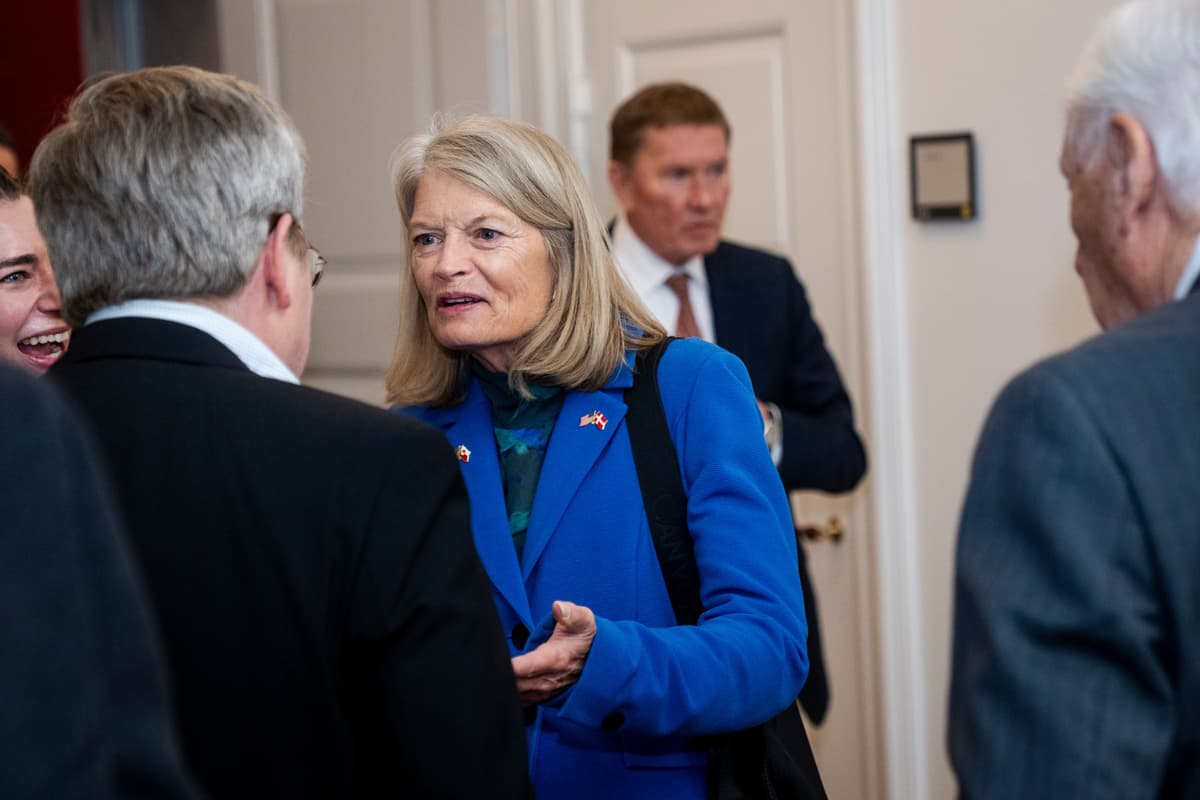
Mr. Trump’s comments came the same day a bipartisan group of American lawmakers traveled to Copenhagen to meet with Danish and Greenlandic lawmakers.
“We are grateful for your hospitality. For 225 years of being a good and trusted ally and partner,” Senator Chris Coons said after the meeting. “We had a strong and robust dialogue about how we extend that into the future.”
Officials from Denmark and Greenland said after meeting with Vice President JD Vance and Secretary of State Marco Rubio at the White House on Wednesday that Mr. Trump’s demand to own the Arctic island is “totally unacceptable.”
“It’s clear that the president has this wish of conquering over Greenland. We made it very, very clear that this is not in the interest of the kingdom,” Denmark’s minister for foreign affairs, Lars Løkke Rasmussen, said at a news conference after the meeting.
Mr. Trump has claimed that if America doesn’t acquire the world’s largest island it will fall into Chinese or Russian hands.
Greenland “is vital for the Golden Dome that we are building,” Mr. Trump said in reference to a proposed missile defense system. “NATO should be leading the way for us to get it.”
Denmark, Finland, Iceland, Norway, and Sweden — all NATO members — already have their own regional defense agreement. The countries created the Nordic Defense Cooperation organization in 2009 to combine previous agreements.
This week, Denmark announced it is increasing its military presence in Greenland and invited other European allies and Canada to send small numbers of troops there for a reconnaissance mission. Sweden, Norway, and Germany all confirmed participation.
The mission was not coordinated through NATO, which might have been intended to freeze America out of participating. The mission aims to explore possible military contributions in the region, Reuters reported.
Russia does have at least one advantage in the Arctic — it is far ahead of America and NATO in icebreaker capability, according to a 2024 Voice of America report.
The Russian Federation also has the world’s only known nuclear icebreaker fleet of four ships, according to Russia’s atomic energy company, Rosatom.
In August, the Northern Fleet of Russia took command of the Ivan Papanin, the first armed combat icebreaker. Three more of the icebreakers are reportedly under construction.
China also has a long-term interest in the Arctic, according to the nonpartisan Wilson Center. It says Beijing has developed its defense capabilities in the region and is increasing cooperation with Russia.
America has entered a trilateral agreement with Canada and Finland to grow their icebreaker fleets. As part of that agreement, the United States Department of Labor announced in November that it was establishing an $8 million program to send American workers to learn at Finnish shipyards.
A Canadian shipbuilder is also investing $1 billion, as part of the agreement, to acquire and modernize a Texas shipyard to build icebreakers in America.