
Trump’s Best Chance at Reviving Cases Against Letitia James and James Comey Could Be the Supreme Court
The government, though, would appear to have an uphill climb to install its prosecutors in the absence of confirmation by the Senate.
The Trump Administration’s appeal of the dismissal of the cases against the former director of the FBI, James Comey, and New York’s attorney general, Letitia James, could prosper — if Attorney General Pam Bondi can land her petition at the Supreme Court.
The appeal’s first stop, though, is not the high court but the Fourth United States Appeals Circuit, which sits in Virginia. That tribunal is tasked with reviewing the ruling handed down by Judge Cameron McGowan Currie, a South Carolina-based appointee of President Clinton. She determined that the interim United States attorney for the Eastern District of Virginia, Lindsey Halligan, was unlawfully appointed — and that the indictments she secured were void.
The government has so far only given notice of its intention to appeal — its full briefing has not yet come due. As both the Department of Justice and Ms. James and Comey formulate their arguments, it is likely that all parties will do so with the Supreme Court in mind.
Judge Currie’s ruling was a setback for Ms. Bondi, who vowed an “immediate appeal.” In the meantime, the DOJ tried, twice over, to indict Ms. James for a second time. In both cases, though, the Greater Washington D.C.-area grand juries refused to hand up charges, an rare reluctance given that grand juries reliably indict more than 90 percent of the time
Only in the wake of that sequence of setbacks did the DOJ appeal Judge Currie’s disqualification of Ms. Halligan. The jurist reasoned that the federal law governing temporary prosecutorial appointments bars the Executive branch from making two consecutive interim appointments. Both Ms. Halligan and her predecessor, Erik Siebert, were appointed on interim bases. Mr. Siebert resigned following reported reluctance to bring charges against Mr. Comey and Ms. James.
The Constitution ordains that principal officers — like United States attorneys — require confirmation by the Senate. A tradition of the upper chamber known as “blue slipping,” though, demands that the approval of both of a state’s senators is required for a nominee to proceed to a vote. Democrats in blue states like New Jersey and New York, and more recently blue Virginia,have used that tradition, which Mr. Trump wants abolished, to block nominees.
Judge Currie ruled that “all actions flowing from Ms. Halligan’s defective appointment were unlawful exercises of executive power and are hereby set aside” because Ms. Bondi’s “attempt to install Ms. Halligan as Interim U.S. Attorney for the Eastern District of Virginia was invalid.” She pinned her ruling to the federal statute that appears to grant the attorney general a single opportunity to appoint an interim prosecutor for a 120-day term.
That statute mandates that after the 120-day window expires “the district court for such district may appoint a United States attorney to serve until the vacancy is filled.” In New Jersey, where 15 out of the 17 district court judges were appointed by Democratic presidents, the jurists rejected Ms. Bondi’s appointment of Alina Habba as chief prosecutor in the Garden State. A panel of the Third United States Appeals Circuit upheld that disqualification.
If the Fourth Circuit follows suit and hands the administration a similar defeat in the Old Dominion, Ms. Bondi could summon the solicitor general, John Sauer — who successfully argued Mr. Trump’s landmark immunity case before the Supreme Court — to help build a high court case. The administration argued to Judge Currie, albeit without success, that the power to appoint interim prosecutors lies within the heartland of executive power. The DOJ has declared in a statement that it “has no tolerance for undemocratic judicial activism.”
The resignation of Ms. Habba — who has enraged Democrats by filing felony charges against a Democratic representative, LaMonica McIver, over a melee outside a New Jersey ICE detention facility — following the Third Circuit’s ruling, though, could suggest that Ms. Bondi recognizes that the DOJ is fighting on unforgiving appellate terrain. The attorney general lamented that “these judges should not be able to countermand the President’s choice of attorneys entrusted with carrying out the executive branch’s core responsibility of prosecuting crime.”
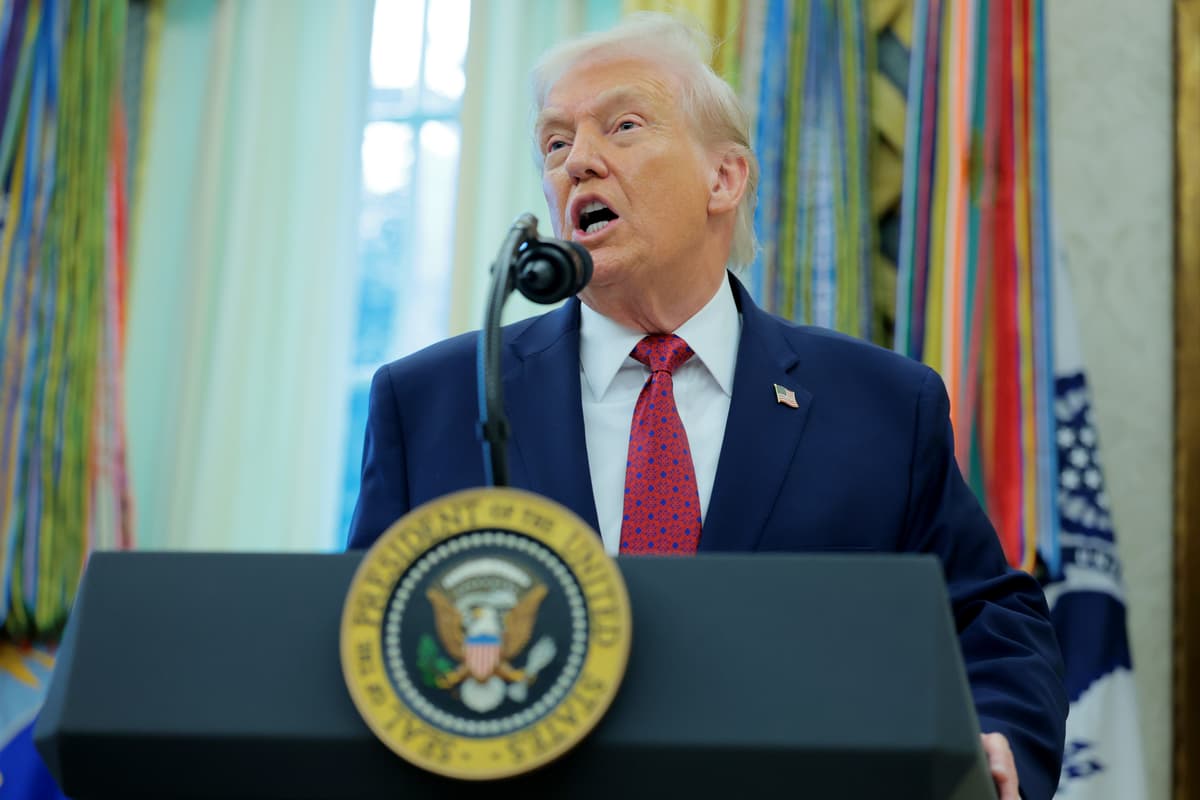
Mr. Trump himself was overheard earlier this month complaining about the situation. “It’s a horrible thing. It makes it impossible to appoint a judge or a US attorney,” he was recorded saying to a colleague as he walked through the West Wing, followed by a scrum of press. “I guess I just have to keep appointing people for three months and then just appoint another one, another one… Everybody I’ve appointed, their time has expired.”
For an appeal to be heard by the Supreme Court at least four justices are required to grant certiorari, meaning review is no sure thing in the matter of Ms. Halligan. The Sun spoke to a constitutional scholar, Joshua Blackman, who reckons that the chances of Ms. Bondi winning on appeal are slim given that the Constitution provides for confirmation by the Senate as the primary path for the appointment of United States attorneys.
Mr. Blackman wonders at the constitutionality of empowering federal judges to appoint executive branch prosecutors, even on an interim basis. That arrangement could be ripe for challenge. One irony of the administration’s position is that in two other cases — the classified documents one brought by Special Counsel Jack Smith and the racketeering one charged in Georgia by the district attorney of Fulton County, Fani Willis — Mr. Trump argued successfully for prosecutorial disqualification.
Judge Cannon’s ruling in the Mar-a-Lago case disqualifying Mr. Smith as unlawfully appointed is cited by Judge Currie’s opinion that reaches the same conclusion in respect of Ms. Halligan. Judge Currie also cites Justice Clarence Thomas, who in the landmark immunity case of Trump v. United States ventured that Mr. Smith’s appointment might have been unlawful. Judge Cannon came to the same conclusion weeks later.
It may yet be that Mr. Trump’s efforts to put his own choices in federal prosecutor roles could follow what’s become something of a pattern in his second term, during which the president, hampered by a broken legislative branch, is stretching his executive powers to the limit. Democratic-appointed federal judges at lower levels rule against him, but ultimately the Supreme Court, with its conservative supermajority, has tended to decide in his favor.