Trump’s Iran Warning: A Credible Threat or Empty Rhetoric?
Unlike previous movements that centered on cultural freedoms or political reform, these demonstrations reflect raw economic desperation.
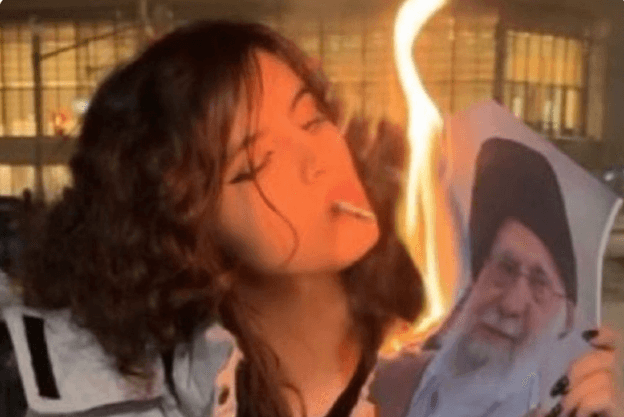

As violent protests sweep across Iran’s most impoverished neighborhoods, President Trump has issued a stark warning to Tehran’s regime: kill protesters and face American military action. The question now gripping national security circles is whether Trump means it — and what form any American intervention might take.
The timing of Mr. Trump’s threat comes as Iran faces its most severe domestic crisis in years, with demonstrations erupting in impoverished cities from Khuzestan Province in the southwest to the streets of Tehran, Tabriz, and Isfahan.
Human rights monitors report at least 65 people have been killed and hundreds more detained in the regime’s crackdown, with Saturday marking one of the deadliest days yet.
Reports indicate that the majority of the casualties are the result of gunshot wounds from live ammunition and rubber bullets, with the latter causing mass blinding.
A Pattern of Escalation
Unlike previous protest movements that centered on cultural freedoms or political reform, these demonstrations reflect raw economic desperation.
“People are protesting just to live,” senior adviser at United Against Nuclear Iran and associate professor at the University of Tennessee at Chattanooga, Saeid Golkar, tells The New York Sun. “Most of these protests are happening in poor neighborhoods that have been hit badly by the last 10 years of mismanagement, corruption, and sanctions.”
The violence on Iran’s streets represents an acceleration of popular discontent that has built steadily since 2009’s Green Movement. The 2019 protests over gas prices left more than 1,500 dead.
The 2022 demonstrations following Mahsa Amini’s death in police custody resulted in 500 to 600 killed and over 1,000 intentionally blinded by security forces shooting protesters in the face. Each wave has come faster and hit harder than the last.
What makes this moment different, according to Mr. Golkar, is the combination of economic collapse and external pressure.
“One Iranian MP said last week that 92 percent of Iranians are dissatisfied,” he notes. “Even with generous estimates, only about 10 percent support the regime.”
The Military Calculus
Mr. Trump’s Iranian track record suggests his threat isn’t entirely hollow. He ordered the January 2020 drone strike that killed Iranian General Qassem Soleimani, and his administration ordered airstrikes against Iran’s nuclear program over the summer.
A United States military source familiar with current planning indicated to the Sun that the president is prepared to act if mass killings occur, potentially through targeted assassinations and increased psychological operations supporting the opposition.
Behind the scenes, Washington has already intensified pressure through less visible means, a military intelligence insider tells the Sun on background. Operations targeting Iran’s “ghost fleet”— vessels Russia uses to transport Iranian oil in violation of sanctions — have ramped up significantly, though they’ve attracted little public attention.
They already are going hard on enforcement, the source continues, stressing, “you just don’t hear about it.”
The president of defense and intelligence firm The Ulysses Group, Andrew Lewis, sees Mr. Trump’s response hinging on how he frames the intervention, and is less optimistic about bold moves.
“If Trump sees the calculus as strikes against the security services to prevent killing civilian crowds versus going straight after the government leadership, then the likelihood is higher he strikes,” Mr. Lewis explains. “I don’t see him wanting to do major strikes on leadership. The strikes would be on security forces to hopefully embolden the populace and send a message to police and military to lay down their weapons.”
Yet Mr. Lewis also expressed frustration with what he views as missed opportunities. He pointed to earlier B-2 bomber strikes that came close to crippling the regime.
“They were virtually finished at that point, and the regime could have ended then if Trump either extended the U.S. targeting or allowed Israel more freedom,” he surmises.
The Netanyahu Factor
Tehran also faces pressure from another direction: Prime Minister Netanyahu, who views the Islamic Republic as an existential threat. Israel’s recent 12-day military operation killed hundreds of Islamic Revolutionary Guard Corps members, according to Mr. Golkar, and more than 13 senior commanders — an unprecedented decapitation of Iran’s security elite.
The regime’s response to the protests reflects Tehran’s fear of fighting on two fronts.
“The Islamic Republic is very concerned that Israel might launch another attack on Iran at a time when the regime is already fighting protesters in the streets,” Mr. Golkar says.
That dual pressure explains why security forces have moved to crush demonstrations with particular brutality, shutting down schools and administrative offices in 21 provinces and forcing universities offline.
Mr. Trump’s warning may have initially boosted protester morale, according to Mr. Golkar, yet the regime’s violent response has continued unabated. The critical question now is whether rhetorical support will translate into action.
While protesters face mounting repression on the streets, the regime’s true vulnerability may lie elsewhere — within the ranks of its own security forces.
The Defection Threshold
Iran’s security apparatus is extensive and decentralized, built specifically to prevent the kind of elite defections that typically precede regime collapse.
“Defections happen when elites perceive the regime is no longer safe,” Mr. Golkar explains. “When that perception changes, it will fall like leaves in autumn.”
Creating that perception wouldn’t require American boots on the ground, analysts say. Continued targeted strikes on security infrastructure and leadership — similar to Israel’s recent campaign — could paralyze the command structure and trigger internal competition for power. The humiliation Iran’s military suffered in the 12-day conflict demonstrated its vulnerability when challenged.
The regime has recently attempted to prevent gatherings, but “it hasn’t been very successful,” Golkar observes. With 92 percent of the population reportedly dissatisfied and only roughly 10 percent still supporting the government, the Islamic Republic faces a legitimacy crisis four decades in the making.
“Many Iranians are now openly calling for the return of the Shah — a remarkable reversal 45 years after the revolution,” he says.
Whether Mr. Trump’s threat proves credible may depend less on Washington’s appetite for intervention than on how events unfold in Iran’s streets over the coming days. Yet one thing is for sure: the president does not want to be seen as enforcing an Obama-like “red line” and then failing to live up to his word.
“(Mr. Trump’s threat to act) is quite a serious threat,” senior director of the Foundation for the Defense of Democracies Iran Program, Behnam Ben Taleblu, tells the Sun. “He did go after Soleimani, and he did take out their nuke program after all.”