
Trump’s Prosecutor in Letitia James and James Comey Cases Cites Surprise Precedent to Keep Her Job — Jack Smith
The mention of the special counsel who tormented President Trump comes in a brief written by Attorney General Pam Bondi.
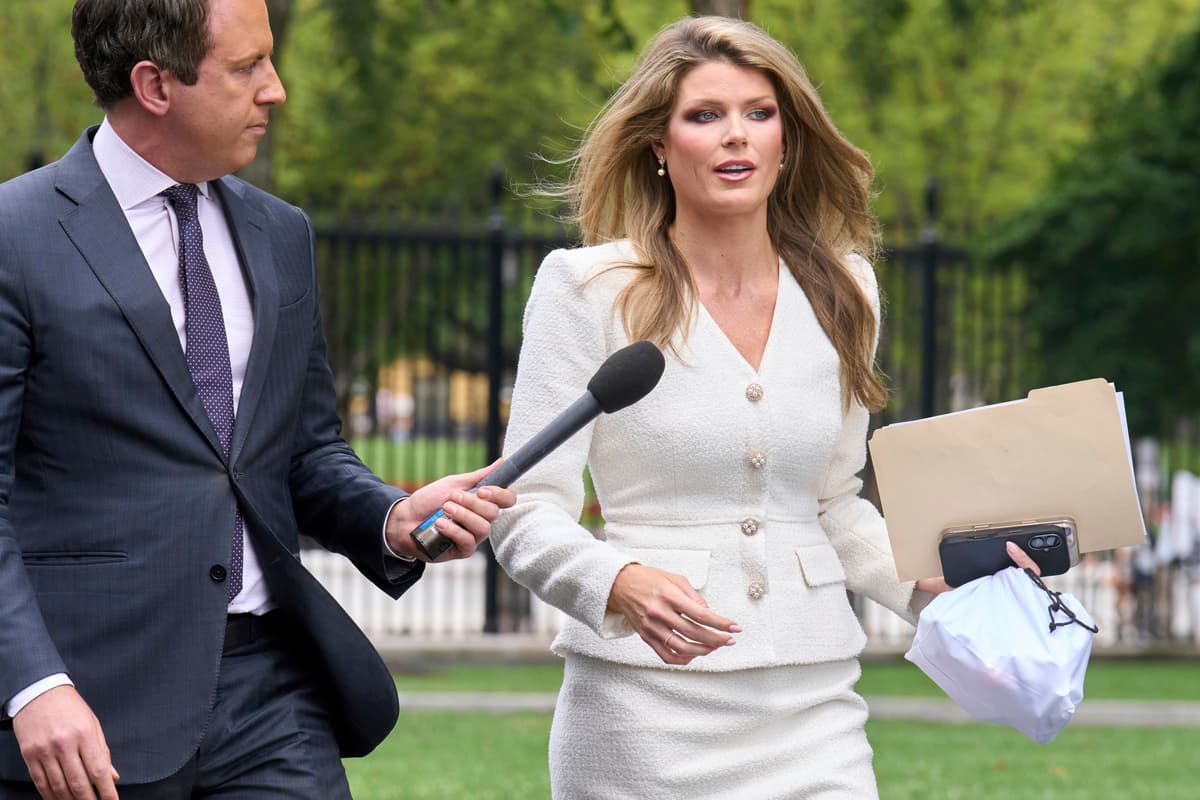
The interim United States attorney for the Eastern District of Virginia, Lindsey Halligan, is fighting to keep her job after being disqualified — and in an unlikely legal maneuver, she’s citing Special Counsel Jack Smith as a precedent.
In November, a South Carolina-based appointee of President Clinton, Judge Cameron McGowan Currie, ruled that Ms. Halligan was unlawfully appointed by Attorney General Pam Bondi. Judge Currie also dismissed the criminal cases against the former director of the FBI, James Comey, and New York’s attorney general, Letitia James. The DOJ has appealed that ruling.
The prosecutions of Ms. James and Mr. Comey — for mortgage fraud and lying to Congress respectively — have gotten pushback from career prosecutors in deep blue Northern Virginia, as well as from district-level judges. For his part, President Trump, who despises the two defendants, has expressed frustration with Ms. Bondi and her team about their struggle to keep the cases afloat, according to two reports this week in the Wall Street Journal.
Ms. Halligan’s legitimacy is central to the cases against Ms. James and Mr. Comey cases. In January, a district court judge in the Eastern District of Virginia, David Novak, issued a ruling — sua sponte, meaning that it came from the bench unprompted — ordering Ms. Halligan to explain why she was still signing documents as the United States attorney even though Judge Currie held that she had no legal claim to that title, even as the DOJ’s appeal is pending to an appellate court.
Judge Novak, an appointee of President Trump, writes that “This matter comes before the Court on its own initiative” because Judge Currie’s disqualification “remains the binding precedent in this district and is not subject to being ignored.” He ordered Ms. Halligan to explain “why her identification does not constitute a false or misleading statement” and the “basis for Ms. Halligan’s identification of herself as the United States Attorney.”
Judge Novak, in a remarkable turn, appeared to suggest that Ms. Halligan could face professional discipline if she continues to hold herself out as the top prosecutor in Virginia’s Eastern District. He cites the Old Dominion’s rules of professional conduct for lawyers, which mandate that “A lawyer shall not make a false or misleading communication about the lawyer or the lawyer’s services.” The rules — to which federal prosecutors are subject — prohibit any “misrepresentation which reflects adversely on the lawyer’s fitness to practice law.”
Judge Novak asks Ms. Halligan why he “should not strike Ms. Halligan’s identification of herself as United States Attorney from the indictment in this matter. Ms. Halligan shall further explain why her identification does not constitute a false or misleading statement.” In a written response this week signed by Ms. Bondi and her top deputy, Todd Blanche, the DOJ denounces Judge Novak’s “sua sponte inquisition into whether it should strike Ms. Halligan’s title from the Government’s signature block.”
Ms. Bondi adds that Judge Novak’s “thinly veiled threat to use attorney discipline to cudgel the Executive Branch into conforming its legal position in all criminal prosecutions to the views of a single district judge is a gross abuse of power and an affront to the separation of powers. The bottom line is that Ms. Halligan has not ‘misrepresented’ anything.”
The DOJ’s position that Judge Novak is “flat wrong to suggest that any change to the Government’s signature block is warranted in this or any other case.” The government reasons that “although Judge Currie concluded that Ms. Halligan was unlawfully appointed, she did not purport to enjoin Ms. Halligan from continuing to oversee the office or from identifying herself as the United States Attorney.”
Ms. Bondi also cites an unusual precedent — the disqualification of Special Counsel Jack Smith in 2024 by Judge Aileen Cannon, a district court judge in South Florida. Judge Cannon was presiding over the Mar-a-Lago classified documents case, and ruled that Mr. Smith, who like Ms. Halligan was never confirmed by the Senate, was serving ultra vires, or without legal authority. Mr. Smith appealed that ruling, a petition that was dropped when Mr. Trump won reelection.
Now the DOJ writes that notwithstanding Judge Cannon’s ruling, “in the days and weeks that followed, the Government continued — openly and without objection by any Court — to file documents identifying Jack Smith by his title as Special Counsel while appellate review proceeded.” The government also notes that Judge Cannon’s disqualification of Mr. Smith in Florida did not prevent him from continuing to prosecute Mr. Trump for election interference in the District of Columbia.
The government writes here that “as far as the Government is aware, no court — much less any judge — ever threatened Smith with attorney discipline.” Judge Cannon, though, explicitly wrote that her ruling disqualifying Mr. Smith was “confined to this proceeding,” and a separate precedent well-established in the nation’s capital maintains that the attorney general — in that case Merrick Garland — possesses the authority to appoint subordinate prosecutors as he deems necessary.
Ms. Bondi argues that “wielding ethics rules as a mechanism to coerce the Executive Branch into conformity with one district judge’s view of the law would raise profound separation-of-powers concerns.” She also notes that the “decision of a federal district court judge” — like Judge Novak — “is not binding precedent in either a different judicial district, the same judicial district, or even upon the same judge in a different case.”
That is black letter law, though the circumstances of how Judge Currie’s ruling came about could suggest a slightly different posture. Judge Currie was called in from the Palmetto State to rule on Ms. Halligan’s appointment because the judges in the Old Dominion reckoned that the role federal statute gives them in the appointment of prosecutors raised the specter of a conflict of interest. That could suggest that her ruling was meant to apply to the entirety of the Eastern District of Virginia.