Twilight of the Lords

Britain’s Labor government is preparing to ‘reform’ the largest legislative body in the Free World by ending the last vestige of hereditary members.

Via Wikimedia Commons
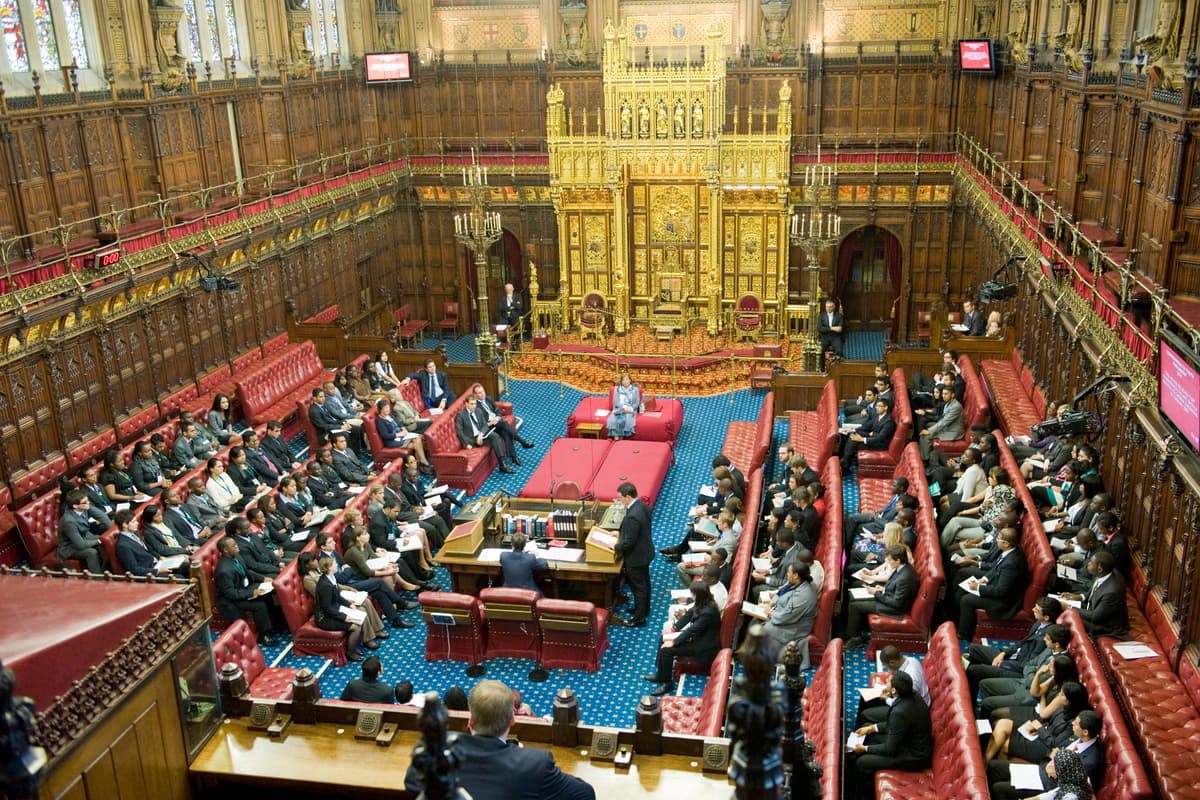
The House of Lords, which faces an uncertain future under Britain's Labour government. Via Wikimedia Commons

Britain’s new Labor government is readying, sometime this coming year, to do away with the last vestiges of hereditary peerages in the House of Lords. What a blunder. Already the House of Lords Act of 1999 ​​ended the automatic right of hereditary peers to sit. Ninety two peerages, though, were exempted. Now the government of Prime Minister Starmer wants to eliminate them, too. In their stead would be life peers, appointed by 10 Downing Street. 

This is a power grab masquerading as reform. The New York Times explains that Labour reckons that “peers are undemocratic, a relic as superannuated as the ermine robes they wear” and that “purging them is the first step to reforming an ancient institution which …  has become, by all accounts, bloated, hidebound and ethically dodgy.” Life peers are marbled with political donors and cronies. Hereditary peerage was, in part, a bulwark against that.

One of Mr. Starmer’s nominees for peerage is his former chief of staff, Sue Gray. She will join a body that now comprises some 800 members, making it the world’s second largest legislative body — after Communist China’s National People’s Congress. Prime Minister Johnson was no stranger to packing it with his cronies. Mr. Starmer once vowed to abolish the House of Lords altogether. Instead, it turns out, he wants to lard it with Labor’s lackeys.

The House of Lords has its taproot in Plantagenet times, when the Magnum Concilium, or “Great Council,” advised the king. Its current structure emerged in the early 18th century, when the Acts of Union created the Parliament of Great Britain. The House is the site for the King’s Speech, but it cannot stop most laws from taking effect. It can, though, launch and sometimes amend legislation. It exerts no control over the tenure of the prime minister. 

The real Waterloo for the Lords came at the hands of a Liberal government in 1911. Two years before, the chancellor of the Exchequer, David Lloyd George, introduced the “People’s Budget,” which unleashed a land tax against property owners. The Lords revolted, but the Liberals secured a narrow reelection. With it, they passed the Parliament Act of 1911, which neutered much of the privileges of the once great chamber. 

Sir Keir’s move against the Lords unfolds against the backdrop of his own plummeting popularity. Polling this month registers that dissatisfaction with the premier now tops 60 percent. Seven in ten are dissatisfied with the work of the government as a whole. One pollster tells Sky News that it is “difficult to find a government that has slipped as much in the polls as this government has so quickly.” Mr. Starmer moved into 10 Downing in July. 

It might seem odd for a republican newspaper to be against a dilution of the Lords. Our constitution, after all, forbids titles of nobility. Yet the constitutionalist in us credits hereditary peerages in Britain as part of separated powers and a system of checks and balances. Plus, too, we see such peerages as a marker of the role of property — however diluted the hereditary part of it may be at this stage — in securing liberty.

It’s a tragedy, in our view, that those on the right in Britain are divided between the Conservatives led by Kemi Badenoch and the fast-rising Reform party headed by Nigel Farage. Mr. Farage played a heroic role in Brexit, but is now for abolishing the House of Lords altogether. Ms. Badenoch, in contrast, warns that the Labor government’s “removal of hereditary peers is only about removing even more conservatives from the Lords.”

“We all know this is not in the top 100 things wrong with our country,” Ms. Badenoch told Parliament. In the Lords itself, Andrew Roberts, speaking as a historian, delivered the other day an eloquent defense of the hereditary system. It has already been reduced to but 88 of the 801* Lords. Several members, Lord Roberts noted, trace forbears to the barons who secured King John’s signature on the Magna Carta. None of them was elected.

________

* The Lords has no fixed number of seats.   


The New York Sun

© 2025 The New York Sun Company, LLC. All rights reserved.

Use of this site constitutes acceptance of our Terms of Use and Privacy Policy. The material on this site is protected by copyright law and may not be reproduced, distributed, transmitted, cached or otherwise used.

The New York Sun

Sign in or  create a free account

or
By continuing you agree to our Privacy Policy and Terms of Use