U.S. Implements Broad Facial Recognition Mandate for Noncitizens at All Points of Entry

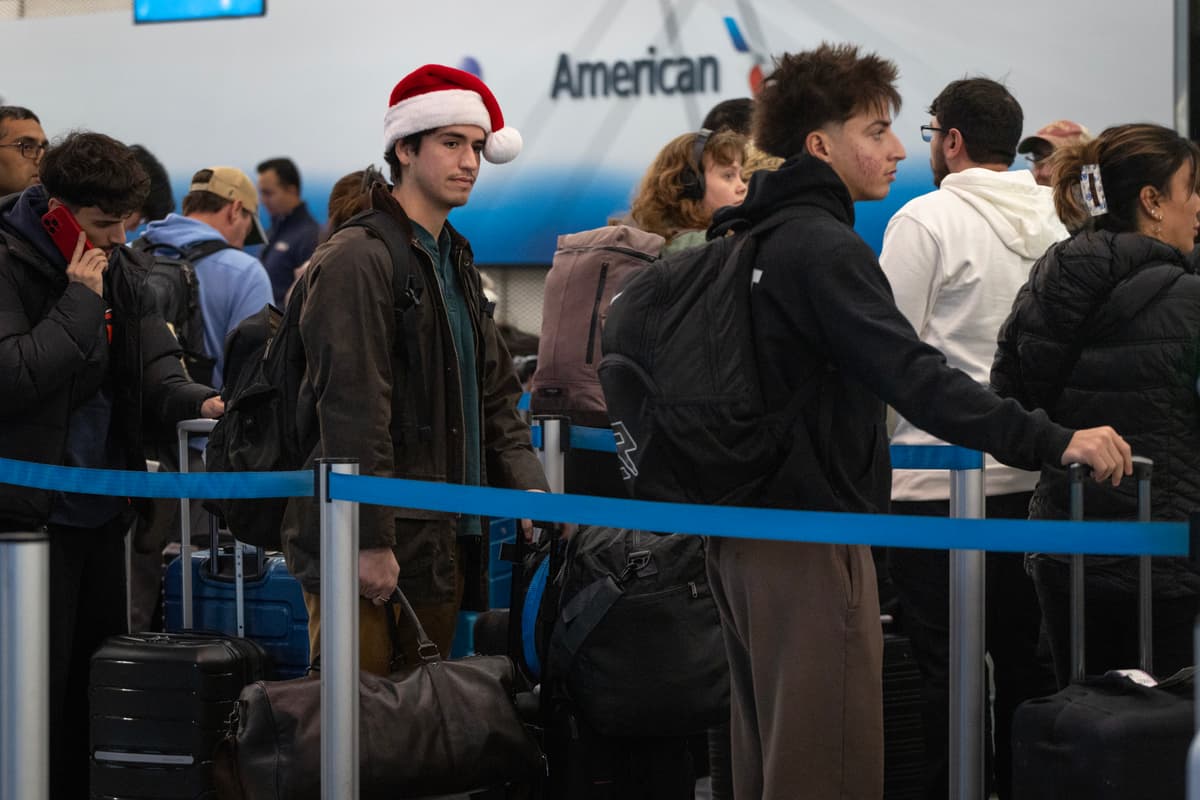
The policy takes effect amid a massive influx of holiday travelers, with more than 44 million passengers expected to pass through airports between December 19 and January 4.

Scott Olson/Getty Images
Travelers arrive to catch flights at Chicago’s O'Hare International Airport on December 21, 2025. Scott Olson/Getty Images

A sweeping new policy requiring the collection of facial recognition data from all noncitizens entering and leaving the United States went into effect on Saturday. 

The policy takes effect as U.S. airports handle a massive influx of holiday travelers. The Transportation Security Administration estimates more than 44 million travelers will pass through airports between December 19 and January 4.

The Department of Homeland Security says the measure is designed to curb visa fraud, identify criminals, detect overstays, and prevent illegal reentries.

Under the new rule, U.S. Customs and Border Protection will collect facial biometric data from all foreign visitors at air, land, and sea ports. Previous exemptions for specific groups, including diplomats and most Canadian visitors, have been removed. 

While CBP already utilizes biometric facial comparison technology at 238 airports to process incoming travelers, the new policy formalizes and expands the mandate significantly, moving beyond earlier pilot programs.

“This final rule marks a major milestone towards our efforts to successfully implement the Biometric Entry/Exit mandate and strengthen the security of the United States,” Diane J. Sabatino, the acting executive assistant commissioner of CBP’s field operations office, said in a statement.

Ms. Sabatino added that increased funding would be used to “expand facial biometrics and advanced technology for identity verification to further secure and innovate the entry/exit process at air, land, and sea.”

The Federal Register notice described facial comparison technology as the “best available method for biometric verification,” citing it as “accurate, unobtrusive, and efficient.”

The implementation has drawn sharp criticism from privacy advocates and lawmakers. In a public comment sent last week to the secretary of homeland security, Kristi Noem, Congresswoman Yvette D. Clarke and 49 other lawmakers, including Alexandria Ocasio-Cortez and Jasmine Crockett, raised alarms regarding “privacy, data security, and the potential for discriminatory or unauthorized surveillance.”

“Biometric identifiers are permanent and cannot be changed if compromised, making the risks of misuse or breach uniquely severe, irreversible, and lifelong,” the letter read.

Civil liberties groups have also expressed concern over the scope of the technology. Jeramie Scott, a lawyer with the Electronic Privacy Information Center, told The New York Times that he worried “the government will seek to expand its use” of the technology.

“The ease of implementation is what, in part, makes facial recognition such a dangerous technology to implement at such a broad scale,” Mr. Scott said.

While the new rule focuses on facial recognition, border officers will continue collecting fingerprints from incoming travelers. DHS clarified the distinction between U.S. citizens and foreign nationals under the new system:

Noncitizens: Participation is mandatory. Photos are stored in the agency’s biometric identity management system for up to 75 years to serve as “confirmation of entry or departure.”

US Citizens: Participation is voluntary. Citizens are not required to submit to facial biometrics and may opt out by notifying a CBP officer or airline representative to undergo a manual passport check instead. Photos of US citizens are discarded within 12 hours.

The push for tighter biometric oversight dates back to a 2017 executive order signed by President Trump requiring an “expedited” biometric entry-exit system. DHS proposed the current rule requiring facial scans for all foreign nationals three years later.


The New York Sun

© 2026 The New York Sun Company, LLC. All rights reserved.

Use of this site constitutes acceptance of our Terms of Use and Privacy Policy. The material on this site is protected by copyright law and may not be reproduced, distributed, transmitted, cached or otherwise used.

The New York Sun

Sign in or  create a free account

or
By continuing you agree to our Privacy Policy and Terms of Use