Venezuela: ‘Long Live Freedom’
President Trump’s capture of Venezuela’s strongman, Nicolás Maduro, stirs echoes of President George H.W. Bush’s seizure of Panama’s president, Manuel Noriega.
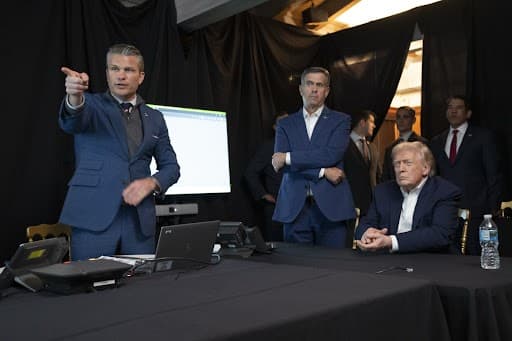

President Trump’s overnight capture of Venezuela’s strongman is likely to emerge as one of the most audacious chapters in the annals of the Monroe Doctrine. The daring demarche is drawing parallels to President George H.W. Bush’s seizure in 1990 of Panama’s president, Manuel Noriega. More details about the overnight operation can be expected to come to light at a press conference by Mr. Trump later this morning.
While the remnants of Nicolás Maduro’s regime are denouncing the dictator’s capture as an “invasion” and a “flagrant violation of international law,” the Noriega precedent offers justification for Mr. Trump’s move. The Panamanian dictator had been accused of drug trafficking, among other crimes. Maduro is head of the Cartel de los Soles and has ties to other notorious narcotraffickers like Tren de Aragua, according to the Department of State.
Mr. Maduro, too, after agreeing with President Biden to conduct national elections, later refused to accept that Venezuelans at the polls overwhelmingly rejected his rule. The illegitimacy of Mr. Maduro’s rule was underscored at Oslo in December after the pro-democracy activist, Maria Corina Machado, fled Venezuela to be awarded the Nobel peace prize. She has long decried Mr. Maduro’s regime as “criminal” and urged Venezuelans to rise up against it.
Ms. Machado has made clear that she is the opposite of Mr. Maduro. She is America’s supporter, a free markets enthusiast, and even a booster of Israel. Some of Mr. Trump’s critics from the left and right have caviled about picking a fight with a foreign leader. Yet as Secretary of State Marco Rubio rightly counters, “If you’re focused on America and America First, you start with your own hemisphere, where we live.”
Mr. Trump’s turn to the Noriega playbook, it would seem, could well advance the cause of democracy in Venezuela and even lead to Ms. Machado’s return to Caracas — in a leadership role that she was denied by Mr. Maduro’s refusal to accept the voters’ will. It was a quarter-century ago, in December 1989, that Bush launched Operation Just Cause to arrest Panama’s dictator and bring him to justice in America.
Manuel Noriega, like today’s Mr. Maduro, was accused of racketeering and drug trafficking. Noriega had also turned anti-American. President Reagan had unsuccessfully urged him to resign. Instead, Noriega was convicted in America and died in prison in 2017. The dictator’s death followed years of wrangling over whether he should be considered a criminal or a prisoner of war. Count on similar disputes to emerge over Mr. Maduro.
Granted, today’s Venezuela is much different than Panama was then, which might have given Mr. Trump pause before moving against Mr. Maduro. The tyrant has powerful allies with a base less than a day’s boat ride from Florida. Russia and Communist China could well have confronted American forces, and Venezuela-based Iranian and Hezbollah terrorists might have mounted some resistance. The regime’s Cuban allies were a threat, too.
Havana, after all, needed Mr. Maduro in power. His fall could presage its own regime’s doom. Cubans have long been embedded in Venezuela’s army and internal security services, helping local thugs quash any sign of dissent. Could the despotism at Havana prove the next domino to fall after Mr. Maduro’s capture? That would vindicate President Javier Milei’s appraisal of Mr. Trump’s seizure of Mr. Maduro: “Freedom advances. Long live freedom, damnit!”