
White House Will Describe Fast-Changing Plans for New Ballroom to Planning Commission Next Month
The January 8 appearance before the National Capital Planning Commission follows a judge’s order that the Trump administration present its plans by year-end.
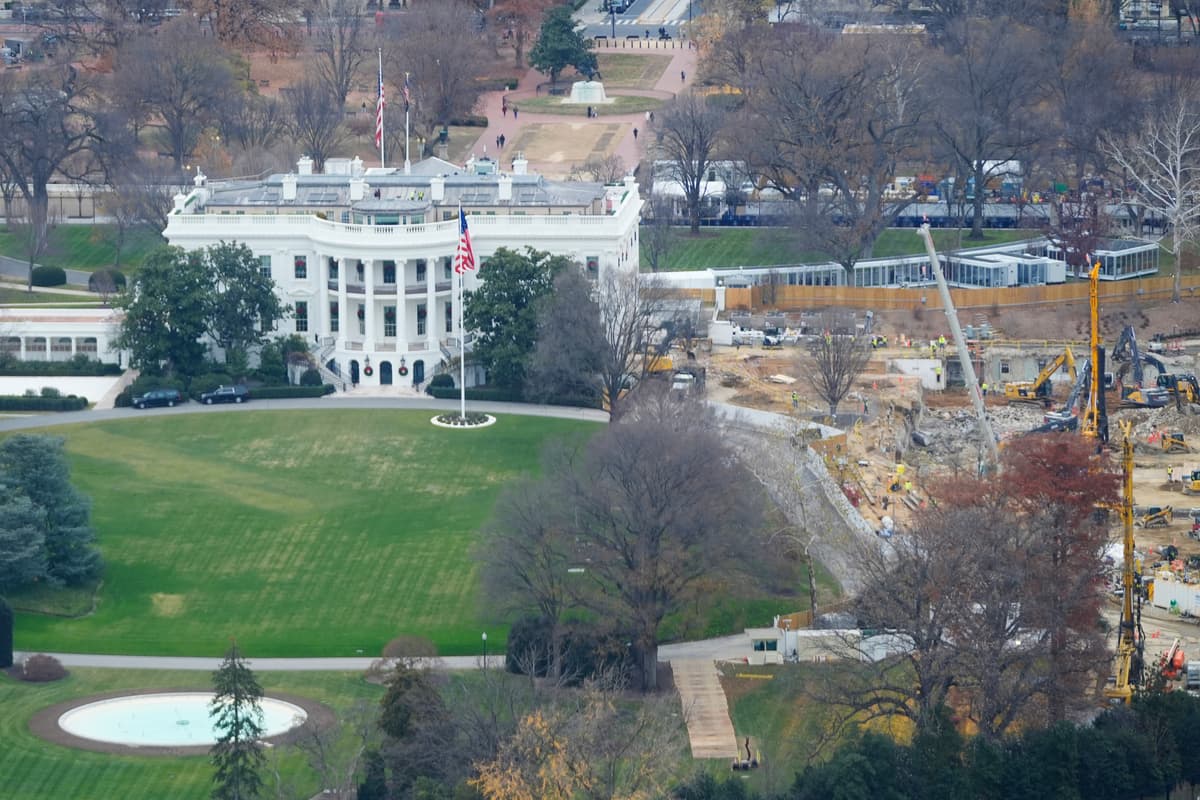

The commission responsible for approving new construction on government property at Washington, D.C., will soon get its first look at the Trump administration’s plans for a new ballroom on the site of the White House’s now-demolished East Wing.
The building plan, described by the National Capital Planning Commission as the “East Wing Modernization Project,” was added this week to the commission’s agenda for its January 8 meeting alongside projects including a new Arabian leopard compound for the National Zoo and a “street tree fence design” for the Smithsonian Gardens.
“The White House will provide an information presentation on the project at NCPC’s January 8th, 2026 meeting,” reads a statement on the commission’s website. “An information presentation is often the first step of NCPC’s review of a project.”
The meeting will provide the White House an opportunity to address formally swirling questions about the planned ballroom, whose size and design have been subject to frequently changing descriptions by the project’s chief proponent, President Trump.
Having initially described the ballroom in July as a 90,000-square-foot structure with seating for 650 people, Mr. Trump told reporters in September it would be expanded to accommodate 900 people. He subsequently increased the desired seating capacity to 999 people.
The president also this month named a new architectural firm, Shalom Baranes, to handle the project in place of James McCrery II, who reportedly had clashed with Mr. Trump over the design changes, especially concerning the size. At 90,000 square feet, the ballroom would be almost twice as large as the White House main building.
Work on the ballroom project began October 20 with the abrupt and previously unannounced demolition of the East Wing, which since 1977 had housed first ladies and their staffs. The National Trust for Historic Preservation filed suit this month, arguing that the administration had violated federal laws by proceeding without any public or congressional reviews.
A George W. Bush-appointed judge ruled last week that, based on security concerns raised by the Secret Service, the work could continue provided that the White House submits its plans to the planning commission and the U.S. Commission of Fine Arts by December 31. It is not clear whether the judge will be satisfied with the January 8 presentation.
On its website, the planning commission explains that no vote will be taken at the January meeting and that no public testimony will be accepted at this stage.
“This is an opportunity for the project applicant to present the project and for Commissioners to ask questions and provide general observations prior to formal review which we anticipate this spring,” the site reads. “No project materials are submitted by the applicant for information presentations.”
The commission also gives the White House a pass on its decision to demolish the East Wing without prior approval, saying its mandate extends only to new construction.
“NCPC does not review the demolition of buildings or general site preparation. The National Capital Planning Act does not give the Commission authority over demolitions,” the website reads. “Additionally, because NCPC only reviews the exteriors of buildings, below-grade improvements are not subject to NCPC review.”
The website adds that members of the public will have an opportunity to testify or submit written comments to the commission at a later stage in the review process. It provides a link to a website explaining how the public can provide input.