
With Incentives Aplenty, Maduro’s Inner Circle Hasn’t Cracked — Even Under Trump’s Pressure
Despite indictments, sanctions, extradition deals, and a massive military buildup, Venezuela’s power clique refuses to budge.
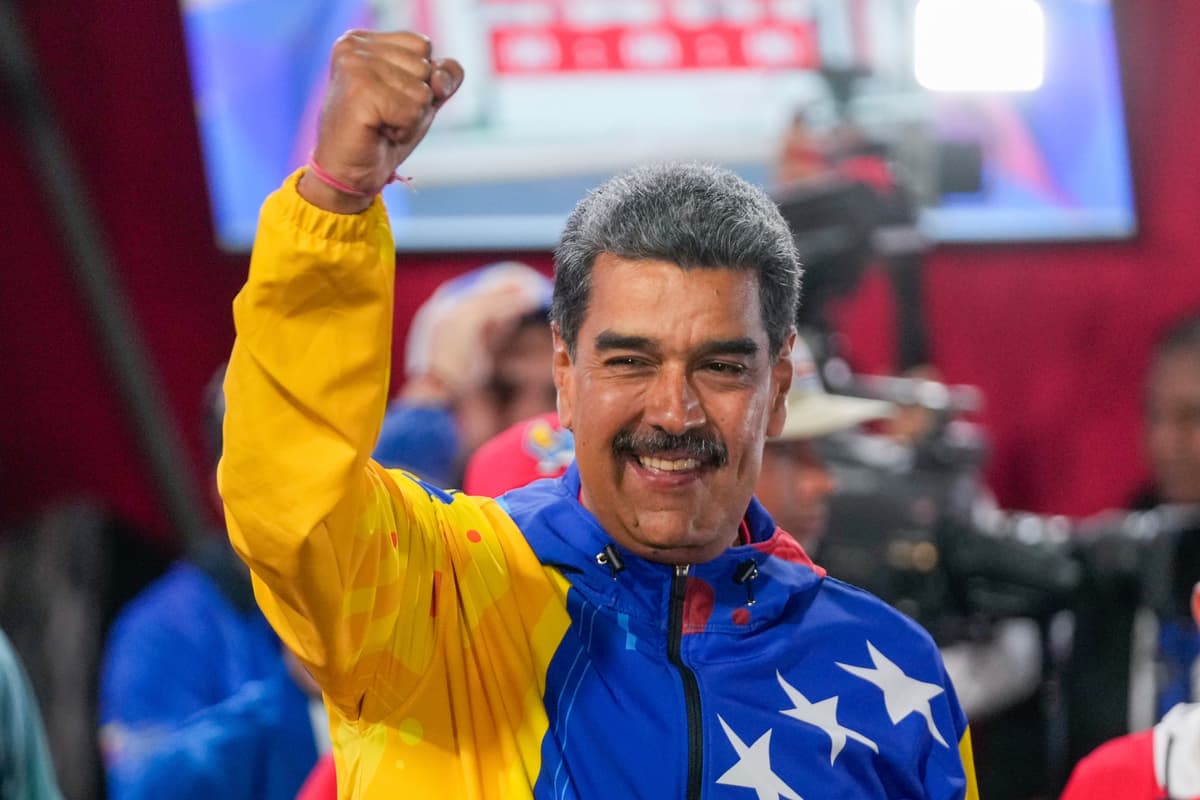
Washington has thrown everything at Venezuelan dictator Nicolás Maduro short of a full-scale invasion. The Justice Department has indicted him on narcoterrorism charges. The Treasury Department has sanctioned nearly 200 individuals linked to the regime.
Top ministers have millions in bounties on their heads. Even one of Mr. Maduro’s former spymasters, Hugo Carvajal, was extradited and pleaded guilty to all charges in June 2025, potentially facing life in prison. Still, the fortress holds.
Following the disputed July 2024 election — condemned as fraudulent by international observers, Venezuela’s opposition expected the pressure to crack Mr. Maduro’s inner circle. Instead, the military stood firm, judges validated bogus results, and key officials closed ranks.
Loyalty, however, may not be the glue holding together the power elite. The cold calculation running through Venezuela’s government officials and high-ranking generals could be fear of a worse fate — decades in an American federal prison or outright elimination.
“A return to the rule of law and democratic government brings the significant risk” that senior leaders deeply involved in illicit activities or profiting from these organizations could be held accountable for their crimes, a research professor at the United States Army War College Strategic Studies Institute, Evan Ellis, tells The New York Sun.
“That risk far outweighs their disdain of Maduro and their own individual ambition,” he says.
The Justice Department’s approach to Carvajal illustrates this dynamic. Despite his potential value as a cooperating witness, federal prosecutors did not publicly disclose any deal before his June guilty plea. His attorneys reportedly claim prosecutors did not offer one before he changed his plea a week before trial.
Carvajal and his counsel have repeatedly described his potential intelligence about the Maduro government’s alleged criminal activities, including espionage and narco-trafficking, and its foreign ties to Iran, Hezbollah, and Colombia’s FARC, among others, as highly valuable to U.S. national security. They claim the information could expand understanding of Venezuela’s networks or lend itself to new sanctions and prosecutions.
Earlier this month in a letter to President Trump, Carvajal renewed his offer to provide detailed information on these matters. Reticence by the administration to these overtures, however, may be just one factor driving the reluctance of Maduro’s inner circle to defect, Mr. Ellis explains.
“While Carvajal’s treatment doubtlessly increases the skepticism of some in the regime of cooperating with representatives of the de jure Edmundo Gonzalez government, or the U.S. — and associated promises of amnesty and reward, there are multiple other factors that also contribute to that lack of confidence,” he says.
These include “the risk that those collaborating will be killed by their conspirators before they can talk, or that any military action without heavy U.S. support will not succeed, or that even if they are pardoned for certain crimes, a future international tribunal or government could hold them liable for other crimes or human rights violations.”
Beyond the threat of prosecution or death, however, lies a system of reward that keeps military and political officials bound to Mr. Maduro through financial self-interest. In this scheme, loyalty translates directly into wealth through gold smuggling, currency manipulation, and oil exports.
The Treasury’s July 2025 designation of Cartel de los Soles as a terrorist organization highlights what analysts have long documented: a decentralized network of loyalists also profits from massive drug trafficking.
“As long as the money’s flowing, then they can keep those rents going to keep people in the regime,” the senior director of government relations at the Foundation for the Defense of Democracies, Connor Pfeiffer, tells the Sun.
International Lifelines That Washington Cannot Sever
Mr. Maduro’s survival depends on more than internal financing and cohesion. A constellation of international allies provides diplomatic cover, intelligence capabilities, and economic escape valves that blunt American pressure.
Russia provides personnel and military equipment, including S-300 air defense systems, Mr. Ellis notes. China’s involvement remains primarily economic but critically important. Venezuela’s exports total 600,000 to one million barrels a day and are mostly headed to China — making up nearly 10 percent of China’s oil imports.
“Russian and Chinese surreptitious purchases of Venezuelan oil, including ship-to-ship transfers, changing the oil grade, and cryptocurrency payments to hide the transactions, provide some resources that help keep Maduro-affiliated elites afloat,” Mr. Ellis says.
Oil exports, however, serve more than one purpose. “Some of that oil is also being used to pay off $60 billion that Maduro’s regime owes the Chinese, going back to the Chavez days,” Mr. Pfeiffer explains. “They’ve been the primary financier of infrastructure and state-owned projects in the country.”
In addition, Iran provides fuel shipments and shares intelligence on evading Western financial restrictions.
“Russia and Iran provide some diluents for Venezuelan oil to get it to a grade at which it can be exported for revenue,” Mr. Ellis says, underscoring that Iran has also helped repair Venezuelan refineries and provided military equipment. “The Chinese have also provided various digital infrastructure and control systems that help the Maduro regime surveil and control its population.”
Cuba’s involvement runs deepest. “Cuban intelligence, military counterintelligence and other organizations have thoroughly penetrated the Venezuelan military and other leadership,” Mr. Ellis says. “That penetration makes any major plot against Maduro relatively easy to detect.”
“Cuba is the key element here, given that they actually reportedly have people on the ground who are around Maduro,” Mr. Pfeiffer concurs, noting that according to reporting during the 2019 re-election protests, Cuban operatives “actually helped keep him in the country.”
For American officials and analysts, the multinational arrangements translate into a durable security shield around the Venezuelan president.
The Strategy of Maximum Pressure
Washington assumed that indictments, sanctions, and military posturing would create fissures within Venezuela’s leadership. Intelligence assessments predicted that military officers would abandon Mr. Maduro to avoid prosecution or seize opportunities for amnesty deals. None of it happened.
The Treasury Department’s January announcement raising rewards to $25 million for Mr. Maduro and his interior minister, Mr. Cabello, and $15 million for his defense minister, Vladimir Padrino López, was supposed to create temptation within the ranks. That’s not the case so far.
“If Maduro is able to pay similar amounts or more to people through oil revenue and drug trafficking, then the economic incentive isn’t going to be there to choose to defect to the United States and turn over Maduro or some of these other officials,” asserts Mr. Pfeiffer.
The strategy, analysts argue, has to change decision-making considerations among regime insiders.
“It is highly difficult for any strategy to induce the Maduro-affiliated leadership to turn on him,” Mr. Ellis says. “The idea of negotiating with Maduro, as the Biden administration mistakenly attempted to do on multiple occasions or believing that overwhelming Venezuelan popular mobilization alone will bring change is even less realistic.”
What would work? According to Mr. Pfeiffer, it all comes down to choking off the cash pipeline.
“Reducing oil exports, they have less revenue coming in, which makes those bounties eventually more appealing; reducing the drug flows, so that they have less drug revenue coming in; and squeeze the regime so much that maybe either Maduro decides he wants to leave on his own, or someone in the inner circle, or someone close enough decides that the U.S. bounties or other incentives are enough to incentivize them to do something,” he says.
As the White House targets Venezuelan fuel and drug shipments on the high seas, a White House-connected source working closely on the Venezuela file tells the Sun on background that significant movement is occurring on several fronts.
“There is covert land action happening and some military defections,” the insider says, noting the impact of seizing oil tankers, exploding drug boats, and curtailing illicit gold trafficking.
In the meantime, Venezuela’s domestic crisis is metastasizing. Hyperinflation, crime, and disease have extracted a heavy toll. More than 7.9 million people have fled the country since Mr. Maduro took power in early 2013.
Yet the combination of fear, fortune, and foreign support has created a veneer among the dictator’s inner circle that shows no external signs of fracturing. That could soon change.
“If Venezuelan military leaders and regime loyalists become convinced that decisive U.S. military action is imminent and will be successful, they will have a very strong incentive to flip sides and cut whatever deal they can to save their own skin, whatever their doubts about such a deal might be,” says Mr. Ellis.