
Abbas Denies End to Pay-To-Slay Payments After Protests Across West Bank By Families of Palestinian Attackers, Prisoners
Under pressure from international interests, Abbas has attempted to revamp a scheme that pays family members of individuals who attacked Israelis.
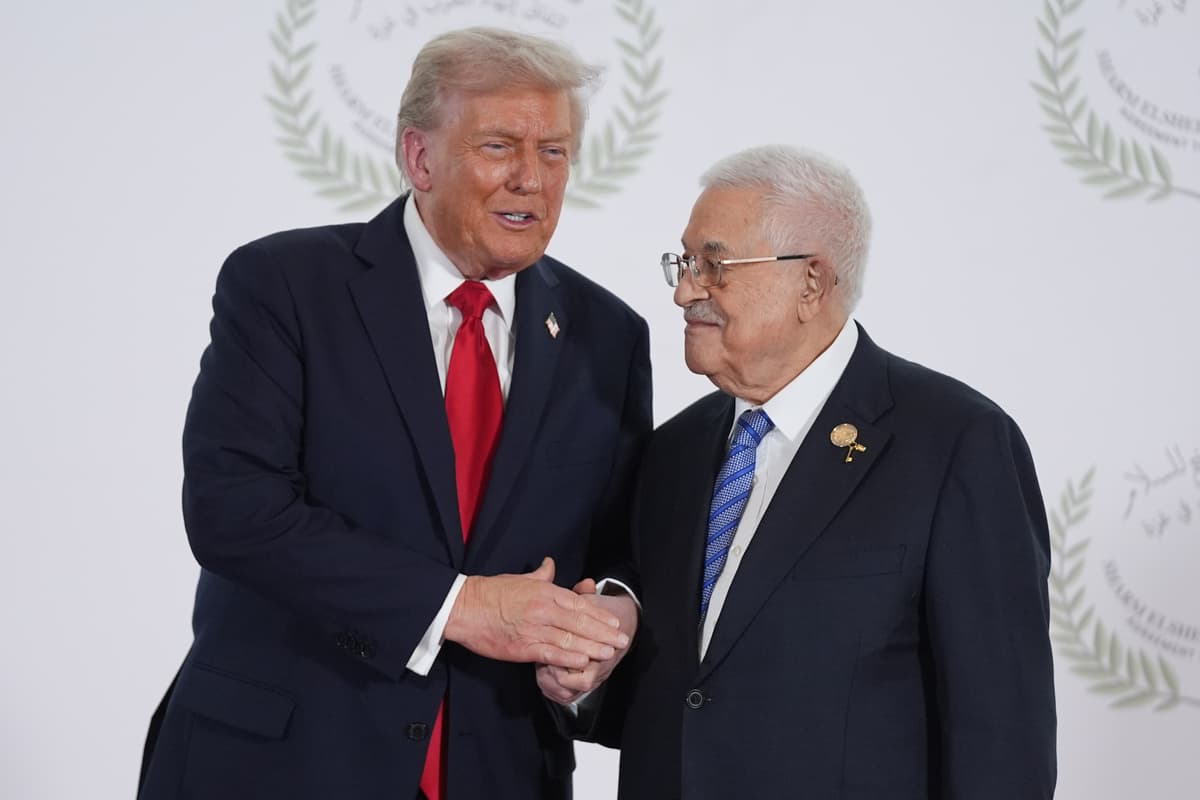
After more than a week of large-scale protests in West Bank cities, villages, and camps, the president of the Palestinian Authority, Mahmoud Abbas, is trying to soothe anger over his decision to reduce payments to Palestinian families whose members were killed or captured after taking up arms against Israel — known as “pay-to-slay.”
Mr. Abbas issued a decree in February that would base the amount of the stipends on a family’s economic need rather than the length of the attacker’s prison sentence.
Last month, he formally removed the benefits payment system from a now-defunct Prisoners and Martyrs Fund and placed it under the “Palestinian National Economic Empowerment Institution,” a semi-independent institution revamped in September which is responsible for the distribution of welfare checks and state salaries.
In response, thousands, including members of Mr. Abbas’s own Fatah Party, registered their opposition and threatened that the failure to reward so-called “martyrs” and prisoners “could ignite large-scale unrest among the Palestinian public,” The Jerusalem Post reports. Some families objected to being treated as welfare cases.
“These are the unalienable rights of the prisoners, and they cannot be subject to political blackmail,” a prisoners group told the Post.
In a Wednesday statement, Mr. Abbas said that contrary to declarations on social media, he had not succumbed to Israeli or international pressure to end the payment scheme.
“I affirm, with absolute clarity, that loyalty to the sacrifices of our righteous martyrs, our steadfast prisoners, our wounded, and their resilient families is a deeply rooted national and moral obligation. It is not subject to political bargaining,” he said.
Mr. Abbas said creation of the economic empowerment institution, known in Arabic as “Tamkeen,” is part of a series of constitutional and political reforms the Palestinian Authority is making in order to “prepare the necessary constitutional frameworks” for a transition to statehood.
Those reforms include creating a financial governance system “based on clear democratic foundations” that he says will move the Authority toward “the realization of our independent Palestinian state with East Jerusalem as its capital.”
“The issuance of decrees by law falls exclusively within the constitutional powers of the President,” Mr. Abbas said, adding that he is seeking to safeguard the current political system and ensure “the continuity of state institutions.”
As Israel and the United States look to eliminate Hamas from any authority over the Palestinian people, Mr. Abbas, 90, has been under pressure to demonstrate that he can be an effective leader for all Palestinians. He is also trying to grapple with an economic crisis that resulted from a 2018 U.S. law that bars the Palestinian Authority from receiving aid if it is used to pay salaries to terrorists. Israel has also withheld tax collections in response to the Prisoners and Martyrs Fund payouts.
While Mr. Abbas faces a backlash among his constituents, the attempt to create an economic institution that meets international standards could work in his favor. By eliminating the fund, Mr. Abbas could win new American aid.
However, Palestinian Media Watch says the pay-to-slay scheme is still in full force. It points to the 2025 release of terrorists Alaa Al-Din Al-Bazian and Naji Ajar as part of the hostage exchange deals with Hamas. The Palestinian Authority has now given the two the ranks of major general and colonel, respectively.
“Blind. No military skills. His only credential: TERROR. This is PAY-FOR-SLAY—HIDDEN, NOT ENDED,” the group posted on X of Al-Din Al-Bazian. It added of Ajar, “No military seniority or skills. His only credential: TERROR. This is PAY-FOR-SLAY—HIDDEN, NOT ENDED.”
West Bank By Families of Palestinian Attackers, Prisoners