
Ahead of America’s 250th, What’s in a Name?
A catchier term than ‘Semiquincentennial’ is sure to emerge before July 4, 2026.
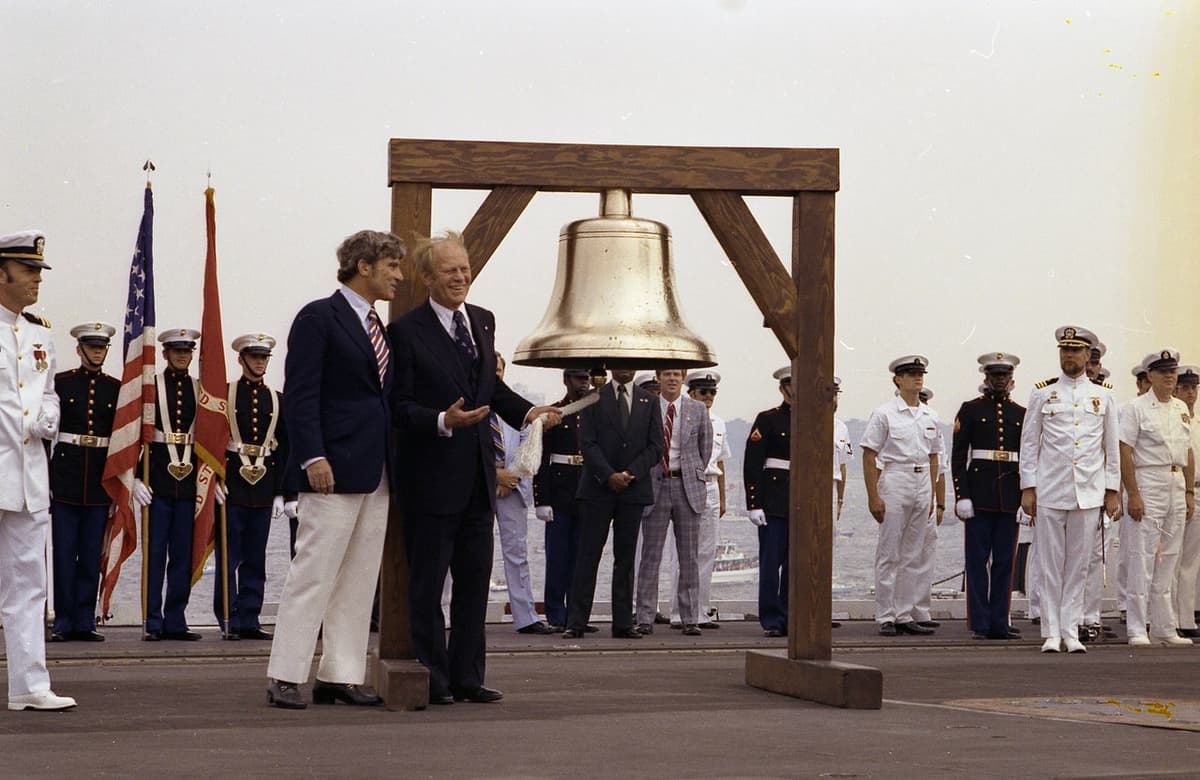
“Semiquincentennial,” like “America’s 250th birthday,” is quite the mouthful. With July 4, 2026, approaching, expect linguists and commentators to search for a shorter name — a catchier one that rolls off the tongue — to mark the Declaration of Independence’s milestone.
In 2016, the federal government named Independence Day 2026 “the United States Semiquincentennial” or “America250.” It’s fitting that Washington D.C. is the source of the clunky, almost unpronounceable name. Its complex and confusing verbosity invokes the capital city’s reputation for bureaucracy.
The prefix “semi” is derived from the Latin meaning half and “quin” from the number five. Centennial, marking 100 years, is Latin for “centum” or century and “annus” for a year. Added up, they give the pretentious or historical minded a flowery way to render the anniversary.
“Semiquincentennial” was chosen over terms like “sestercentennial,” “bisesquicentennial,” and “Quarter Millennium.” But, as a rule, using a dead language doesn’t bode well for terms seizing the popular imagination. A safe bet is that America250 will be more common.
There will, however, be the popular grouse that “America” refers to the entire Western Hemisphere. US250 or USA250 might be better, but they sound like highways. Since Roman numerals are more familiar than Latin words from Super Bowls and clock faces, CCL for 100, 100, and 50 might get a whirl.
The America250 logo features the number rendered in red, white, and blue ribbons. The design invokes the curved, five-pointed star of the 1976 Bicentennial, meant to convey softness and unity by the artist who won a graphic contest that year.
The logo is useful for visual mediums. What are speakers — not to mention writers fearing typos — to do when a tongue-twister like “Semiquincentennial” is the only option? They will search for something less unwieldy and, with few options available, begin to craft new terms.
America250 seems a good placeholder until something better is found. But expect people to push for something shorter to carry on through the celebration. Although press outlets no longer need typesetters, economy of words is just as popular in our hashtag world.
New York Highlanders was just too long for newspapermen seeking to write headlines when the team played at Hilltop Park in Manhattan in the first years of the last century. Reporters pitched the New York Americans, Hilltoppers, Greater New Yorks, Deveryites, and Invaders, according to the author of “Pinstripe Empire,” Marty Appel.
A baseball historian, Fred Lieb, wrote in 1922 that “the sporting editor at one of the New York evening papers,” the Evening Journal, exclaimed, ‘The hell with this Highlanders; I am going to call this team “the Yanks.” That will fit into heads better.” The club made the name official in 1913.
The Brooklyn Trolley Dodgers — honoring locals who risked their lives avoiding being struck crossing the tracks — has been truncated to “Dodgers” for so long that few remember the full name with the team now in Los Angeles. The Mets, and NBA’s Knicks, are seldom referred to as the Metropolitans or Knickerbockers either.
Writers and speakers can, at least, be thankful that they were spared names with even more syllables. Princeton University surfaced “bicenquinquagenary” for its 250th anniversary in 1996. Washington and Lee University followed suit three years later.
Rutgers University, Princeton’s opponent for the first college football game in 1869, went for simplicity when marking its 1766 founding. The State University of New Jersey called 2016’s event “Rutgers 250” and branded it “A Day of Revolutionary Thinking.” No Latin in sight.
The Rutgers choice might prove a fitting example for America to follow. The Declaration of Independence was read in public for just the third time within sight of what was then Queens College. From a spot on campus, President Monroe, an artilleryman, held off the Red Coats in the Revolutionary War, buying President Washington’s army time to withdraw.
“Brevity is the soul of wit,” Shakespeare said. An America hungry for abbreviations may be stuck with a Semiquincentennial for now. If past is prologue, though, it won’t be long before a term that’s easier to say and spell clicks, taking the focus off the war of words and putting it on the Miracle at Philadelphia where it belongs.