
America, Hoping for a Relationship With a Democratic Iran, Can Start By Burying the CIA’s Mossadegh Myth
Since 1953, the agency has let stand the tale of a coup that never was.
The legacy of 1953’s so-called coup in Iran is hanging over President Trump as he weighs how to support anti-regime protesters. While the CIA and the ayatollahs agree about America’s role in subverting democracy, it’s a false narrative — one that’s damaging hopes for a relationship with a future, democratic government in Tehran.
In 2013, the CIA added Operation Ajax to its website timeline: “19 August 1953: CIA-assisted coup overthrows Iranian Premier Mohammed Mossadegh.” The boast helped the agency to cultivate a mystique, but it also gave the ayatollahs a tool to stoke anger against America and the U.K.
At the World Economic Forum in 2005, President Clinton said he “formally apologized on behalf of the United States” for “crimes against Iran.” He alleged that the CIA “deposed Mr. Mossadegh, who was an elected parliamentary democrat, and brought the Shah back.”
In 2009 at Cairo, President Obama said that America “played a role in the overthrow of a democratically elected Iranian government.” But Mossadegh wasn’t “democratically elected” or a “democrat.” He refused a legal order to cede power, which raised fears that he’d align Iran with the USSR.
The shah, Mohammad Reza Pahlavi, appointed Mossadegh with the parliament’s agreement in 1951, and removed him once in July 1952 before giving him another chance. This routine mechanism was used to cycle through 10 prime ministers before the shah’s reign ended in 1979.
In 2021’s “The Last Shah: America, Iran and the Fall of the Pahlavi Dynasty,” Ray Takeyh challenged the CIA’s official story. What’s “often referred to as the original sin,” he wrote, “where U.S. meddling poisoned relations … and even made the Islamist revolution of 1979 possible,” belies the facts.
“Recent evidence,” Mr. Takeyh wrote, “suggests that America’s role” with the U.K. “was a minor one and the key actors … were the Iranians themselves. It was Iranian generals, clerics, and everyday citizens who put an end to Mossadegh’s premiership. All the Western lamentations aside, this was very much an Iranian affair.”
The CIA, formed in 1947, didn’t have today’s resources in 1953. But Kermit Roosevelt, President Theodore Roosevelt’s grandson, exaggerated the agency’s role — and his own — into a legend. The truth was more mundane. Mossadegh was unpopular and it was obvious that Pahlavi was going to replace him.
Pahlavi appointed Major General Fazlollah Zahedi, whom America also preferred, as his new prime minister. But when the shah sent a firman, or royal decree, informing Mossadegh that his services were no longer required, he ordered Zahedi’s arrest instead. The shah, fearing the worst, left the country.
In “All the Shah’s Men,” Stephen Kinzer writes that Zahedi fled to Roosevelt who hid him under a blanket on the floor of his car and spirited him to a “hideout.” The undersecretary of state, General Walter Bedell Smith, wrote President Eisenhower that the CIA had failed; they’d “probably have to snuggle up to Mossadegh.”
But Pahlavi’s supporters resisted the power grab. Roosevelt’s contribution was small; he used Tehran’s few photocopiers to spread copies of the royal decree. “This is not an insurrection,” the shah said when the protests forced Mossadegh’s resignation. “Now we have a legal government. General Zahedi is premier. I appointed him.”
By clinging to office, Mossadegh had violated the law, even after earlier rejecting Pahlavi’s offer to resign as monarch and accepting royal authority. “The crimes of Mossadegh,” the shah told reporters, had been “the most serious a person can be responsible for.”
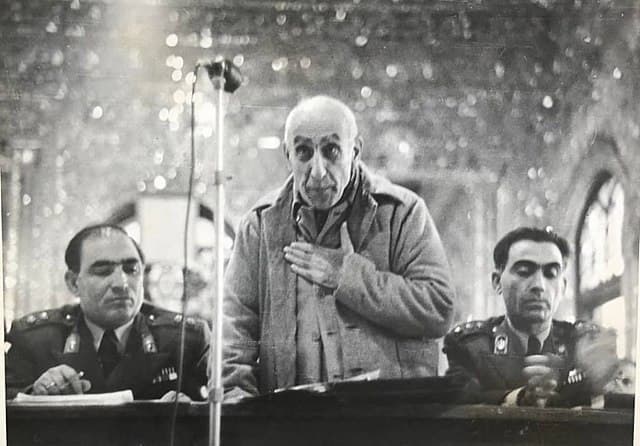
Pahlavi called Mossadegh “an evil man who wanted only one thing out of life: power at all costs. To accomplish this end, he was willing to sacrifice the Iranian people, and he almost succeeded.” Mossadegh was tried and sentenced to three years in prison. Prosecutors had sought the death penalty; the shah advocated for house arrest.
Since 1953, the CIA has let stand the tale of a coup that never was. But today, the myth only helps the ayatollahs sow distrust between the West and Iranians protesting in the streets. The truth can help America get a fresh start with whatever government emerges in Tehran, ensuring a better future for all.