As Trump Weighs His Options, Technology and Weaponry Emerge as Keys To Winning the Battle For Freedom in Iran
Iran is emerging as ‘an opportunity for American tech leadership to make a tangible difference … supporting the fundamental human right to free communication.’
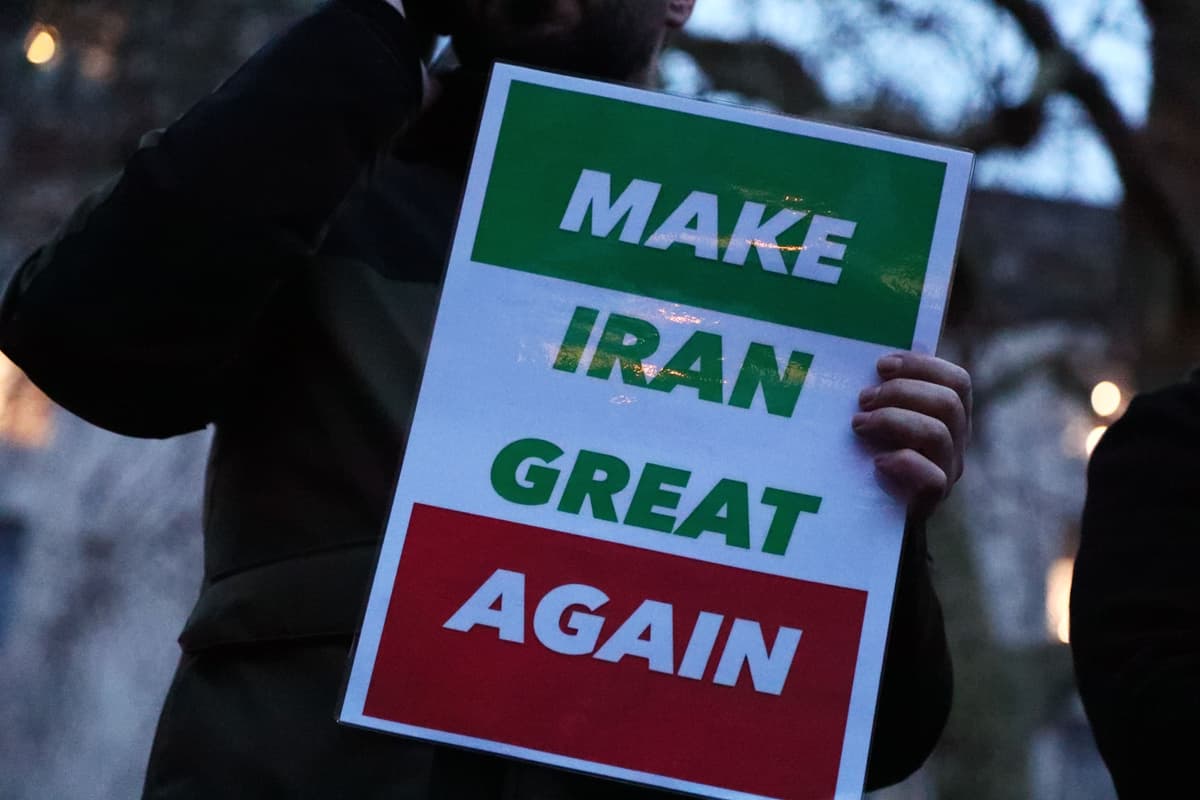
As Iranian protestors head into a new day wondering whether they will survive another day of demonstrations against their increasingly repressive government, President Trump is mulling America’s options for capitalizing on a singular opportunity to topple the Islamic regime.
Not since the revolution in 1979 has Iran’s government been in a more precarious moment. With thousands of protesters detained and injured and hundreds more dead, the country’s fate may now rest on momentum. The outcome could come down to whether foreign powers will lend a long arm of military or technological assistance to topple the ayatollah or stand by as the Supreme Leader reasserts his challenged authority to quash the largest protests against the government since the theocracy came to power 47 years ago.
So far, few in the international community have exercised themselves over the emerging events. A spokesman for U.N. Secretary General Antonio Guterres, Stephane Dujarric, said Sunday the chief was “shocked” by reports of excessive use of force by Iranian authorities. Like many leaders, he has urged Tehran to “exercise maximum restraint and to refrain from unnecessary or disproportionate use of force.”
With the rest of the world delivering a tepid response, Mr. Trump, increasingly shown to be a man of kinetic action on the international front, may reach a decision on Tuesday when he meets with advisors. According to The Wall Street Journal and other reports, he will be holding a meeting with his senior officials, including Secretary of State Marco Rubio, Defense Secretary Pete Hegseth and the chairman of the Joint Chiefs of Staff, General Dan Caine to decide on an American response.
Most, but not all options, are said to be on the table. Boots on the ground are almost certainly ruled out, according to the reports, and with a good portion of America’s naval resources deployed in the Caribbean following a surprise action in Venezuela to oust Nicolás Maduro, military carriers are not positioned to move quickly halfway around the world.
That may not matter, says one independent geopolitical analyst, Shanaka Anslem Perera, who believes the United States is re-positioning its tankers to refuel stealth bombers for a long-range coordinated attack.
“When a dozen KC-135s cross the Atlantic simultaneously, you are not watching a drill. You are watching the logistics for long-range precision strikes being pre-positioned,” he said on X, noting the buildup to the June 2025 bunker-buster attack on Iran’s nuclear facilities followed a similar pattern. “B-2s can launch from Missouri, refuel over Europe, strike Iran, and recover at Diego Garcia in under 30 hours. They do not need to be stationed nearby.”
Barring stealth bombers, after reports of the use of sonic weapons in Venezuela, a successful U.S. response may come down to cyber weapons or other technological tools — including Elon Musk’s Starlink.
As the Islamic regime seeks to silence all news from the ground, making the Internet available only to a select group of commanders and national security specialists, one British-Iranian cyberespionage expert, Nariman Gharib, who maintains an Iran Internet Blackout Monitor, says the key is for American tech leaders to open up the cellular phones with direct-to-satellite access so that Iranian protest leaders can talk among themselves.
“15% of Iranian users already have Starlink-compatible devices (over 1 million installs in December alone),” Mr. Gharib posted on X, saying that the top three most popular devices in Iran are all Starlink-compatible and do not require any special hardware like a satellite dish or antenna to operate.
“The technology is ready. The phones are already in people’s hands. With 90 million people in Iran, the potential reach is enormous. The main barrier isn’t device availability — it’s deployment and carrier agreements,” he said. “This is an opportunity for American tech leadership to make a tangible difference — not just in saving lives during emergencies, but in supporting the fundamental human right to free communication.”
According to Iran’s opposition news site, Iran wire, Iran’s digital blackout includes jammers to shut down access to Starlink, preventing the release of videos and hindering domestic plans to coordinate a post-ayatollah Iran.
“Despite reports that tens of thousands of Starlink units are operating inside Iran, the blackout has also reached satellite connections. It is reported that about 30% of Starlink’s uplink and downlink traffic was initially disrupted, quickly rising to more than 80%,” IranWire reported.
Mr. Perera said that is the result of a certain axis coordinating to block communications. “Russia supplied the hardware. China published the playbook. Iran just proved it works. Starlink: 80% packet loss,” he wrote.
“Two months ago, Chinese researchers published exactly how to black out Starlink over Taiwan,” he continued. “935 coordinated ground-based jammers blanketing Ku-band frequencies. Tehran was the field test. 40,000 terminals. Near-total degradation. Regime now executing anyone caught with a dish as ‘enemies of God.’”
Online videos are still being shuttled out of Iran by hand to networks in other countries. The images show massive demonstrations in scores of cities, although they could soon be stopped dead.
“The pattern of protests in the capital has largely taken the form of scattered, short-lived, and fluid gatherings, an approach shaped in response to the heavy presence of security forces and increased field pressure,” the Human Rights Activists News Agency said. “Reports were received of surveillance drones flying overhead and movements by security forces around protest locations, indicating ongoing monitoring and security control.”
As few of those moments are being seen among Iranians, on Sunday, Iran’s president, Masoud Pezeshkian, issued a veiled threat that the Islamic Republic stands strong because of internal unity and public support. He blamed foreign powers, including Israel’s Mossad, for destabilizing the country, but says they have failed due to “societal cohesion and effective governance.”
“The enemy’s effort to make #Iran face chaos during the 12-day-war came to a complete failure, and now, despite its continuous effort to destabilize the country, Iran remains steadfast and capable of defending its national interests,” the Iranian president said, according to the official government handle on X.
With little imagination for what a post-Iran could look like, some lawmakers suggest the United States be cautious in its next move, as it may embolden the regime even further.
“Let’s keep up the sanctions pressure, which helped in Syria and is helping, I think, dramatize the misdeeds of this regime. But U.S. military action would just bring back the painful history of the U.S. toppling the Iranian prime minister back in the 1950s and would give the regime the ability to blame their own failures on the United States,” Senator Tim Kaine said on CBS’s “Face the Nation” Sunday.