Billionaires Weigh Moving Out of California as Congressman Flips His Support in Favor of a Wealth Tax
Congressman Ro Khanna says a one-time tax of up to 5 percent of billionaires’ wealth could raise money needed from a loss in federal funding.
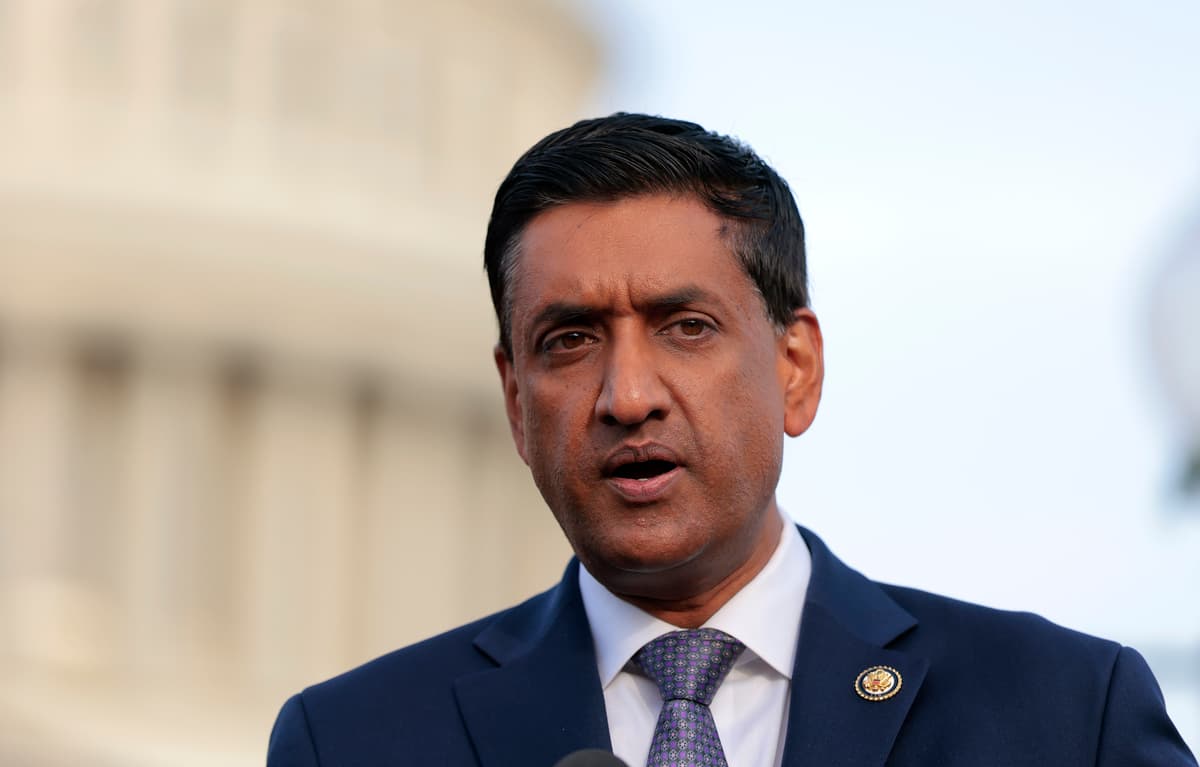

A Silicon Valley congressman is reversing himself to lend his support to a 5 percent state wealth tax on billionaires, following the lead of superstar socialist and the incoming Mayor Zohran Mamdani of New York City.
Congressman Ro Khanna expressed his support over the weekend for a proposed tax on California residents who have a net worth of $1 billion or more at the end of 2026. The tax, which could be paid at once or in installments of 1 percent per year over five years with 7.5 percent interest, is estimated to be able to raise anywhere from $25 billion to $100 billion from the Golden State’s 200 billionaires.
Supporters say the funds would make up for a loss in federal funding for already strapped health care, education, and food programs. The state’s Medicaid program, Medi-Cal, has been plagued by underfunding for years as it covers the cost of illegal immigrant health care, while the state’s supplemental food program, CalFresh, was added to the list of state agencies with the highest risk for fraud, according to the state’s auditor.
“A modest wealth tax to pay for education, healthcare and childcare makes sense. But we need to make sure the money is not wasted,” said Mr. Khanna, adding that he differs from Mr. Mamdani because Mr. Mamdani would like to eliminate billionaires altogether.
Mr. Khanna, who opposed the idea of a billionaire’s tax just a year ago, added that venture capitalists, start-up founders, and innovators would not be deterred from joining Silicon Valley for fear of having to pay 1 percent of $1 billion.
“Founders don’t think that way,” he said.
But California billionaires like Peter Thiel and Larry Page have reportedly said that they will flee the state if the tax proposal is passed into law as currently written because it calls for a tax on unrealized gains. Several billionaires have called it a flat-out confiscation of wealth.
“To be clear, the Billionaire Tax Act in California is not (just) an unrealized gains tax. It’s a 5% across-the-board confiscation of net worth. It applies even if one has already realized and paid taxes on the entire amount,” said tech founder David Sacks, who was the founding COO of PayPal alongside co-founder Mr. Thiel, and currently serves as President Trump’s AI and crypto czar.
Mr. Sacks noted that California could work its way out of its financial shortfall if it could get control over its financial picture.
A state auditor’s report earlier this month found eight state agencies at high risk for waste, fraud, and mismanagement.
Among the potential losses cited in the report is an 11 percent error rate for CalFresh benefits, which will result in an estimated $2.5 billion in additional costs by 2028 as the state is required to take on more of the administrative expenses passed on by the federal government. The report also found $1.5 billion in improper unemployment payments in the past two years as well as $500 million in unemployment fraud in 2024 alone, and $35 billion spent on homelessness since 2019 that can’t be tracked.
Governor Gavin Newsom, who earlier this month expressed his opposition to the wealth tax, said the state has not lost $70 billion, as the report calculates.
“The State Auditor’s ‘high-risk’ list does NOT cite billions in current losses. It’s a report to flag programs for added oversight BEFORE potential fraud occurs. California PROSECUTES fraud — arresting 929 people and recovering $5.9 billion in unemployment fraud alone,” the governor’s press office posted.
“I don’t care if the losses are past, current or even potential. Gavin is not spinning or gaslighting his way out of this one!” said reality star and podcaster Spencer Pratt, who has led the criticism of the state’s response to the massive Pacific Palisades fires that burned down his and his neighbors’ homes in 2024.
Already, the state has spent $3.2 billion in recovery costs, though no new homes have yet been occupied. Mr. Newsom has asked the federal government for $34 billion in additional funds for rebuilding.
Representative Kevin Kiley told Newsmax that the report shows that the state failed to take corrective steps before the losses occurred. He added that the number of high-risk agencies has increased under Mr. Newsom’s tenure and the report does not count other losses like the multibillion dollar high-speed rail project that is still unbuilt, the telephone surcharge for a failed emergency operations telecommunications system, and the massive fraud in community college applications.
“The notion that higher taxes and more revenue will solve California’s problems is easily disproven by the immediate past. The budget just grew $124 billion over five years and everything got worse,” he said. “We now lead the nation in poverty, unemployment, and homelessness.”