China, Canada Look To Resolve Bitter Differences During First Summit in Eight Years
President Xi is attempting to exploit Carney’s desire to loosen ties with America following Trump’s tariffs and harsh criticism of the northern neighbor.
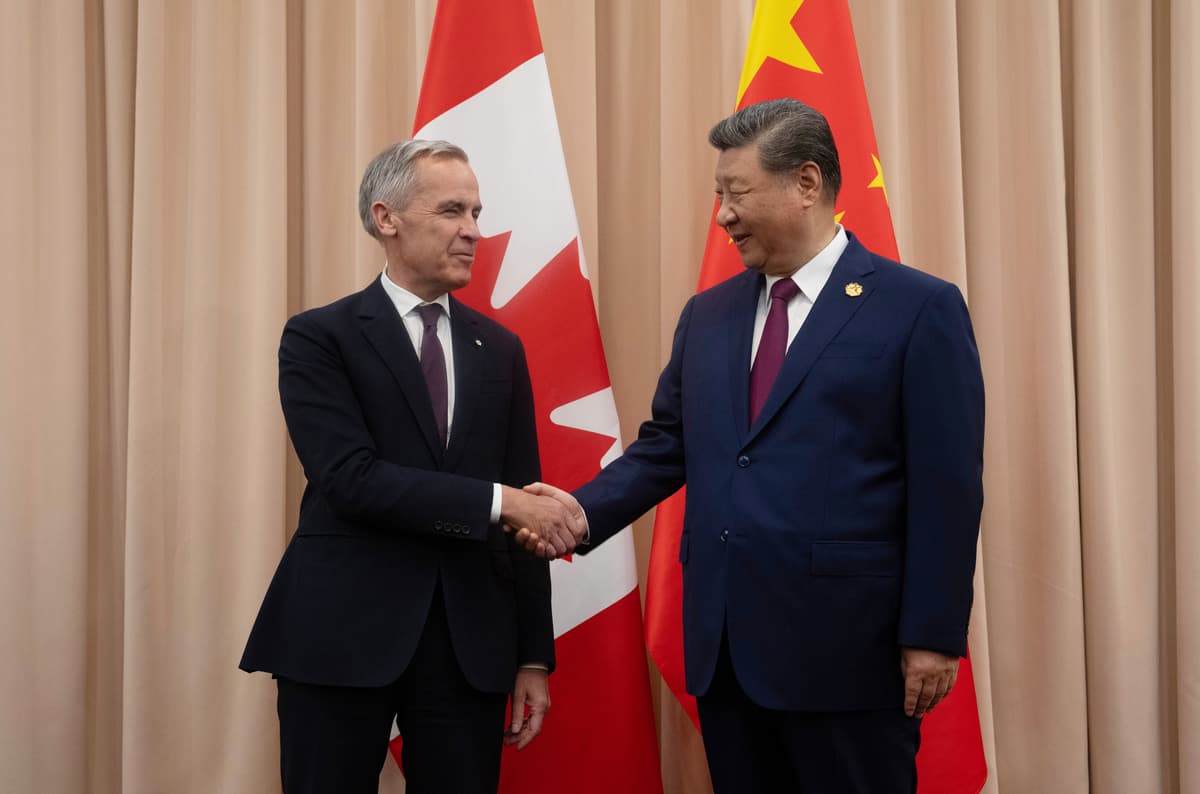
The leaders of Communist China and Canada will share common cause in their complaints about American tariffs when they meet this week at Beijing in the first China-Canada summit in more than eight years. There’s no guarantee, however, that Canada’s Prime Minister, Mark Carney, and China’s President Xi Jinping will overcome all their long-festering problems.
The depth of differences between the two emerged in a carefully worded statement from China’s foreign ministry making clear that it is up to Mr. Carney to alter Canada’s outlook. In verbiage reeking of condescension, the English-language propaganda newspaper Global Times quoted a Chinese official as saying Mr. Xi would “provide new strategic guidance for the further improvement and development of bilateral relations.”
In Ottawa, Mr. Carney’s office was anxious not to embellish the prospects for success in the talks with an excessive veneer of optimism. More modestly, an aide said in a statement, the goal, after Mr. Carney arrives Tuesday in Beijing, is to “recalibrate” a relationship that has suffered through trade wars and the jailing of high-profile citizens.
During his three days in China, before leaving for Qatar and next week’s World Economic Forum in Davos, Mr. Carney will get a full dose of what the Chinese expect from Canada and what he might offer in return in meetings not only with Mr. Xi but with a range of other officials as well as trade and industry leaders.
Throughout the meeting, the Chinese will play upon Mr. Carney’s avowed desire to substantially reduce Canada’s historic relations with America. Both leaders will not hesitate to express their opposition to President Trump’s desire to take over Greenland — and perhaps share a sardonic laugh over his talk about Canada as America’s “51st state.”
“China is a prickly pear, but you can still concentrate on trade, while not resolving other issues,” a prominent Canadian commentator, Randal Marlin, author of “Propaganda and the Ethics of Persuasion,” tells the Sun. “No question,” he says, Mr. Carney” is seeking to lessen dependence on the U.S.”
The thaw between Beijing and Ottawa is a dividend of Mr. Xi’s meeting with Mr. Carney on October 31 on the sidelines of the gathering of the Asia-Pacific Economic Cooperation group at Gyeongju. Canada has called that meeting “a turning point.” Mr. Xi calls the summit “in Beijing an opportunity to promote the return of bilateral relations to a healthy, stable and sustainable track as soon as possible.”
The Chinese, though, believe it’s up to Canada, not China, to change course. Whether Mr. Carney’s visit “becomes a genuine turning point,” said the Global Times, “depends on Ottawa’s actions.”
With difficult American relations looming over them, Messrs. Xi and Carney will zero in on such sticking points as the 100 percent tariff imposed by Canada on Chinese electric vehicles and retaliatory tariffs slapped by China on agricultural exports that are vital for the economies of Canada’s western provinces.
Mr. Carney and Chinese trade officials are also sure to talk about opening China to Canadian steel, motor vehicles and other products while America and Canada negotiate tariffs imposed by Mr. Trump.
Mr. Carney “has been highly successful in bank-connected activities and is a superb negotiator,’ says Mr. Marlin. “As for propaganda, think of how Greenland might serve to divert attention away from other issues.”
Mr. Carney says his visit is all about “forging new partnerships around the world to transform our economy from one that has been reliant on a single trade partner.”
That’s a sharp departure from acrimonious Chinese Canadian relations fostered under his predecessor, Justin Trudeau, who resigned nearly a year ago. Mr. Trudeau did see Mr. Xi in China in 2016, but Chinese Canadian relations nosedived when Canada detained the daughter of the founder of the Chinese tech giant Huawei at the request of Washington in 2018 and China retaliated by arresting two Canadians.
They were all held for nearly three years before Washington gave up its request for her extradition and worked out a face-saving deal under which all were freed, but Canada-Chinese relations soured with Canada speaking out against China’s oppression of its Uighur minority and crackdown on free speech in Hong Kong. Then too, Canadians suspected the Chinese of jeopardizing security by interfering in Canadian politics — a charge made against China in many other countries.