China’s President Xi, Canada’s Prime Minister Carney Talk Trade, Form ‘Strategic Partnership’ at Beijing Summit
‘The goal is to work with China at a time when the world is full of disruption,’ says Canada’s industry minister, Melanie Joly.
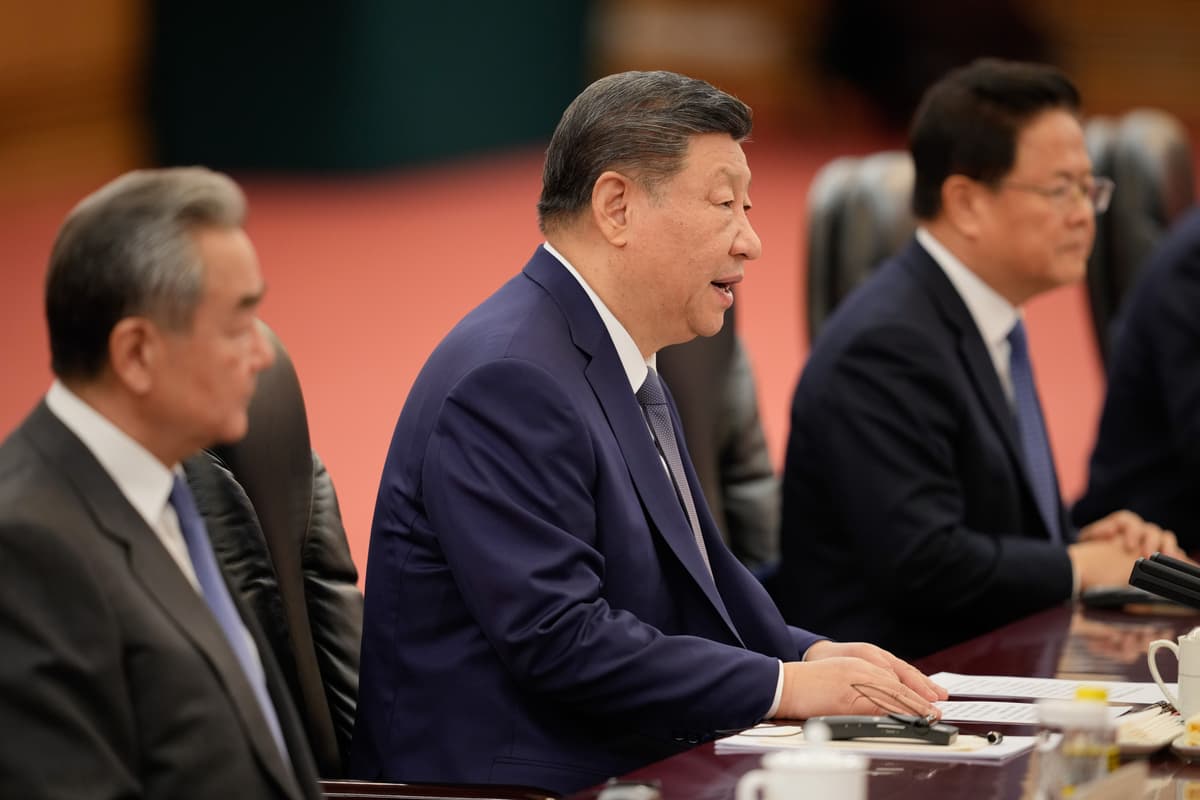
The leaders of Communist China and Canada have sought to bury a legacy of animosity with a joint statement that glosses over differences on trade and political interference beneath what they call a “new Strategic Partnership.”
In the statement, released at a state dinner hosted by China’s President Xi Jinping in the Great Hall of the People in Beijing, Canada’s Prime Minister Mark Carney reaffirms Canada’s “long standing commitment to its One China policy,” a pointed reminder that Canada transferred relations from the island democracy of Taiwan to Beijing in 1970, nearly nine years before America.
The 1,166-word statement avoids references to problems ranging from high tariffs to interference in elections while pledging the commitment of both countries “to expanding bilateral trade, strengthening two-way investment, and deepening cooperation in diverse sectors of mutual interest. “
After the dinner, Mr. Carney announced a tentative deal to lift high tariffs on “tens of thousands of Chinese electric vehicles into the country” in exchange for lower duties on agricultural products, including canola, an acronym for the uniquely “Canadian oil, low acid” product in a wide range of recipes.
Mr. Carney said that he expected Beijing to reduce tariffs on canola seed to 15 percent beginning in March while Canada slashed its 100 percent tariffs on 49,000 Chinese electric vehicles from 100 percent to 6.1 percent, according to CBC.
The deal, more of an understanding than a final agreement, showed the eagerness of both sides to open what Mr. Carney proclaimed as “a new chapter in turning China–Canada relations toward improvement.” Left hanging was whether the deal would be expanded to cover many more vehicles and other products on both sides or would endure beyond the end of the year. There was no mention of the prospect of exporting American cars made in Canada to China.
The viability of the deal on importing Chinese vehicles was by no means certain considering the strong opposition of the Ontario premier, Doug Ford, who said as Mr. Carney left Canada that “It would not be good for Ontario and Canada, and it sure the heck wouldn’t be good for the U.S. — and it wouldn’t be good when it comes to negotiating with President Trump.”
There was no doubt, however, that Mr. Carney, accompanied by five other cabinet ministers along with trade and industrial executives, had in three full days established the basis for building a relationship that would provide an alternative to Canada’s overwhelming ties with America. Conspicuously, Mr. Carney’s wife did not join him on a trip that skipped the usual sortie to the Great Wall or petting of pandas.
The Chinese and Canadian leadeers need not have held any talks at all before agreeing on the first day of Mr. Carney’s mission “on a series of deals that renewed trade ties especially trade in Canadian oil, gas and uranium and Chinese solar and wind technology,” the Toronto Star reported. “The prime minister basked in a warm welcome he said marks a ‘new era.’”
Those deals, obviously reached well in advance of the arrival of Mr. Carney and his entourage set the tone for a mission that showed Canada’s desire to get out from under its long established bonds with America and China’s eagerness to exploit the opportunity.
“The goal is to work with China at a time when the world is full of disruption,” said Canada’s industry minister, Melanie Joly. “There are several countries that are more disruptive,” she said, without singling out America. “The goal of Canada is to work with different countries.,” also unnamed.
Also unmentioned but doubtless on the minds of leaders on both sides was the acrimony surrounding the detention of the daughter of the founder of China’s tech giant, Huawei, at the request of Washington, which wanted to bring her to trial in America for fraud charges stemming from Huawei exports to Iran. China in retaliation jailed two Canadians in a case that took three years to settle with all being freed. Then the Chinese were accused of influencing voters not to support candidates accused of opposing Beijing.
There was no need to mention such unpleasantness while the leaders, in their joint statement, agreed “ in the spirit of mutual respect, equality, and mutual benefit to bring more positive outcomes to both peoples.”