
Federal Judge Orders Hearing About Whether Luigi Mangione’s Backpack Was Lawfully Searched During His Arrest at McDonald’s
The issue of the search and seizure at the McDonald’s was already the subject of three weeks of hearings in state court in December.
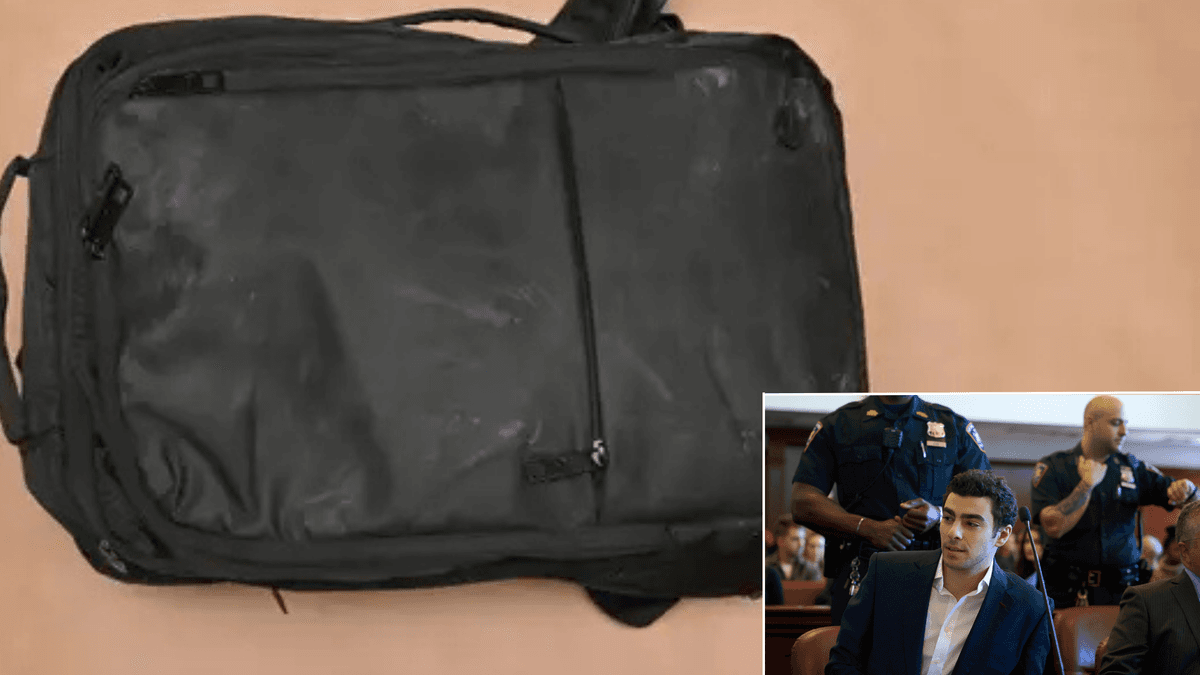
The federal judge, presiding over the case against Luigi Mangione, who is accused of shooting to death the CEO of UnitedHealthcare, Brian Thompson, ordered a new hearing to determine what evidence will be permitted at the upcoming federal trial.
The federal district judge, Margaret Garnett, wrote on Monday that after considering “both the arguments made by counsel” during a hearing held on Friday and “the seriousness of the charges” she wants to hold an evidentiary hearing. She ordered the parties to agree on dates and times in the next two weeks.
The hearing will be “brief,” the judge wrote in her ruling. It’s unlikely the federal judge will allow the type of mini-trial that took place at New York state court last month, where the court held three weeks long “evidence suppression” hearings.
Mr. Mangione, 27, is being prosecuted in three separate jurisdictions for crimes relating to the killing of Thompson, who was gunned down on a midtown Manhattan street last December. He faces charges in Pennsylvania, where he was arrested, in New York state court, where he is prosecuted by the Manhattan district attorney’s office, and in federal court at the Southern District of New York, where federal prosecutors are seeking the death penalty. Mr. Mangione has pleaded not guilty to all charges.
Last week, as the Sun reported, Judge Garnett held a federal court hearing on a defense motion that asked her to dismiss the death penalty eligible count of the indictment, “murder through the use of a firearm.” During that hearing, the judge also addressed another motion brought by the defense that alleges Mr. Mangione’s backpack was searched without warrant during his arrest at an Altoona, Pennsylvania McDonald’s, violating his due process rights.

Defense attorneys claim that because his backpack was searched unlawfully, the evidence seized during the search, including a loaded magazine, a 3-D printed handgun, and a red notebook, should be precluded from trial.
That evidence is crucial to the prosecution’s case. According to investigators, the shell casings found at the crime scene match the bullets in the loaded magazine, indicating that the gun could be the actual murder weapon, while the red notebook contains writings about Mr. Mangione’s disdain for the health insurance business and would serve prosecutors in establishing the motive.
The notebook contains phrases like “This investor conference is a true windfall … and — most importantly — the message becomes self evident,” and “What do you do? You wack the CEO at the annual parasitic bean-counter convention,” and “It’s targeted, precise, and doesn’t risk innocents,” as well as further writings.
In December, the judge presiding over Mr. Mangione’s state case at Manhattan criminal court, Gregory Carro, held hearings on the same evidentiary issues that lasted almost three weeks and heard over a dozen witnesses.
Five days after Thompson, a father of two, who had come to New York to attend an annual investor conference at the Hilton Hotel, was shot from behind and killed just outside the hotel, Mr. Mangione was arrested at the Macdonald’s in the heart of small town Altoona, Pennsylvania, about 270 miles west of New York City.

The New York Police Department had published images of the suspect taken from surveillance cameras, after the suspect, who fled the crime scene immediately, triggered a nationwide manhunt. A customer at the McDonald’s, who had seen these images, alerted the manager that a man eating his breakfast resembled the man wanted for the Manhattan shooting. Two Altoona patrol officers came to the Macdonald’s after the manager called 911, followed by more officers, and about thirteen police officers were present when Mr. Mangione was eventually taken into custody.
During the suppression hearings at Manhattan criminal court, several of these arresting officers testified, insisting that they had followed standard procedural regulations when they searched Mr. Mangione’s backpack.
On Friday, Judge Garnett, the federal court judge, asked defense attorney Jacob Kaplan “what might come out at a hearing,” that she could not find in the guide book Altoona officers adhere to.
The attorney replied that “based on just the reading of the patrol guide… it may give them (the officers) the opportunity to safeguard the property,” meaning the officers are permitted to hold onto a suspect’s property, but not the authority to “actually go through the property.”

The judge made clear in her order that her hearing would be “brief” and that the testimony of one “officer of the Altoona Police Department with sufficient authority and experience” on “the established or standardized procedures” when a person is “arrested in a public place” would suffice.
The officer, she wrote, does not need to have been directly involved in Mr. Mangione’s arrest but needs to have knowledge of the regulations that were in effect in December 2024, when Mr. Mangione was taken into custody.
Furthermore, the judge asked prosecutors to provide her “with a copy of the affidavit in support of the federal search warrant, and any documents incorporated therein by reference.”
If Judge Garnett rules on the motion to suppress this essential evidence in January, or even in February or March, her ruling would come before Judge Carro’s ruling. He said he would make his decision before or by May 18.
The two judges do not have to come to the same conclusion.