Hackers Force Former Shah’s Son Onto Iranian Television With One More Resistance Message as Regime Curbs Protests, Reopens Internet Access
Organizers of the World Economic Forum at Davos are extending an invitation to Iran’s foreign minister despite the regime’s harsh crackdown on dissent.
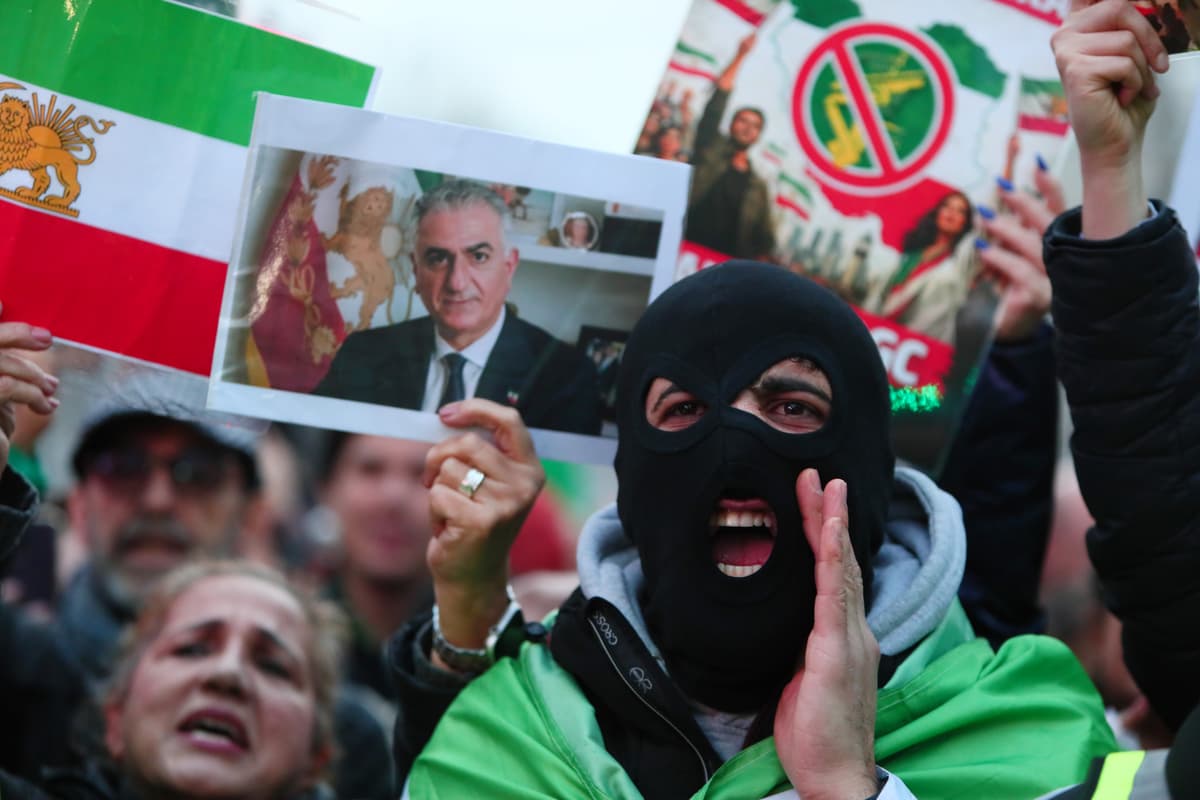

With Iran’s Islamic leadership regaining international acceptance following a brutal crackdown that has left an estimated 16,500 dead, Crown Prince Reza Pahlavi entered millions of homes in Iran Sunday night after hackers penetrated state TV with a message from the late shah’s son urging protesters to remain resilient and warning the military to protect the nation.
With the Internet reopening but still mostly blocked, hackers managed to penetrate Iran’s state owned television via satellite for 10 minutes, sending video of anti-regime protesters and a message from Mr. Pahlavi — son of the Shah that was overthrown in 1979 — that “help is still on the way” into millions of homes across the country.
“By now you should have heard the message of the president of the United States: Help is on the way. I have a special message for the army personnel. It is on the way. I have a special message for the army personnel. You are the National Army of Iran, 9th Army of the Islamic Republic. We have a duty to protect your lives right now. This is a great opportunity for you,” he said in the broadcast, which reportedly streamed on every channel.
The breach follows a decision by Iranian authorities to relieve the chief of Iran’s second-largest mobile phone operator from his duties for “failure to comply” with orders cutting off internet access to anti-regime protests, Iran’s Fars news agency reported Sunday.
“Alireza Rafiei was removed from the position of CEO of the company after about a year of activity,” reads the report. “Irancell disobeyed the orders of the decision-making institutions in implementing the announced policies regarding the restriction of internet access in crisis situations.”
Technology is proving to be one of the most potent forces in the battle for control of Iran. It has also proven to be the sword that cut the latest attempt to overthrow the Islamic regime. Iran’s imposed shutdown of the internet has seemingly stalled action on the ground as demonstrators find themselves unable to communicate and organize with one another, and facing death if caught trying.
A purge — without witnesses, conducted by as many as 5,000 Iraqi mercenaries on top of Iranian police and military this past week, achieved what was intended — to quell international attention and stack up a death toll so high that human rights groups can’t confirm the total numbers dead.
Protesters flooded social media in the preceding weeks to stir up excitement and a sense of momentum in the clashes. But authoritarian officials used those same posts to hunt down demonstrators, with Iranian government agencies scraping profiles to identify people on the ground.
In an attempt to prevent the regime from targeting activists, the parent company of Instagram and Facebook, Meta, began hiding the lists of followers and accounts of individuals geo-located in Iran.
Though Google and a few other internet sites have since come back online following their January 8 shutdown, Iran’s lethal intolerance of protests has gone unpunished. On Thursday, President Trump backed down from threats of action against the regime earlier in the week, saying Iran’s decision not to follow through with its plan to hang 800 prisoners it had captured was a smart move.
“We’ve been told that the killing in Iran is stopping,” the president said, adding that his administration was “going to watch and see” before taking action. On Saturday, after being read in on X posts by Iran’s top cleric, Ayatollah Ali Khamenei, the president told Politico that Iran needs a leadership change.
“It’s time to look for new leadership in Iran,” the president said. “The man is a sick man who should run his country properly and stop killing people. His country is the worst place to live anywhere in the world because of poor leadership.”
In response, Iran’s president, Masoud Pezeshkian, said Sunday that any act against the Supreme Leader, Ali Khamenei, would be treated as an act of war. On the same day, Iran’s judiciary spokesman, Asghar Jahangir, told reporters that the regime may go ahead and execute people detained during the unrest because they “waged war against God,” an offense punishable by death under Iranian law.
Following Mr. Trump’s muted response and with a popular overthrow no longer seemingly imminent, the World Economic Forum on Sunday invited Iran’s foreign minister, Abbas Araghchi, to attend the meeting of international leaders in Davos, Switzerland, this week.
The invitation elicited disgust from groups monitoring the threat from Iran, including United Against a Nuclear Iran, which urged the economic forum, where Mr. Trump and leaders from 60 nations will hobnob with private industry leaders, to rescind its invitation.
“The message WEF is sending: you can shoot Iranians in the eyes and genitals, murder thousands of them, and shut off the internet for your people, but still be welcomed in Davos that same month. WEF’s theme this year is “A Spirit of Dialogue.” Instead of dialogue, the Islamic Republic offered bullets to these brave Iranians,” said United Against a Nuclear Iran’s policy director, Jason Brodsky.
“This is a time when the regime should be isolated, not awarded with cushy speaking slots at global gatherings for a repeat of the same disinformation and propaganda tour,” Mr. Brodsky continued.
Unless the invitation to Mr. Araghchi is revoked, as was a separate invitation from the Munich Security Conference, the economic forum may be subject to its own protests, Mr. Pahlavi warned. “Protesting the presence of the killer Araghchi at the World Economic Forum is the duty of every honorable human being,” Mr. Pahlavi’s communications team said Sunday.
Mr. Araghchi has repeatedly blamed Israel and the United States for stirring up the protests and supplying the weapons that he says are responsible for a majority of the violence on the ground in Iran. Iranian officials also accused an unnamed foreign country of hacking the TV channels that enabled Mr. Pahlavi’s statement. No one has come forward to claim credit for the hack.
Switzerland had already granted permission to Mr. Araghchi or another Iranian official to travel to the country after calling in the regime’s ambassador to Switzerland to reprimand him on the mounting death toll. Swiss diplomatic officials representing U.S. interests offered to serve as a mediator between Iran and America to lower the temperature.
Just two days later, another Iranian ambassador, the Islamic Republic’s top diplomat at the United Nations European Headquarters in Geneva, Alireza Jeirani Hekamabad, defected and applied for asylum in Switzerland.
According to the news monitoring agency, Iran International, Mr. Hekamabad said he feared consequences to himself following a structural collapse of the regime.