

Harvard Study Finds Former NFL Players at Much Higher Suicide Risk

A former Giants lineman turned mental health counselor says results aren’t surprising.
AP/Brian Blanco
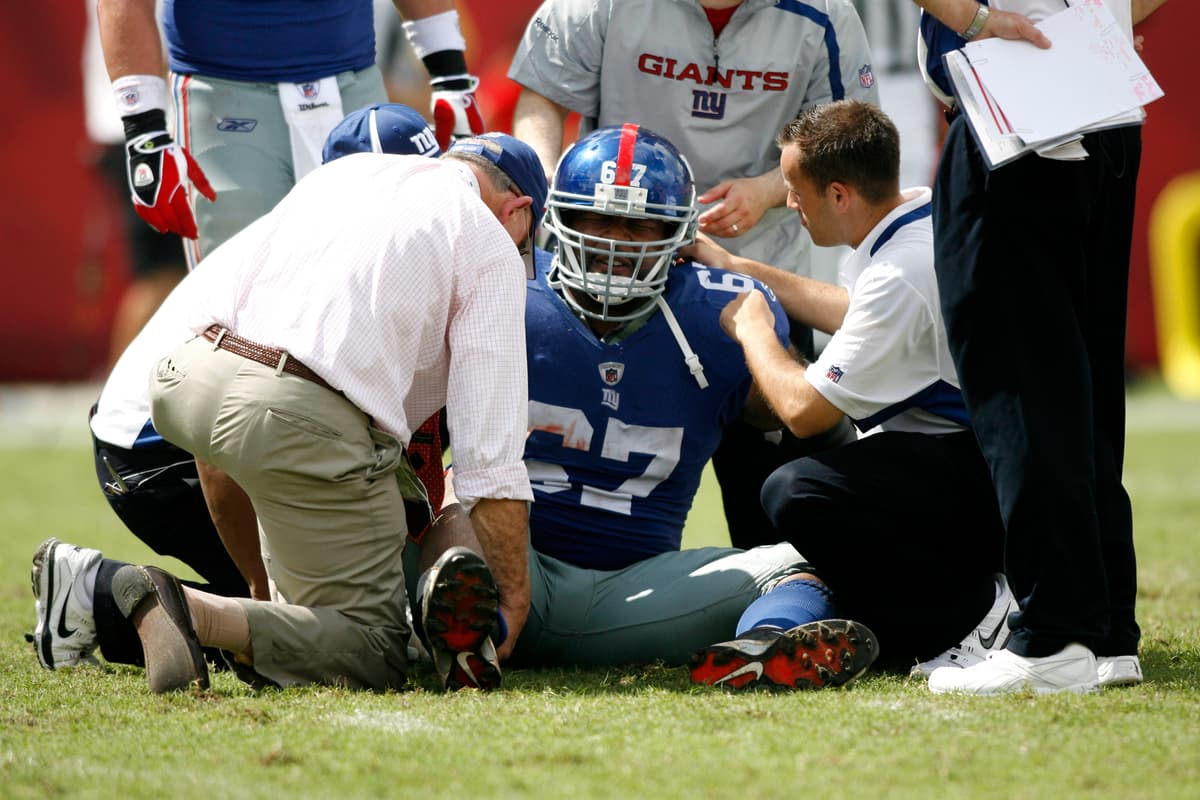
New York Giants tackle Kareem McKenzie is tended to by team trainers before being taken out of the game in the third quarter of an NFL football game September 27, 2009, at Tampa, Florida. AP/Brian Blanco

After winning the Super Bowl in 2011 with the New York Giants, Kareem McKenzie believed he was preparing for another NFL season protecting quarterbacks and opening running lanes. Instead, the veteran offensive lineman received unexpected news: the Giants weren’t re-signing him for 2012.

When no other teams expressed an interest, Mr. McKenzie’s 11-year career ended abruptly. Like many professional athletes, he was forced to confront a sobering question: What comes next?

For years, his identity, daily routine and purpose were defined by football. Now that structure was gone. The confusion about what to do next, and the physical toll of more than a decade playing such a physical sport can linger for years and ultimately develop into mental health issues if not something more serious.

It’s why Mr. McKenzie now holds a Doctorate in Counseling and Supervision and works in the mental health field. His journey from Super Bowl champion to counselor gives him a unique perspective on a troubling trend, highlighted by a recent Harvard University study released this week that showed suicide rates among former NFL players was 2.6 times higher than for the NBA and MLB between 2011 and 2019.

The Football Players Health Study at Harvard University tracked thousands of deaths among former players in the three leagues dating back to 1979 and logged 101 suicides.

While the suicides rate between the three leagues were similar and below the national average through 2010, the NFL began outdistancing their cohorts over the next decade in an alarming and unwanted category.

A two-time Super Bowl champion with the Giants, Mr. McKenzie isn’t surprised by the alarming results of the study published in the Journal of Neurotrauma.

“It’s not surprising given that when you do an in-depth study you can focus on specific areas of interest and the different factors that play into it,” he told the New York Sun. “You’re talking about an NFL player who has a goal and understands what that goal is each and every day, only to have that removed from them and they’re unemployed. How do they translate the skills they learned in the NFL to everyday life in the business world and find a career path they can find rewarding?”

The transition out of professional sports can be difficult and mentally taxing. Athletes spend their formative years singularly focused on training, performance, and competition. Few are prepared for the day when that career ends, often suddenly and without warning, the way it did for Mr. McKenzie.

“How many individuals in any career path are actively working towards finding some type of gainful employment outside of what they currently do?” he said. “Nobody prepares for the day when they don’t have a job.”

Rachel Grashow, a co-author of the study, said there are “multiple factors” contributing to the spike in the suicide rate of former NFL players. She pointed to a 2024 study that reported nearly a third of former NFL players suffered from sleep apnea, hypertension, low testosterone and depression. Some attributed their symptoms to chronic traumatic encephalopathy or CTE, a degenerative brain disease linked to repeated head trauma. Among the believed symptoms are thoughts of suicide.

“If CTE is so correlated with thoughts of self-harm, is that actually translating out into a change in the suicide rate that we see?” Ms. Grashow said.

Several high-profile former NFL players who died by suicide were later found to have CTE, including Junior Seau (2012), Dave Duerson (2012), Jovan Belcher (2012), Aaron Hernandez (2017), and Phillip Adams, who killed six people and then himself in 2021. CTE can only be confirmed posthumously, but a study by the Boston University CTE Center found that 91.7 percent of examined brains from 376 former NFL players showed signs of the disease.

While the connection between repeated head trauma and neurological damage is well established, Mr. McKenzie cautions against attributing every suicide among former football players solely to CTE. “You don’t know necessarily what someone is dealing with to where they felt it was a viable option to engage in self-injurious behavior,” he said.

In response to the Harvard study, the NFL Players Association issued a statement emphasizing player health remains “a paramount issue,” adding, “Our union offers a number of dedicated health resources to active and former players. We regularly encourage players to take advantage of these programs, along with maintaining check-ups with their personal healthcare providers, as part of a holistic approach to their physical and mental well-being.”

The NFL echoed that message, saying the study, “underscores the importance of resources the NFL and the NFLPA provide to former players, and we encourage former players to utilize these resources to identify and seek treatment when they are concerned about their health.”

The programs exist. The challenge is getting players to use them. “It can be difficult when you have a person who comes from the mindset of being a tough gridiron football player that’s mentally and physically tough,” Mr. McKenzie said. “It can be difficult because of ego for them to communicate that they need help.”


The New York Sun

© 2026 The New York Sun Company, LLC. All rights reserved.

Use of this site constitutes acceptance of our Terms of Use and Privacy Policy. The material on this site is protected by copyright law and may not be reproduced, distributed, transmitted, cached or otherwise used.

The New York Sun

Sign in or  create a free account

or
By continuing you agree to our Privacy Policy and Terms of Use