
How NIL’s Uneven System Opened College Hoops to Gambling Corruption

Vulnerable small school athletes are easy mark for sports betting fixers.
Mathieu Lewis-Rolland/Getty Images
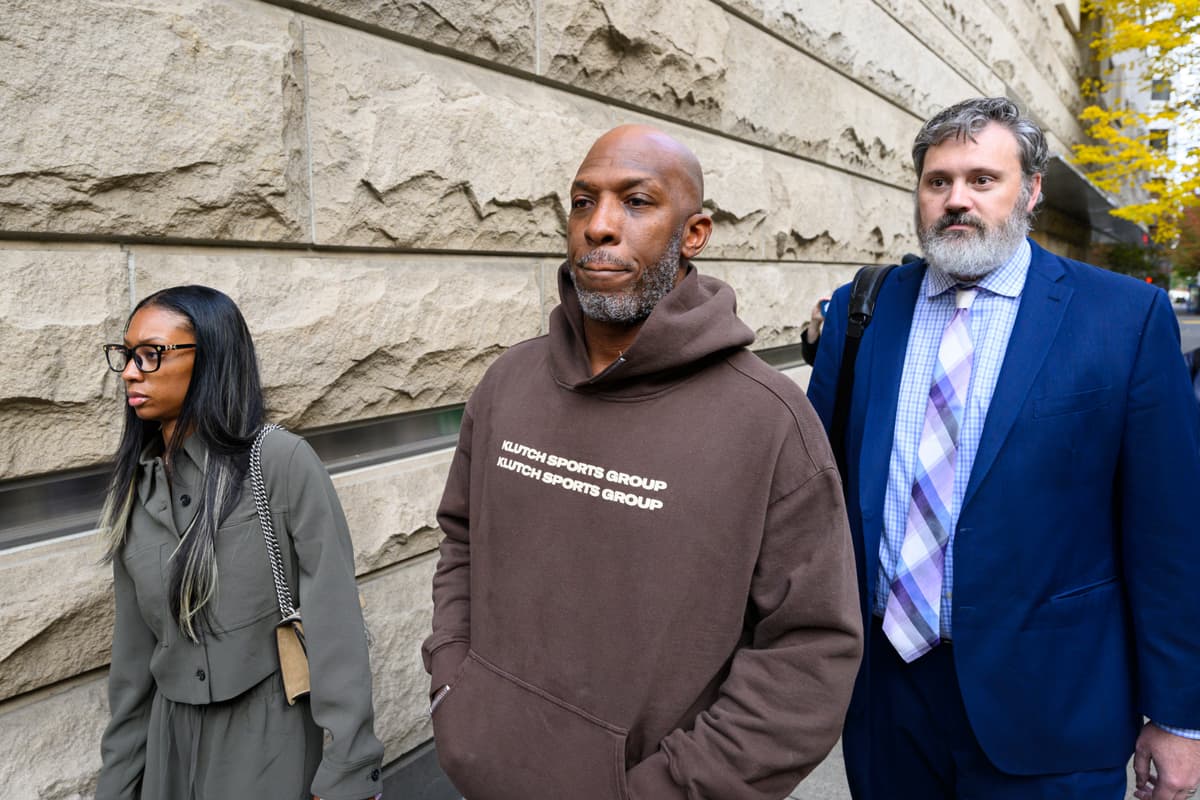
Portland Trailblazers head coach Chauncey Billups exits the Mark O. Hatfield United States Courthouse after his Portland arraignment on October 23, 2025. Mathieu Lewis-Rolland/Getty Images

The headlines were jarring but, in hindsight, perhaps inevitable.

Federal prosecutors last week unsealed sweeping indictments accusing 26 men — including former and current college basketball players, trainers, and professional gamblers — of orchestrating an international point-shaving conspiracy that allegedly fixed at least 29 games over two seasons.

This latest sports betting scandal is not just about crime. It exposes a vulnerability created by a college sports economy that now produces massive wealth for some athletes, institutions, and gambling operators — while leaving others envious of their financial gains.

The list of targeted schools — Nicholls State, La Salle, Fordham, Kennesaw State, Coppin State, Abilene Christian, Eastern Michigan, Alabama State, among others — reveals a pattern hiding in plain sight. Low profile games in small arenas involving players with menial or non-existent NIL deals are fertile ground for corruption.

Guardrails have never kept pace with the explosive growth in legalized sports betting and NIL compensation, especially in a sport like basketball where a single player’s decision can swing betting outcomes worth hundreds of thousands of dollars.

Prosecutors call this latest betting scandal, which spans from Chinese professional leagues to NCAA Division 1 games, “an extensive international criminal conspiracy.”

The question is whether anyone should be surprised.

NIL a New Class System?

Unlike an earlier gambling scandal in October that involved NBA head coach Chauncey Billups and former NBA players Terry Rozier and Damon Jones, this latest group of arrests were not well-known professional athletes or coaches.

Fixers targeted games at smaller universities, including Nicholls State, Tulane, Northwestern State, St. Louis, La Salle, Fordham, Buffalo, DePaul, Robert Morris, Southern Mississippi, North Carolina A&T, Kennesaw State, Coppin State, New Orleans, Abilene Christian, Eastern Michigan and Alabama State, according to the indictment.

The players in the alleged scheme tended to be lesser known or off-the-radar. Those charged include several former college basketball players: Alberto Laureano, 24; Arlando Arnold, 24; Simeon Cottle, 21; Kevin Cross, 25; Bradley Ezewiro, 23; Shawn Fulcher, 22; Carlos Hart, 23; Markeese Hastings, 25; Cedquavious Hunter, 22; Oumar Koureissi, 24; Da’Sean Nelson, 23; Demond Robinson, 25; Camian Shell, 23; Dyquavion Short, 20; Airion Simmons, 25; Jalen Terry, 24; Corey Hines, 23; Diante Smith, 25; Antonio Blakeney, 29; Isaiah Adams, 24; Micawber Etienne, 24; and Elijah Gray, 22. Trainers Jalen Smith, 30, and Roderick Winkler, 31, and “high-stakes sports gamblers” Marves Fairley, 40, and Shane Hennen, 40, were also named in the indictments. The suspects face charges include alleged bribery in sports, conspiracy to commit wire fraud, wire fraud and aiding and abetting.

The anonymity of the games and players allegedly targeted made gamblers more comfortable, believing they were safe from notice.

Prosecutors say gamblers paid bribes ranging from $10,000 to $30,000 per game to college players willing to shave points — underperforming just enough to influence betting spreads without necessarily losing the game outright.

For a star player at a high-profile program with a six-figure NIL portfolio, that offer might seem laughably small. But for a player at a low-profile school — someone who may never play professionally, who comes from modest means, and who receives little or no NIL income — $10,000 can feel life-changing.

NIL opened opportunities for many talented student athletes— but it also widened the gap between haves and have-nots. The indictment suggests fixers knew exactly where to look, players who felt overlooked, underpaid, and invisible.

Poor Athletes, Big Returns

Betting markets are heavily monitored by betting platforms and sports books. In a major televised game, betting irregularities attract attention quickly. Statistical anomalies are scrutinized. But in obscure matchups on weekday nights, small fluctuations in betting patterns or unusual performances can pass unnoticed.

Until they didn’t.

One of the most eye-opening data points in the indictment was a $247,000 bet placed on a La Salle–St. Bonaventure game in February 2024 — a staggering sum for a mid-major contest. Wagers of that size on inconsequential games can raise red flags.

Yet in dozens of other cases, significant wagers blended into the noise of modern legalized betting. With sports betting now legal in 40 states and the District of Columbia, billions of dollars move through online sports books every week. Algorithms flag suspicious activity — but the sheer volume creates cover.

Small programs have limited compliance staff. Their coaches and administrators often juggle multiple responsibilities. Integrity monitoring systems exist, but their reach is uneven. And in many of the smaller arenas, there is little media presence to question unusual on-court behavior.

Most of the players named in the indictment played NCAA Division 1 basketball and completed their eligibility in the past year or two. But a handful were still playing as of last week. Mr. Cottle is the leading scorer for Kennesaw State, averaging 20.2 points per game. He has been suspended from all team activities, according to the school.

Mr. Hart is averaging 13.1 points per game at Eastern Michigan and has been suspended from the team, according to a school statement. The alleged conduct happened before Mr. Hart arrived, and the school said it was not aware of the probe when it recruited him. Mr. Shell is on the roster of Delaware State and is also suspended as a result of the indictment.

Injuries slowed this season for Mr. Koureissi, limiting him to six games for Texas Southern. He’s been removed from the team, the school said. He played one season for Texas Southern.

It is no coincidence that the list of targeted schools reads like a map of college basketball’s middle and lower tiers. The scandal exposes an uncomfortable truth: the further a program sits from the spotlight, the more vulnerable it may be.

Power of One

Of all sports, basketball has long been considered uniquely susceptible to point shaving. The reasons are structural.

In football, a single player rarely controls the flow of a game enough to reliably alter outcomes without detection. In baseball, individual performance variance is expected and harder to manipulate precisely. In basketball, however, a single starter plays heavy minutes, touches the ball frequently, and can influence possessions repeatedly through missed shots, careless turnovers, or subtle defensive lapses.

The indictment provides striking examples. Players allegedly agreed to score below their normal averages, commit uncharacteristic fouls, or reduce effort at key moments — just enough to affect the final margin. The gamblers were not trying to decide winners and losers. They targeted point spreads, first-half lines, and prop bets — the fine-grain betting markets that now dominate sportsbook menus.

In one case, prosecutors say gamblers bet nearly $200,000 on a Chinese Basketball Association game after arranging for Antonio Blakeney — then a star player — to underperform. In another, college players allegedly received payments to influence first-half scoring margins in Atlantic 10 Conference games.

The indictment even captures text messages revealing the casual tone of the operation. After one player failed to sabotage his team enough to secure a betting win, he messaged a handler: “I tried.” The response: “You did your job for sure. There’s nine other players on the court.”

Wayne Jacobs, special agent in charge of the FBI’s Philadelphia office, delivered the government’s warning succinctly.

“The short-term gain will never be worth the long-term loss,” Mr. Jacobs said. “The consequences are real: federal criminal charges, permanent damage to careers and lasting harm to reputations.”

Yet for athletes who see little future in professional sports, the long-term calculation may not feel obvious at the moment.

Perfect Storm

The breadth of this case suggests something larger than a handful of bad actors. It suggests a system that created opportunities for exploitation.

NIL produces income for college athletes — but unevenly. Legalized sports betting created massive markets — but oversight struggles to keep pace. NCAA and universities formed partnerships with sportsbooks — but compliance frameworks are underdeveloped. And small-school athletes — ambitious, competitive, and financially uncertain — find themselves operating in the shadows of a booming industry built around their performances.

The result, prosecutors allege, was a coordinated network of gamblers, intermediaries, and athletes quietly manipulating outcomes in under-the-radar games for millions of dollars in wagers.

Whether this case represents an isolated conspiracy or the first exposure of a broader problem remains to be seen. Investigators hint that more inquiries are ongoing. Lawmakers are already calling for tighter regulation of prop betting and restrictions on gambling partnerships with college programs. NCAA leadership faces renewed scrutiny over whether it moved fast enough to address integrity risks.

But one thing is clear: the era of treating sports gambling and college athletics as parallel enterprises is over. They are now deeply intertwined — financially, culturally, and operationally.

Road Ahead

In the aftermath of the indictments, several schools have suspended players. Others have launched internal reviews. Compliance officers nationwide are revisiting monitoring systems. Coaches are being urged to educate athletes about gambling approaches and the permanence of federal criminal records.

Yet solutions will not be simple.

As long as betting markets exist on college games, incentives to manipulate outcomes will exist. As long as NIL income remains unevenly distributed, some athletes will remain more vulnerable than others. And as long as small-school programs operate outside heavy media coverage, anonymity will provide opportunity.

The scandal has pulled back the curtain on a part of college sports few fans ever see — the financial pressures, the off-court temptations, and the blurred boundaries between amateur competition and professional commerce.

It is a cautionary tale not just about integrity, but about unintended consequences. The college sports economy has never been more profitable. It has also never been more exposed.

When money, competition, and opportunity collide without sufficient guardrails, the outcome is rarely surprising.

The only surprise now is that it took this long for such a scandal to emerge.


The New York Sun

© 2026 The New York Sun Company, LLC. All rights reserved.

Use of this site constitutes acceptance of our Terms of Use and Privacy Policy. The material on this site is protected by copyright law and may not be reproduced, distributed, transmitted, cached or otherwise used.

The New York Sun

Sign in or  create a free account

or
By continuing you agree to our Privacy Policy and Terms of Use