


How To Check Clothes Quality

As garment quality has declined over the years, there are easy, accessible tips for checking quality before the checkout.
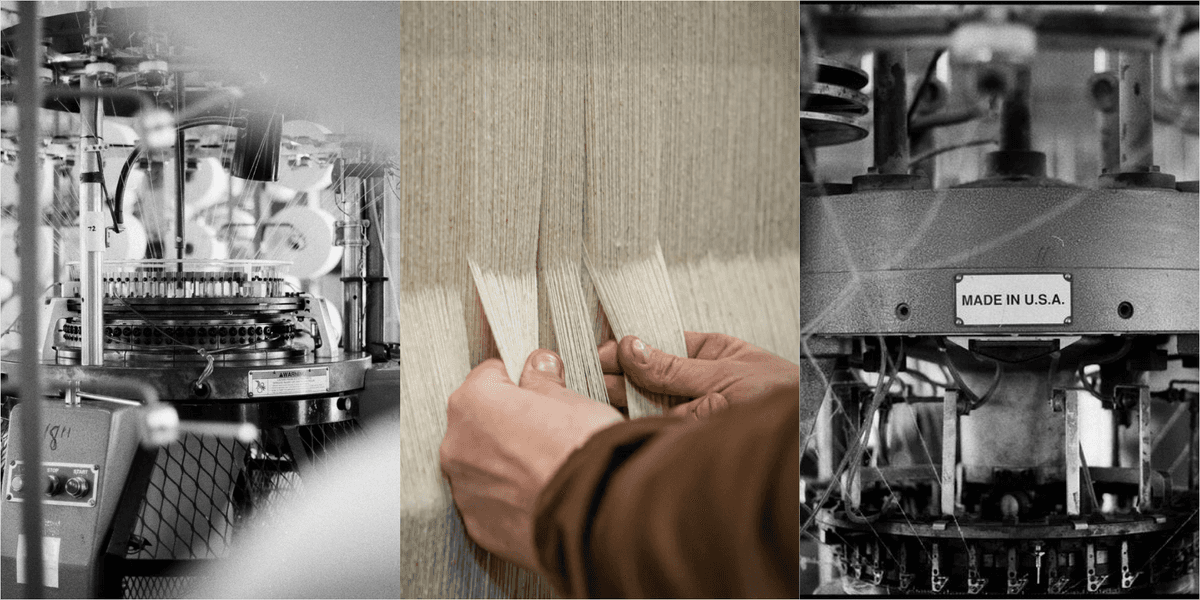
Courtesy of Buck Mason
Buck Mason Production Photos. Courtesy of Buck Mason

There have never been more clothing brands available to purchase from than now, selling all sorts of items, in every style, at all price points. The other day, as I flicked through Instagram Reels, I saw a woman wearing an $11,000 fur jacket from Phoebe Philo; only for the following video to show a different woman wearing a knock-off of that same jacket, which she bought on Shein for about $3.

However, despite the diversity, the quality hasn’t increased. On average, Americans are buying 5 times as many clothes items a year as they did in the 1980s, but spending less than half of what they did for them; and the market has responded accordingly, putting low costs and high trendiness over construction quality.

But you don’t need to know how to sew to check for quality, and I recommend all the following tips for shopping for clothes in person. And, even if you don’t use these tips, you should shop in person. Sizing is inconsistent across brands, photos can be deceptive, and you can’t understand the feel of the fabric from an image. Shopping offline solves for all these.

The core point to remember is that the quality of a garment comes down to how long it lasts between washes, and how many washes the item lasts. The former is dictated by the quality of the material; the latter, by the quality of the garments construction.

When looking for material quality, the easiest step is to check the label and see how much of the item is made from natural fiber. Sometimes, an item can’t be made from natural fibers — such as the pleats from Issey Miyake. But if it looks like a cotton T-shirt, it should be 100% cotton, not a poly-blend.

Not all polyester is made equal, and some formulations are better than others. But all are plastic, and therefore not hydrophilic — water absorbing — nor naturally antimicrobial, as wool is. If you wear a polyester item against your skin all day, you will feel sweatier at the end of it, and the item will smell faster; it will also just react worse in the wash. Sometimes blends aren’t bad — a small percentage of elastane in denim can increase wearability during a weight-loss or gain period — and a polyester outer layer is fine as it’s not touching your skin. But, if you’re buying trousers, shirts, sweaters, dresses, or other skin-touching items, aim for the highest possible percentage of natural fibers.

What fiber should make sense for the weather. Buy cotton and linen in summer or for loose garments; buy wool and tight weaves for winter. Cashmere is an option, but unless a piece of knitwear costs more than $500, you should always go for wool instead. Cheap cashmere ages poorly, and quality wool is as soft and insulating.

Course, scratchy wool is from the outside of the sheep, where it needs to be hardy, and this wool is cheaper; but better wool, from closer to the sheep’s skin, is soft and comfortable. If you’re happy spending top dollar for cashmere, you will be rewarded with the lightest, silkiest knitwear possible, but most shoppers should go for wool instead.

This durability of natural fabrics usually comes down to fiber length, which is a core part of the durability of a natural fabric. Short-fiber cotton, for example, is cheaper but has more fiber ends, which will knot together through friction. This is why your clothes can pill or produce lint. Longer fiber fabrics won’t pill as severely, and you can search for long-fiber cotton t-shirts, for instance.

An easy in-store check is to rub a small bit of the garment against itself and see what happens. If a few seconds of rubbing in the store can make it pill, then so too will your daily life, and you shouldn’t buy it.

It’s worth noting, however, that though long-fiber cotton is softer, simply feeling a soft cotton doesn’t mean it’s of higher quality. Brands will now essentially use pre-damaged fabric in their clothes, particularly on the inside, giving it a fluffier feel in-store but with lower durability.

If you’re checking a woven fabric, look for the tightness and evenness of the weave. Not only does this look better, but a tighter weave prevents plucking and holds in more heat. Linen is a deliberately looser weave, but it still should be consistent, with no mistakes or irregularities.

On construction quality, the main elements to pay attention to are seams and stitches. Namely; is the stitching short, consistent, and straight? If it’s not, then don’t buy it. The short stitching is a particular focus as longer stitches make for weaker seams and increase the chance of snagging. Ultimately, aim for items with stitches of about 1mm in length or shorter; if it’s 3mm or more, don’t buy it. Also, if an item has too many loose threads, don’t buy it. Having one or two is fine, but multiple loose threads — particularly long ones — is a sign of poor construction.

If you’re looking to spend good money on a more expensive item, check for how the edges of the garment are finished, and look particularly for overlocked stitches. This fast machine finish is cheap but holds poorly and provides ample opportunity for snagging, which can be particularly bad if there is no other supporting stitch for that piece. Instead, expensive items should use binding (where another piece of fabric is sewn over the raw edges), flat felling (where the raw edge is folded inside itself and then stitched down), or French seaming (where the seam is sewn twice, once inside, once out).

The easiest way to check these elements is to look at the inside of the garment; if the inside doesn’t look as neat as the outside, it’s a sign of poor work, too.

Along with regular stitches, seams are a crucial part to check. The easiest way to do this is to hold the garment up to the light and gently pull apart the fabric on each side of the seam. If the piece is constructed well, in such a way that it will last years of daily use and washing, then it should be tight and unmoving; but if light comes through, then that’s a sign of real structural weakness. When checking seams, you should also consider seam allowances; in other words, the excess fabric folded back from the seam. A well-made item will have a fair amount of fabric left in reserve, allowing a tailor to adjust the item to fit your body.

Finally, you can check the hardware of a piece; the quality of its buttons and zips. If the button holes have fraying threads on the edge or are finished with a simple zig-zag stitch, they will not last daily use. Similarly, if a zip is stiff in the store, it won’t get better in daily life.

Beyond checking to see if a quality manufacturer made the zipper — most notably, YKK from Japan or Riri from Switzerland — check the width of the zipper teeth. If that metal is less than 5mm wide, it will not be able to take strain, and only buy items with zips like this on light summer items. Look for zips between 6mm and 10mm wide, and don’t buy items with those tiny invisible zips.

These zips are usually at tension-bearing places but are necessarily slim and made from plastic, meaning they break easily and frequently. If you’re happy to repair that, go ahead, but I’m not, so I wouldn’t buy these items. Similarly, only buy zipped-up boots that have the chunkiest, toughest zips.


The New York Sun

© 2025 The New York Sun Company, LLC. All rights reserved.

Use of this site constitutes acceptance of our Terms of Use and Privacy Policy. The material on this site is protected by copyright law and may not be reproduced, distributed, transmitted, cached or otherwise used.

The New York Sun

Sign in or  create a free account

or
By continuing you agree to our Privacy Policy and Terms of Use