‘I Am a Prisoner of War’: Maduro Says He Was Kidnapped as He Pleads Not Guilty in First Manhattan Court Appearance
Ms. Maduro’s attorney claims his client was injured during her capture and that she has a fractured rib.
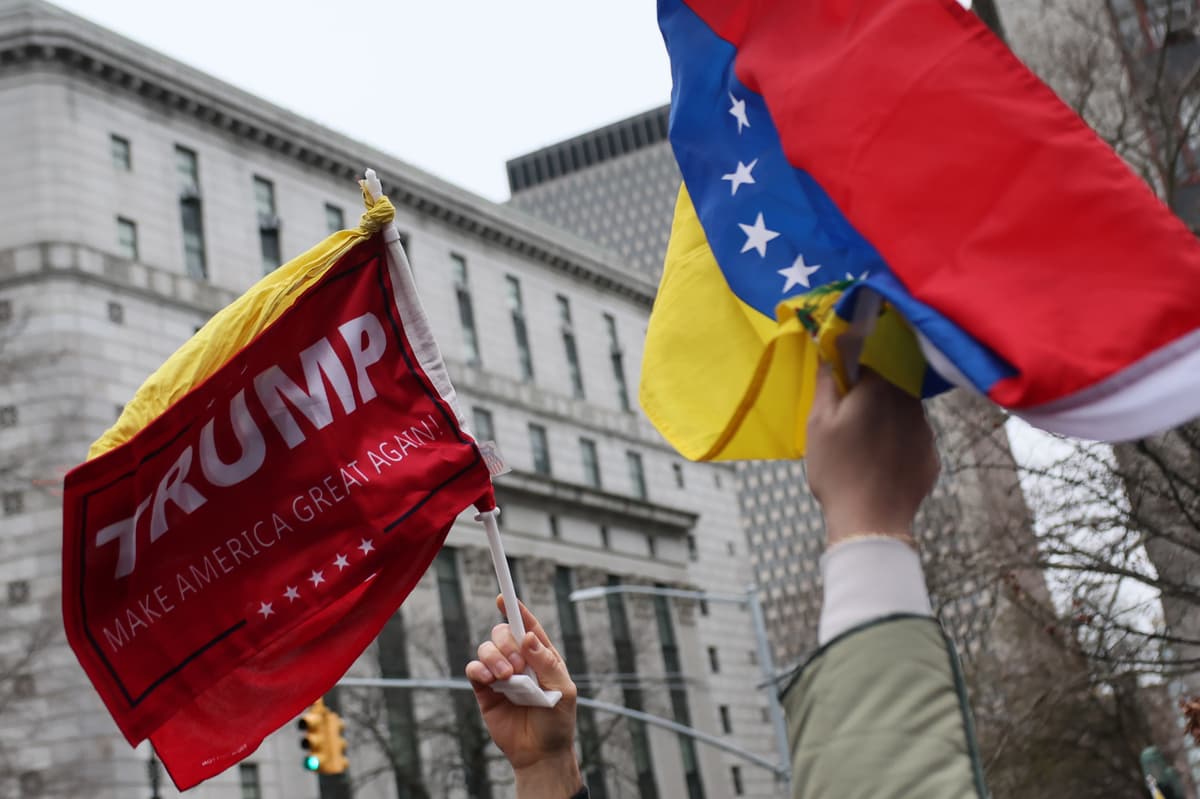

The deposed president of Venezuela, Nicolás Maduro, and his wife, Cilia Adele Flores de Maduro, were arraigned at a federal Manhattan courthouse on Monday. Both defendants pleaded not guilty to “narco- terrorism” and weapons-related charges. The couple did not make a bail application yet, and were returned to Metropolitan Detention Center, Brooklyn, where they have been incarcerated since they arrived in the country. Their next court date is scheduled for March 17.
The presiding district judge, Alvin Hellerstein, said it was his job to ensure a fair trial. “That’s my job and that’s my intent,” Judge Hellerstein said.
He then asked Mr. Maduro to identify himself.
“I am Nicolas Maduro Moros… I have been kidnapped… I am a prisoner of war… I was captured in my home,” Mr. Maduro answered, speaking through a translator.
The judge cut him off, saying, “There is a time and place for all of this. At this point, I only want to know, are you, Nicolas Maduro Moros?”
The judge explained to him his rights and then he arraigned him. Mr. Maduro pleaded not guilty.
“I am innocent. I am a decent man,” Mr. Maduro said through a translator. “I am the president of my country.”
Maduro waived the right to hear the indictment read out loud and said he would prefer to read it himself.
Mr. Nicolas’ attorney is Barry Joel Pollack, who previously represented Julian Assange. Mr. Pollack told the judge that “there are issues of the legality of his abduction.”
He asked the judge not to make a motion schedule yet until these issues would be addressed and resolved.
When asked if she was Celia Flores de Maduro, she answered through a translator, like her husband, “I am the first lady of the Republic of Venezuela.”
“I am not guilty. I am completely innocent,” she said.
Mr. Pollack also raised health and medical issues for both members of the couple that must be addressed. According to her lawyer, Mark Donnelly, she sustained significant injuries when she was seized. She claimed to have a fracture on her ribs and is demanding a full X-ray.
The couple was seized by United States Special Operations forces at their residence within Fuerte Tiuna, a sprawling and heavily fortified military complex in central Caracas, the capital of Venezuela in the early morning hours of January 3 and flown from an American assault ship off the Venezuela coast to New York, where they arrived Saturday afternoon, and after having been processed at the Drug Enforcement Agency in Manhattan, were driven to the same hulking detention center, where Luigi Mangione, the alleged CEO-killer, is also incarcerated as he awaits trial.
Mr. Maduro, 63, wore a short sleeve navy V-neck shirt over orange jail garb. He was also wearing earphones, for translation. Ms. Flores, 69 wore a similar outfit and sat two seats away from her husband.
Judge Hellerstein read the charges of the newly unsealed four-count indictment to the two defendants.
The prosecution is led by Jay Clayton, who was appointed the United States attorney for the Southern District of New York in April 2025, along with prosecutors from the National Security and International Narcotics Unit.
Federal prosecutors accuse Mr. Maduro, his wife, and Mr. Maduro’s son from a prior marriage, Nicolas Maduro Guerra, as well as two government officials and the head of the drug trafficking gang Tren de Aragua of being involved in decades-long operations that sent large quantities of cocaine to the United States to enrich themselves. The only defendants present in the courtroom on Monday were Mr. Maduro and Ms. Flores. The other defendants are still at large.
“For over 25 years, leaders of Venezuela have abused their positions of public trust and corrupted once-legitimate institutions to import tons of cocaine into the United States,” the indictment alleges.
“As Venezuela’s President and now de facto ruler,” the indictment goes on, Mr. Maduro “is at the forefront of that corruption,” which he allowed “to flourish for his own benefit, for the benefit of members of his ruling regime, and for the benefit of his family members.”
Mr. Maduro faces four counts, narco-terrorism conspiracy, cocaine importation conspiracy, possession of machine guns and destructive devices, and conspiracy to possess machine guns and destructive devices. His wife faces the same charges, except for the narco-terrorism conspiracy count.
Judge Hellerstein, 92, who was appointed to the bench by President Bill Clinton in 1998, has been presiding over the case against Mr. Maduro since it was first brought by prosecutors at the Southern District in 2020 under President Trump’s first administration.
One of the assistant U.S. attorneys, who handled that prosecution was Emil Bove III, then the co-chair of the office of terrorism and international narcotics unit. Mr. Bove resigned in 2021 and later joined President Trump’s defense team in his New York criminal trial. Mr. Bove was appointed to the federal bench last year.
The superseding indictment against Mr. Maduro and his co-conspirators was filed under seal in December 2025. On Saturday, Attorney General Pam Bondi unsealed and published it on social media. It builds largely on the original charges, adding the weapon-related counts, and new details involving government positions Mr. Maduro allegedly abused to facilitate drug trafficking prior to his presidency.
Perhaps the most significant differences between the two indictments are the co-conspirators. The first indictment listed six defendants, only two of which have remained: Mr. Maduro and the current Minister of Interior, Justice and Peace, Diosdado Cabello Rondon, 62, who is also an active member of the Venezuelan armed forces, and previously served as the chief of staff under the former Venezuelan president Hugo Chavez.
The four new defendants are Mr. Maduro’s wife, Mr. Maduro’s adult son from a prior marriage, Mr. Maduro Guerra, 35, who is also known by his nickname “The Prince,” as well as the retired naval officer and Venezuelan politician Ramon Rodriguez Chacin, 74, who served as the Minister of Interior, Justice and Peace, in 2002 and again in 2008, and who was part of the first coup attempt by Mr. Chavez in 1992, the future dictator, who died in 2013.
Last but not least, the superseding indictment names the leader of the notorious Tren de Aragua drug trafficking gang, Hector Rusthenford Guerrero Flores, 42, who was indicted on separate charges in December, and who remains at large. The State Department has offered $5 million for information leading to his arrest.
The indictment does not allege that Mr. Maduro directly engaged with Mr. Guerrero Flores. Instead prosecutors accuse “members of the regime” of having facilitated drug transports he was involved in, such as helping “to protect… cocaine shipments… that were transported” from Venezuela to other countries “for eventual distribution to the United States,” the indictment states.
Other allegations include an offer from Mr. Guerrero Flores to “an individual he understood to be working with the Venezuelan regime” to “provide escort services for drug loads” and “handle the logistics of every aspect of the drug trade, including the use of storage compartments…”
In February 2025, the United States formally designated the criminal organization Tren de Aragua (TdA) as a Foreign Terrorist Organization. If prosecutors can convince a jury that the Venezuelan regime was in fact colluding with the Tren de Aragua leader, they would prove allegations made by the White House that Mr. Maduro was connected to “narco-terrorists,” a claim he and his government have vehemently denied.
Narco-terrorism is a term coined in South America in the 1980s to describe the operations of drug dealers who seek to influence governments or societies with violence or intimidation.
Prosecutors further accuse Mr. Maduro and his co-conspirators of having “partnered with some of the most violent and prolific drug traffickers and narco-terrorists in the world.” They listed four main criminal organizations: The Columbian Fuerzas Armadas Revolucionarias (FARC) and Ejercito de Liberación Nacional (ELN), “which control cocaine production in the mountainous regions of Colombia;” the Mexican Sinaloa Cartel and the Zetas, “which control routes in Central America and the methods for crossing cocaine from Mexico into the United States; and TdA, which controls a criminal network able to assist with the transportation of cocaine within Venezuela and on the Venezuelan coast.”
Mr. Maduro, “like former President Chavez before him,” the indictment alleges, “participates in, perpetuates, and protects a culture of corruption in which powerful Venezuelan elites enrich themselves through drug trafficking and the protection of their partner drug traffickers.”
For example, while Mr. Maduro was the acting Minister of Foreign Affairs, between 2006 and 2008, he allegedly “sold Venezuelan diplomatic passports” to drug traffickers and “facilitated the movement of private planes under diplomatic cover…” the indictment states.
Ms. Flores, the deposed First Lady, a Venezuelan lawyer and politician, who was the first woman to serve as president of the National Assembly (2006–2011) and served as the Attorney General of Venezuela from 2012 until the presidential election of her husband in 2013, is alleged to have “accepted hundreds of thousands of dollars in bribes to broker a meeting between a large-scale drug trafficker and the director of Venezuela’s National Anti-Drug Office,” prosecutors wrote.
The couple is further accused of having “ordered kidnappings, beatings, and murders against those who owed them drug money or otherwise undermined their drug trafficking operation, including ordering the murder of a local drug boss in Caracas, Venezuela.”
Meanwhile, Mr. Maduro’s son, Mr. Maduro Guerra, 35, is accused of making numerous trips on a plane, “owned by Venezuela’s state oil company, Petroleos de Venezuela, S.A., “to Margarita Island, an island in the Caribbean Sea north of the mainland, which upon its return was loaded with “large packages wrapped in tape that the captain understood were drugs,” the indictment alleges.
The son is further accused of having been involved in an alleged shipment of “hundreds of kilograms of cocaine from Venezuela to Miami, Florida.” According to prosecutors, Mr. Maduro Guerra “spoke with his drug trafficking partners about… shipping low-quality cocaine to New York because it could not be sold in Miami, arranging a 500-kilogram shipment of cocaine to be unloaded from a cargo container near Miami, and using scrap metal containers to smuggle cocaine into the ports of New York.”
Mr. Maduro Guerra is currently at large with reports indicating the U.S. is conducting a massive manhunt for him.
If convicted on all counts, Mr. Maduro could face the death penalty.