
If Only the Investment Geniuses in Congress Would Turn Their Acumen to America’s Policy Challenges
The public shouldn’t have to worry that their representative is voting based on what’s good for a stock portfolio instead of what’s good for the nation.
With the geniuses we have in Congress, no problem should be too tough to solve, whether it’s inflation, health care costs, war or disease.
Ten members ended 2025 with stock market returns far exceeding the S&P, the Dow, the Nasdaq or what legendary stock pickers like Warren Buffet achieve. Representative Tim Moore, Republican of North Carolina, earned 52 percent on his stock portfolio.
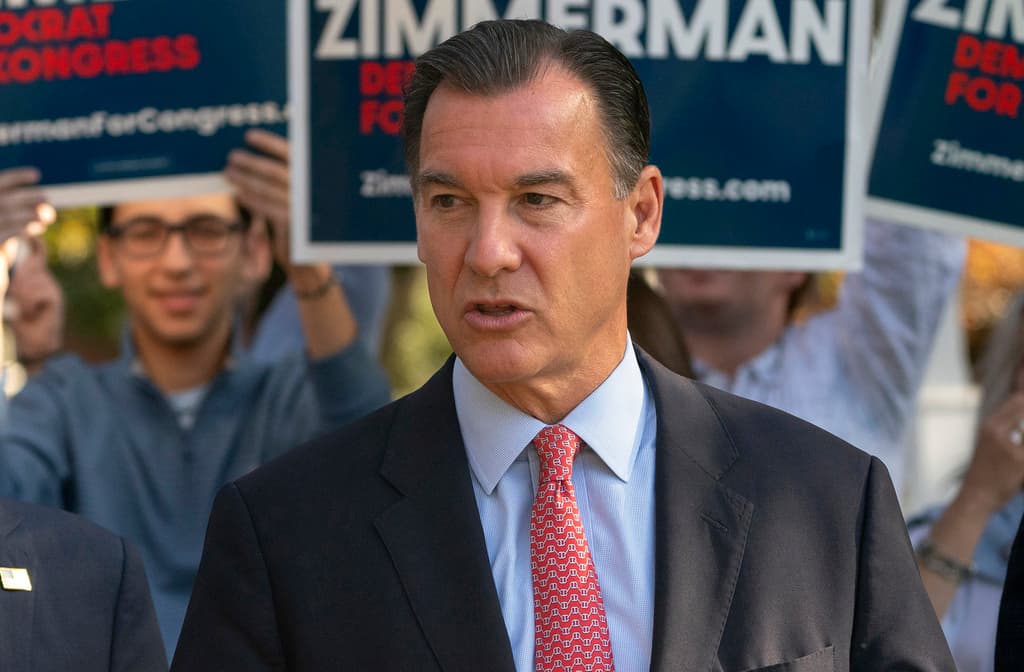
New York’s Tom Suozzi, a Democrat representing parts of Queens and the Long Island “gold coast,” scored a 35 percent gain. Representative Marjorie Taylor Greene is closing out her Congressional career with a staggering 33 percent stock profit for 2025.
Unfortunately it’s not genius on display. It’s sleaze. These lawmakers have information and influence other stock traders don’t have. Lawmakers know when a bill will be voted on or a regulation adopted, and they have the clout to influence the timing.
That common-sense observation is now backed up by a study of 20 years’ worth of congressional stock trading data published by the National Bureau of Economic Research.
The study also shows that, generally, lawmakers with the most seniority and leadership roles outperform rank-and file-members. Speaker Nancy Pelosi raked in 54 percent in 2024, beating every hedge fund, but only scored an 18 percent gain in 2025, when she was out of the leadership and in the minority.
The exception this year is Mr. Moore, a freshman member. Yet he’s in the catbird seat, sitting on several key subcommittees of the Committee on Financial Services. This top stock picker’s maneuvers are tracked by an ever-growing social media audience.
Historically, members in the majority make the highest gains. The top four stock pickers for 2025 are all Republicans.
It’s about access to information and the ability to control the timing of events for personal profit.
Information about what members are trading is so valuable that there are websites like Quiver Quantitative devoted entirely to reporting daily on lawmakers’ positions and trades.
If you’re sickened by this, it gets worse. “Some members seemed to spend more time managing their portfolios than they did at their day job on Capitol Hill,” said Quiver Quantitative’s cofounder, Christopher Kardatzke.
Senator Richard Blumenthal, Democrat of Connecticut, took the top spot in 2025 for trading volume — $79.83 million — making 406 trades, according to the watchdog website Common Cause.
That’s more than two trades a day for each day Congress was in session. Who has time to read legislation or look out for constituents?
About half of Congress — both Democrats and Republicans — trades stock. Yet in the past, there has been no will to discipline the stock traders and stop the shenanigans. It’s like a gentleman’s agreement to hide the dirty laundry.
The Stop Trading on Congressional Knowledge Act of 2012 bars members and their families from using nonpublic information to make gains.
It’s a laugh, though. The reporting requirements are frequently ignored by members who, when caught, face a wrist-slap penalty of $200. Inconsequential to someone making millions on trading.
Mr. Suozzi, who has amassed a fortune during his terms in Congress since 2016, ended this year with a $9.5 million stock portfolio, up $2.5 million for the year.
He has often brushed off his failures to report per the Stock Act, claiming “some of the formalities” of the law “are not necessarily something I make a priority of.”
No member has ever been prosecuted for violating the prohibition on insider trading, a crime that’s tricky to prove.
The result is that unsavory trading is on full display. Representative Rob Bresnahan, Republican of Pennsylvania, was skewered in the press for selling thousands of dollars’ worth of stock in companies that manage Medicaid enrollees a week before voting for a bill that slashed Medicaid funding.
It’s time for a total ban on stock trading by members of Congress. Some 86 percent of Americans support it, including 88 percent of Democrats, 87 percent of Republicans, and 81 percent of independents, according to a 2023 University of Maryland poll.
The public shouldn’t have to worry that their representative is voting based on what’s good for a stock portfolio instead of what’s good for the nation.
The House is expected to take up legislation for a total ban on stock trading by members and their families. It would have real teeth, including compelling violators to disgorge all profits to the Treasury and pay fines up to 10 percent of the value of the prohibited investments.
The push is making for strange bedfellows: in the House, Representative Chip Roy, a Texas Republican, and Representative Alexandria Ocasio-Cortez, Democrat of New York, and in the upper chamber, by Senators Jon Ossoff, Democrat of Georgia, and Josh Hawley, a Missouri Republican.
Just before Congress adjourned for Christmas, Representative Steve Scalise, a Louisiana Republican, said, “We want to get that done.”
Even Mr. Suozzi claims to support the ban, his press representative, Matt Fried, told the New York Post. Mr. Suozzi and other profiteers shouldn’t need a legal ban, though.
A law isn’t necessary to do the right thing. It just takes honor. Half of Congress is already eschewing stock trading. Time for the rest to do the same.
Creators.com