Is President Trump’s ‘Donroe Doctrine’ Judicious?

Denying subsidized Venezuelan oil to Beijing and crippling Moscow’s petroleum-dependent economy could have global ripple effects beyond the immediate region.
Via X
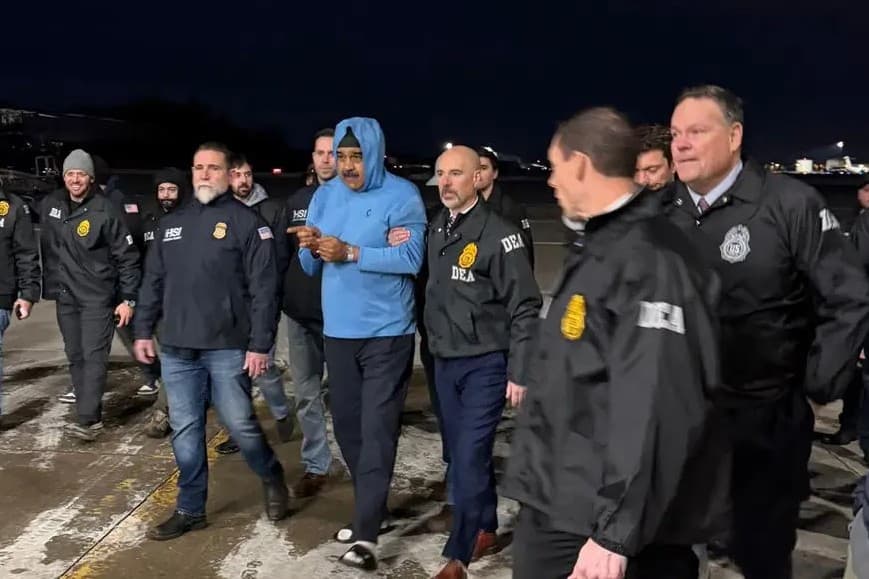
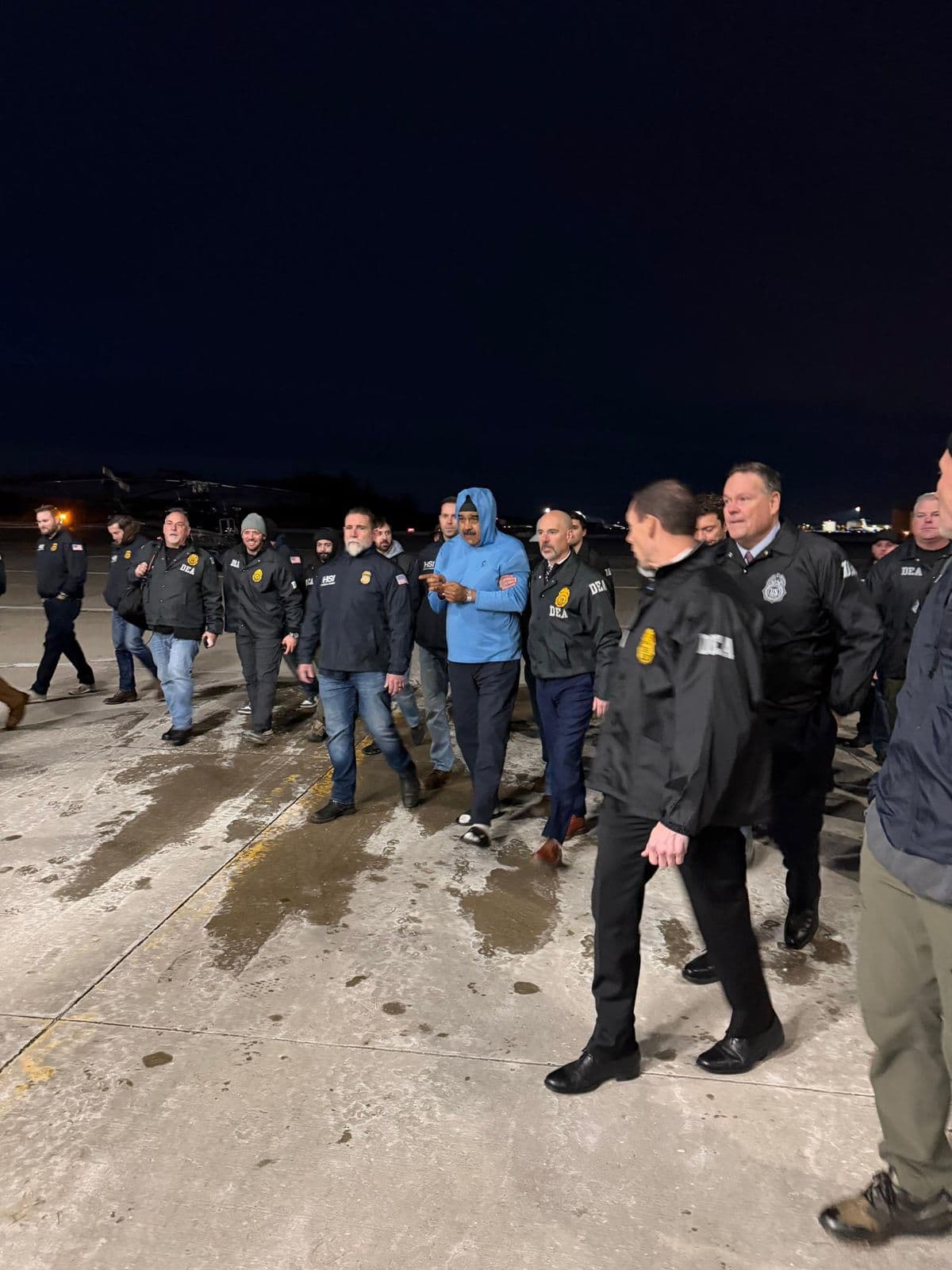
President Nicolás Maduro of Venezuela arrives on American soil to stand trial on drug and weapons-related charges. Via X

President Trump’s critics are likely to scoff at the use of a word that even top MAGA acolytes would do a double take over. Can global adventures in Iran, Europe, and Venezuela, add up to a “judicious” foreign policy?

“We are going to run the country until such time as we can do a safe, proper and judicious transition,” Mr. Trump told reporters on Saturday, following the extraction from Venezuela of its dictator, Nicolas Maduro. To sharpen the point, Mr. Trump strayed from his prepared notes, adding, “it has to be judicious, because that’s what we’re all about.”

The word “judicious” is defined by Merriam Webster as “having, exercising, or characterized by sound judgment.” Democrats in Congress argue that if there is any rhyme or reason at all to Mr. Trump’s haphazard national security policies, they are guided by other than judgment, let alone a sound one. Is he simply all over the place? 

Speaking to reporters on Air Force One Sunday, the president expanded on his “Donroe Doctrine” version of the Monroe Doctrine. In addition to Venezuela he indicated that anti-American regimes  in Colombia, Cuba, and Nicaragua, should be concerned, adding, “you have to do something about Mexico.” 

To European horrors he also said “We need Greenland from the standpoint of national security.” He dismissed its current owner, Denmark. It merely “added one more dog sled,” Mr. Trump said, to defend the world’s largest island from Communist China, Russia and other adversaries. 

“Trump’s foreign policy — the Middle East, Russia, Venezuela — is fundamentally corrupt,” Senator Chris Murphy says. “The invasion of Venezuela has nothing to do with American security. Venezuela is not a security threat to the U.S.. This is about making Trump’s oil industry and Wall Street friends rich.”

Standing next to Mr. Trump on Air Force One on Sunday, Senator Lindsey Graham retorted, “He’s going to clear our backyard of a drug caliphate, countries run by narcoterrorist dictators who murder, rape, send drugs into our country to kill thousands of our citizens. To my Democratic friends, you should be celebrating this.”

Another debate that might arise is whether Mr. Trump’s operations in Venezuela, Iran, and elsewhere are targeting the low-hanging fruit. America’s top challenges, Russia’s aggression in Europe and Communist China’s escalation around Taiwan, are yet to be addressed, some in Washington claim.     

There’s a world beyond Washington

Political sniping aside, Operation Absolute Resolve seems to have instilled fear in America’s world adversaries. “The Trump Doctrine is simple: Clear warnings followed through with decisive and deadly action to protect the American people and advance American interests,” the chief executive of the Foundation for Defense of Democracies, Mark Dubowitz, tells the Sun. 

The Islamic Republic’s supreme leader, Ali Khamanei, for one, is facing a growing nation-wide revolt. “Maduro and Khamenei had been given every chance to negotiate but they stuck to their old playbook of defiance — dismissing Trump as full of sound and fury but ultimately about nothing,” Mr. Dubowitz says. “If the capture of Maduro is prologue, Khamenei and his stormtroopers may want to start packing for Moscow.”

Mr. Trump’s admonition of the Tehran regime to avoid killing protesters is “unprecedented,” an Iran watcher at Israel’s Institute for National Security Studies, Beni Sabti, tells the Sun. “It gives the protesters psychological fuel,” even as the regime seems to fear repeating past forms of violent repression. 

Such calculations, though, can change if Mr. Trump fails to follow through on his threats, Mr. Sabti says. “The regime can contain two or three weeks of protest,” he says. “If it lasts for a month or longer, that would be a huge achievement” for the protesters.

Meanwhile, striking the Islamic Republic of Iran’s nuclear facilities in coordination with Israel back in June forces Mr. Khamanei to take Mr. Trump’s threats seriously. The 12-day war would have been considered ill-advised by several recent presidents. 

Are they scared yet? 

In addition to joining Israel in striking Iran, Mr. Trump constantly threatens tariffs on countries that defy him. Allies and even some adversaries, as a result, are careful to avoid overt condemnation of his moves, even when they are perceived as injudicious. Arab and Muslim countries threw their weight behind his Gaza cease-fire plan, even though it carefully avoided harming Israel’s interests.

Mr. Maduro’s allies at Moscow, Beijing, Tehran, and the United Nations headquarters, cry violations of “international law” and of the UN Charter. Yet even European countries that normally would have deemed the weekend action injudicious are careful to avoid Mr. Trump’s ire, and tiptoe around the subject. 

Answering allegations of lawlessness at home and abroad, the American UN ambassador, Mike Waltz, told the Security Council on Monday that the region is now better and safer, adding, “millions of Venezuelans that have fled this brutal regime are celebrating and cheering around the world as this body pontificates.”  

What’s Next for Venezuela?

Mr. Trump’s critics are appalled that his plans fail to frame his day-after goals around the restoration of democracy. Ears perked up when the president on Saturday dismissed the Peace Nobelist Maria Corina Machado as having no sufficient following in the country, even as the opposition she leads won a 2024 election in a landslide.   

The Washington Post even contends that Mr. Trump’s remark on Ms. Machado was driven by the Nobel committee decision to prefer her to him for the prize. Reality could be more complex. Members of the president’s inner circle have concluded that in a country where backing of the army can be decisive, the opposition has failed so far to secure alliances with top generals. 

Mr. Trump seems to prefer, at least initially, Mr. Maduro’s deputy, Delcy Rodriguez, as acting president. Can he place her, though, under a short leash and threats of removal if she fails to do America’s bidding. Democracy might arrive later on. There will be no de-baathification, they vow, and America will not follow the Iraq war script. 

Secretary Marco Rubio told CBS on Sunday that he has had many conversations with Ms. Machado, which he said he admires. Yet “a lot of people analyze everything that happens in foreign policy through the lens of what happened from 2001 to 2015 or 16,” he adds. “The whole foreign policy apparatus thinks everything is Libya, everything is Iraq, everything is Afghanistan. This is not the Middle East, and our mission here is very different.”

With its potential of producing more than 300 billion barrels, it could benefit the Venezuelan economy and enrich American oil companies. Blocking illicit exports to Communist China and Cuba could also set back American adversaries. Making a bold move in the hemisphere could reverberate round the world. 

It was a different world back in 1823, when Secretary of State John Quincy Adams introduced a policy of denying Europeans dominance in the hemisphere, known now as the Monroe Doctrine.

Echoing Adams, Mr. Rubio told ABC that “we’ll set the conditions so that we no longer have in our hemisphere a Venezuela that’s the crossroads for many of our adversaries around the world, including Iran and Hizbollah.” 

Mr. Trump’s Donroe version seems chaotic, but it might prove judicious. It aims to deny subsidized Venezuelan oil to Beijing and therefore have significant global ripple effects beyond the immediate region. As America tightens control over global energy markets, too, Moscow’s oil-dependent economy might weaken along with its ability to threaten Europe. 


The New York Sun

© 2026 The New York Sun Company, LLC. All rights reserved.

Use of this site constitutes acceptance of our Terms of Use and Privacy Policy. The material on this site is protected by copyright law and may not be reproduced, distributed, transmitted, cached or otherwise used.

The New York Sun

Sign in or  create a free account

or
By continuing you agree to our Privacy Policy and Terms of Use