
Japan’s Prime Minister, Three Months on the Job, Takes a Chance on a Snap Election To Solidify Her Rule
It’s a ‘risky but potentially rewarding gamble’ for the conservative Sanae Takaichi to strengthen her position with the Liberal-Democratic Party.
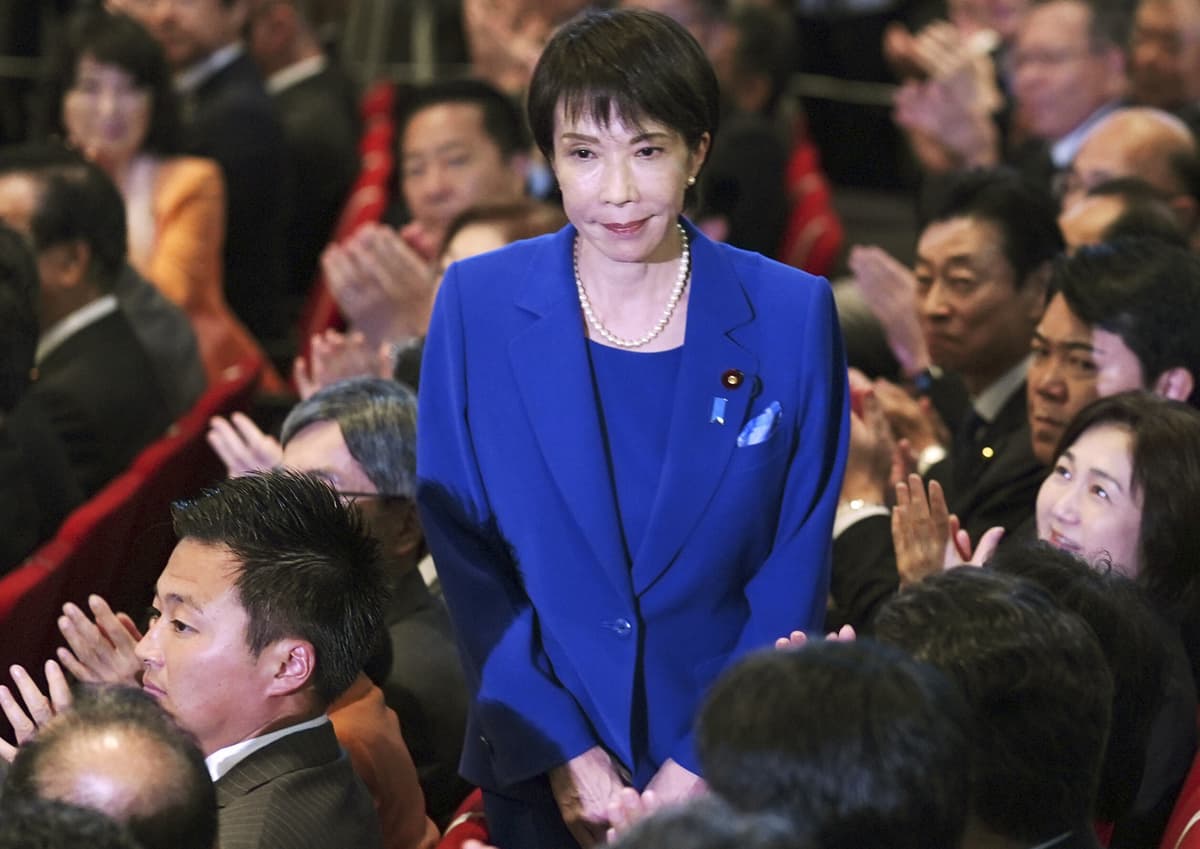

Prime Minister Sanae Takaichi of Japan has made the bold decision to try to consolidate her power by announcing a snap election for a new parliament, or Diet, that she hopes will overwhelmingly approve her conservative program, including more defense spending.
Just three months after the Diet elected her as Japan’s first female prime minister, Ms. Takaishi believes the election will give her long-ruling but divided Liberal Democratic Party enough seats in the chamber to enable her to ram through a new budget and other measures with a boost from the LDP’s coalition partner, the minor Japan Innovation Party.
Ms. Takaichi “to roll the dice on risky, but potentially rewarding, snap election,” headlined the English-language Japan Times on the gamble she’s taking to stop opposition forces from fighting her moves to resolve festering economic issues and increase military strength in the face of rising pressure from Communist China.
“It’s smart of her,” a Columbia University professor, Tom Christensen, tells the Sun. “The LDP was in a very rocky place. Most people say China is bullying us.”
Although popularity ratings for the LDP hover at around 30 percent, Ms. Takaichi enjoys approval ratings of about 70 percent among Japanese voters — many of them young people who see her as a breath of fresh air in a decaying political system.
On top of her personal image, the 64-year-old prime minister represents a rightward shift by an American ally that’s losing confidence in that alliance. Voters are also upset by China’s persistent criticism in the wake of her controversial stand on the need to defend Taiwan in case of Chinese attack.
Almost immediately after taking over, Ms. Takaichi got on the wrong side of China by remarking that a Chinese attack on Taiwan would “constitute a situation threatening Japan’s survival.” The inference was that Japan, which ruled Taiwan for 50 years after defeating the Chinese in the Sino-Japanese war in 1895 until Japan’s defeat in World War II, would defend Taiwan against a Chinese attack.
Japan “has fabricated various excuses to accelerate its military expansion, brazenly exported destructive weapons, and even clamored for nuclear armament in defiance of global opposition,” the English-language Chinese propaganda newspaper, Global Times, quoted a spokesman for China’s defense ministry as saying “Such actions further expose the sinister intent of Japan’s right-wing forces to push for remilitarization and the resurrection of militarism.”
Although not yet developing nuclear warheads, Japan has stockpiled plutonium and operates 13 nuclear reactors for producing electricity after shutting down all 54 of its reactors following the earthquake and tsunami that flooded the Fukushima power station on the east coast in 2011. Japanese physicists and engineers are believed capable of producing nuclear warheads in three years.
More immediately, Japan is increasing its defense budget to more than $58 billion this year — approaching two percent of its gross domestic product. Although Japan has only about 240,000 troops in its all-volunteer armed forces, they’re believed to be the best trained, best armed in Asia.
For Japan to play a significant role in Asia, however, Ms. Takaichi would have to get around the constraint in Article 9 in Japan’s post-war “peace constitution” that bans Japanese troops from waging war beyond Japan’s borders.
She has said “an update of the Constitution is necessary in light of international circumstances and social changes.”’ Notably, China’s rising power and North Korean threats. If necessary, she said, she would call a national referendum, a move that would spark intense debate inside Japan and deep suspicion in China and all the other Asian nations that Japan conquered in World War II. For China, much of which Japanese troops conquered in the 1930s, the fear is that Japan could rise again.
First things first, though. Ms. Takaichi must dissolve the Diet when it meets again on January 23 and then set elections for all 465 members of the lower house in February. Although voters may not see Article 9 as the primary issue, Ms. Takaichi has left no doubt it’s on her agenda. She’s already told the Diet, “I am determined to persevere and go all-out to create an environment in which a national referendum asking for or against constitutional amendment can be held as soon as possible.”