
Marco Rubio Explains the Heart of Trumpism
The secretary of state sends a signal to several other government leaders around the world: they should listen to President Trump’s comments carefully.
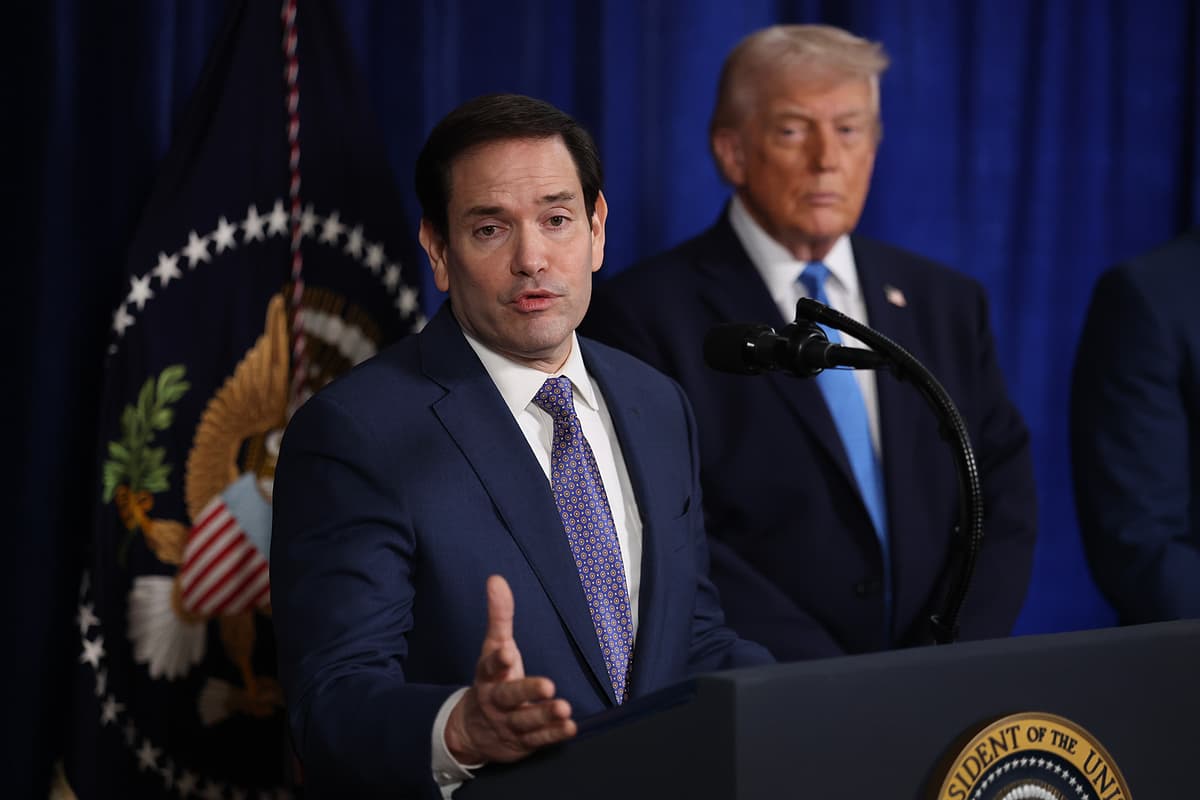
In Sunday’s press conference on Venezuela at Mar-a-Lago, The secretary of state and national security adviser, Marco Rubio, gave an explanation of how President Trump operates.
Too few pundits commented on what Mr. Rubio said — and yet it was one of the most insightful explanations of Mr. Trump I have ever heard or read.
Mr. Rubio said:
“And the message here should be to the world. The president doesn’t go out looking for people to pick fights with, he’s not, generally he wants to get along with everybody. We’ll talk and meet with anybody, but don’t play games. Don’t play games while this president’s in office because it’s not gonna turn out well. I guess that lesson was learned last night and we hope it’ll be instructive moving forward.”
There are two key elements in Mr. Rubio’s analysis.
First, Mr. Trump says what he really means. For several months, he used strong language to express how unhappy he was with Nicolás Maduro’s dictatorship. Apparently, American negotiators had been suggesting for some time that Mr. Maduro would have a better and more pleasant future if he voluntarily resigned and took about $20 million.
Mr. Maduro clearly thought Mr. Trump was bluffing. He only came to understand how real the threat was when American forces were in his palace.
In a sense, Mr. Rubio was using this moment to send a signal to several other government leaders around the world: they should listen to Mr. Trump’s comments carefully.
The president of Colombia was directly mentioned by Mr. Trump for his role in cocaine production and trafficking. After the Venezuela experience, Mr. Rubio suggested he should take Mr. Trump’s warnings seriously.
Further, Mr. Trump has warned the Iranian dictatorship not to kill dissidents protesting in the streets. He has told those in Nigeria who have been killing Christians to stop immediately.
Then, you have President Vladimir Putin’s game playing about negotiating a truce with Ukraine. As Mr. Rubio intimated, the decisive action in Venezuela should be a teaching moment for all of America’s adversaries.
This is a remarkable time to have the best prepared student of Latin America as the secretary of state and national security adviser. Mr. Rubio’s parents came from Cuba. He grew up at Miami surrounded by anti-Communist Cubans. He has studied the region tirelessly.
I remember standing next to him at election night at West Palm Beach. We chatted about how to free the Cuban people from more than six decades of oppressive communist tyranny. It was clear that Mr. Rubio was leaning forward and determined to do all he could. At that moment, neither of us realized the opportunities Mr. Trump was going to give him.
The other facet of the Venezuelan operation is the overwhelming bias Mr. Trump has for action.
If you read Mr. Trump’s two most insightful books, “The Art of the Deal” and “The Art of the Comeback,” you will realize that he is constantly thinking, testing, trying, and negotiating. He combines a strange combination of patient long-term planning and immediate instinct to act.
In foreign policy, Mr. Trump tends to see large pictures. He then relentlessly pushes and pulls to get to the future he thinks is possible.
Because the news media and academia have such huge biases against Mr. Trump — and his generally tough stances on global policy — it is virtually impossible for them to study what he actually is doing.
They default to focusing on what they already hate about him. The result is they consistently underestimate his capacity for big ideas and immediate implementation.
In that Sunday press conference, Mr. Rubio gave us and the world some important insights into the man who is reshaping the Middle East, Latin America, and soon the Russian-Ukrainian killing ground.
Mr. Trump reminded us again last weekend that he is an extraordinary leader. It serves all of us well to study his actions and think through Mr. Rubio’s analysis.