Mike Tyson Takes Weed Partners to Court Alleging Fraud and Self-Dealing

The lawsuit comes as a recent executive order from President Trump stands to make the cannabis industry substantially more profitable.

Via X
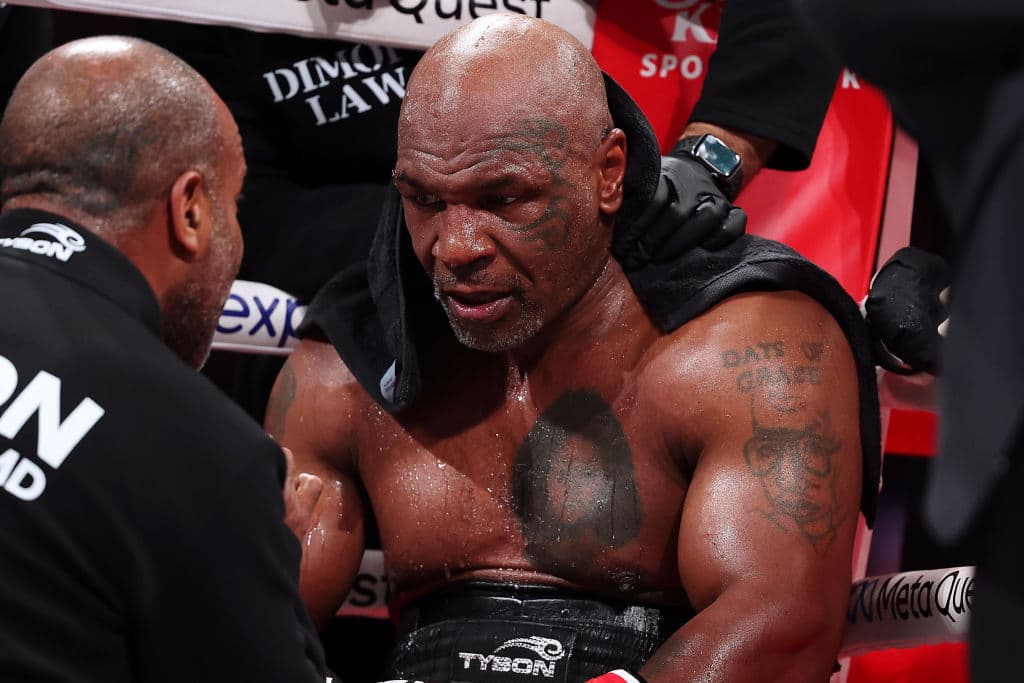
Boxer Mike Tyson exhales in a video where he expressed his appreciation to President Trump for moving to ease restrictions on the use of cannabis. Via X

A litigious former boxing champion, Mike Tyson, is heading back to court, this time with a $50 million lawsuit alleging that several former associates in the weed business have mispent and mishandled millions of dollars.

Wrestling legend  Ric Flair joins Mr. Tyson in the suit, which alleges fraud, breach of contract and other claims in connection with a cannabis company that uses their name, image and likenesses. The company, Carma HoldCo, which is also a plaintiff, lists Mr. Tyson as its current CEO.

In a 21-count lawsuit filed last week in U.S. District Court in Illinois, Messrs. Tyson and Flair accuse former executives Chad Bronstein, Adam Wilks, Nicole Cosby and James Case of conspiring to commit “criminal wire fraud, embezzlement, money laundering and extortion, as well as securities fraud and shameless self-dealing that enriched the defendants to the tune of tens of millions of dollars.”

Mr. Bronstein, Mr. Wilks and Ms. Cosby served until earlier this year as Carma’s president and chairman; CEO; and chief legal and licensing officer, respectively, according to Front Office Sports. Mr. Case is a shareholder. Carma distributes the Tyson 2.0 and Ric Flair Drip cannabis products.

The plaintiffs allege the defendants sold licensing rights, which was not allowed under the terms of their contracts, and that Mr. Wilks executed an unauthorized “kickback” deal with a vape maker, DomPen.

“Throughout their time at CARMA, Bronstein and Wilks treated CARMA as their own personal piggy bank, using more than $1 million to pay for unauthorized personal travel on private jets, costs associated with Bronstein’s personal yacht, renovations to Bronsteins’s personal residence, a mortgage payment for Wilk’s personal residence, and lavish entertainment expenditures for Wilks, including exorbitantly priced medals and travel expenditures, as well as excessive and unapproved compensation and bonuses.”

The defendants have called the complaint, “fiction” and labeled it as an “attempt to spit out an earful of salacious headlines.”

The lawsuit seeks a jury trial and more than $50 million in damages, legal fees, and other costs.

Cannabis companies like Carma stand to become substantially more profitable after President Trump signed an executive order last week directing the federal government to move forward with reclassifying marijuana from a Schedule I drug to a Schedule III drug. The order will fast-track a formal review process needed to ease strict federal restrictions on cannabis.

Marijuana is currently listed as a Schedule I drug, grouped with heroin, ecstasy and LSD — drugs seen as having no accepted medical use and a high risk of abuse. Cannabis reform advocates, including Mr. Tyson, applauded Mr. Trump’s action.

Advocates say the reclassification could lead to more research funding and increased medical studies on marijuana. It would also allow cannabis companies to deduct normal business expenses on their federal tax returns and perhaps attract more users.

Mr. Tyson thanked Mr. Trump for “listening to people across the country and taking a practical step toward modernizing outdated policies.”

Suing business partners has been a recurring theme for Mr. Tyson, who was boxing’s most feared fighter in the 1990s. At a time when he had earned $127 million in purses, the IRS was demanding he pay $12 million in unpaid taxes. The boxer then filed a $100 million lawsuit against his former promoter Don King for accounting manipulation and improper deductions. Mr. Tyson eventually settled the lawsuit for $14 million with all of the money going to the IRS, various creditors and an ex-wife.

“I carry the weight of the fool alone,” Mr. Tyson said at the time, “but other people contributed to it. I didn’t know any better. I was just going along for the ride. I didn’t have any money, and I thought it was the best thing to do. I didn’t really know much about all that stuff. I was just desperate back then.”

Mr. Tyson has since become much more business savvy. His entry into the cannabis business in 2024 was marketed as a success with more than two dispensaries selling more than $40,000 of his products in two hours.

Among the products were THC-laced gummies in the shape of Evander Holyfield’s ear, a reminder of the infamous “Bite Fight” in 1997 during which Mr. Tyson bit off a piece of his opponent’s ear.

“If this continues, Mike Tyson may soon trade in legendary boxing gloves for a pair of green thumbs,” remarked the Marijuana Index, an industry news website.

Mr. Tyson had a previous cannabis venture called Tyson Ranch, which reportedly failed due to management issues.


The New York Sun

© 2025 The New York Sun Company, LLC. All rights reserved.

Use of this site constitutes acceptance of our Terms of Use and Privacy Policy. The material on this site is protected by copyright law and may not be reproduced, distributed, transmitted, cached or otherwise used.

The New York Sun

Sign in or  create a free account

or
By continuing you agree to our Privacy Policy and Terms of Use