New Restrictions on South Korean Press Start To Affect Coverage in Favor of Left-of-Center Government

Legislation is seen as a move to protect the government’s left-leaning president, Lee Jae-myung.
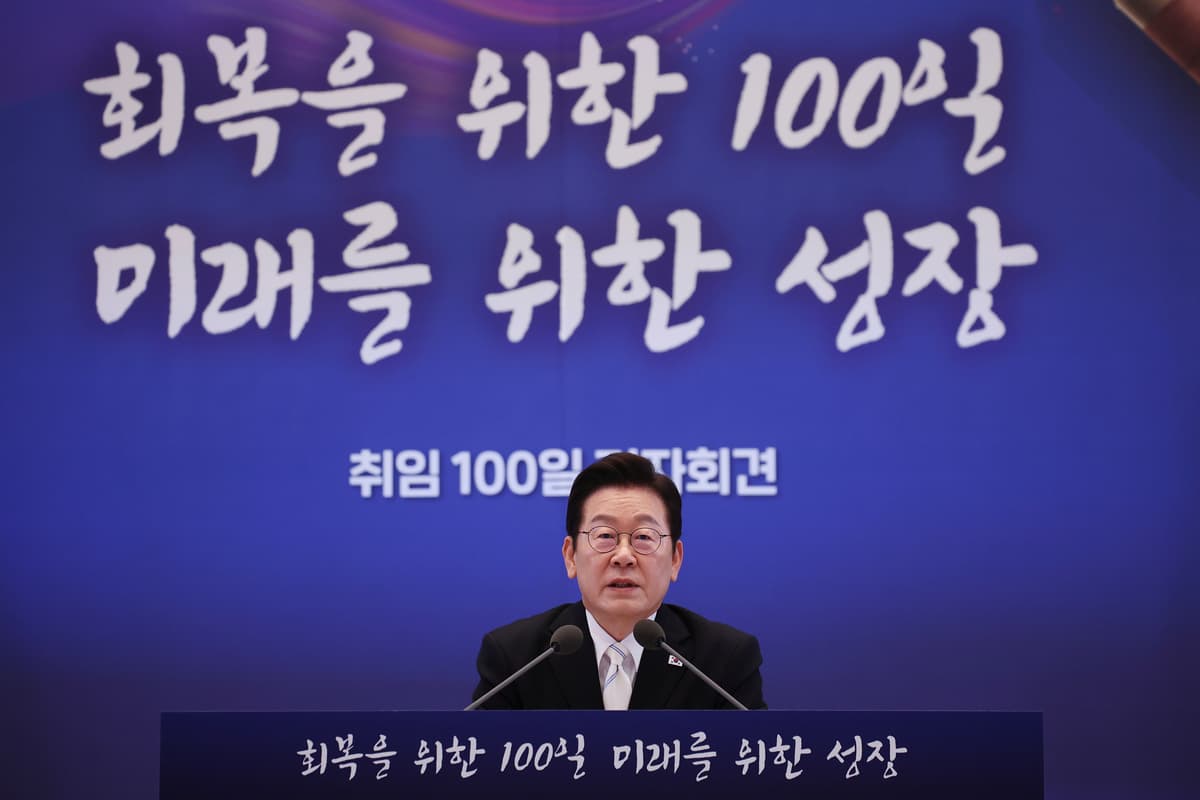
Kim Hong-Ji/pool via AP
President Lee Jae Myung at Seoul, South Korea, September 11, 2025. Kim Hong-Ji/pool via AP

South Korea’s conservative newspaper, Chosun Ilbo, calls it the “Mouth Barrier.” The leftist daily Hankyoreh prefers to refer to it as a bill “to establish a dedicated tribunal to try crimes of insurrection.”

Either way, the newly adopted amendment to South Korea’s “information and communication network act” imposes strict limitations on top of long-held inhibitions on freedom of the press, and freedom of speech. It is seen in Korea as a move to protect the government of the country’s left-leaning president, Lee Jae-myung.

Passage of the bill by the leftist-dominated national assembly comes after a filibuster by the conservative People Power Party. The party’s former leader, Yoon Suk-yeol, is in jail facing multiple charges for his ill-fated, brief attempt at imposing martial law a little more than a year ago. His wife is also in jail, charged with taking bribes, gifts, and payoffs.

South Korean journalists have been telling the Sun ever since the election of Mr. Lee in June, two months after Korea’s constitutional court upheld Mr. Yoon’s impeachment, that the country’s often-critical newspapers were afraid to engage in serious criticism. A former editor of two small right-wing papers tells me that they had abruptly changed their editorial policies, refraining from the angry editorials and exposes of what they saw as the ills of Mr. Lee’s new government.

None of the Korean journalists wanted their names used, but they now say the new legislation legitimizes what Mr. Lee has been doing all along: repressing and intimidating critics. Right-wingers still stage mass protests in central Seoul, but the crowds are smaller than they were six months ago, when typically several hundred thousand people would gather to hear denunciations of leftists who then were vying successfully, to take power.

“Nobody wants to say anything in public,” a journalist for one of Seoul’s dozen or so daily newspapers told me as the new bill was about to be passed. 

The country’s biggest national daily, Chosun Ilbo, dared to go further than other papers when it blasted the newly adopted “regulations on false and illegal information” as “arbitrary and ambiguous.” 

“The core of this law is that if it is determined to be ‘false and fabricated information’ or ‘illegal information’, it will be deleted from the Internet and YouTube, and if it is violated, it will be compensated up to five times the amount of damages,” Chosun Ilbo reports.

If information judged to be false and illegal is distributed more than once, the Korea Broadcasting and Media Communications Commission, a state agency, can impose a fine of up to 1 billion won (nearly $700,000).


The New York Sun

© 2025 The New York Sun Company, LLC. All rights reserved.

Use of this site constitutes acceptance of our Terms of Use and Privacy Policy. The material on this site is protected by copyright law and may not be reproduced, distributed, transmitted, cached or otherwise used.

The New York Sun

Sign in or  create a free account

or
By continuing you agree to our Privacy Policy and Terms of Use