Pressured by Transgender Activists, Star Academic Backs Out of His Own Research

By imperilling a paper on gender-transition interventions for youths, evidence-based medicine expert Gordon Guyatt joins a wider suppressive trend seen in academic publishing in pediatric gender medicine.

Providence Research
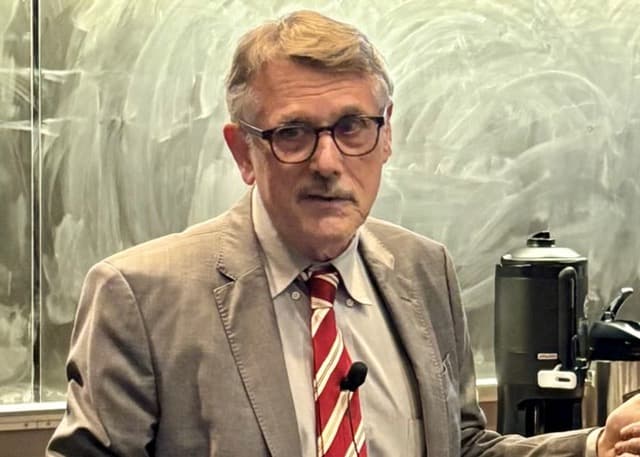
Professor Gordon Guyatt, a premier practitioner of evidence based medicine. Providence Research

A renowned Canadian researcher has bowed to a pressure campaign by transgender activists who have sought to blunt the impact of research they consider a threat to minors’ access to medical gender treatments. The scholar, evidence-based medicine expert Dr. Gordon Guyatt, led his junior academic colleagues in collectively jumping ship as coauthors, in a leading medical journal, of a pending paper on this controversial subject. 

According to emails obtained by the Sun, this withdrawal left the much-anticipated paper in pre-publication limbo. Such suppression — or at least effective suppression — of research findings is in keeping with a broader trend seen in recent years within the controversial field of pediatric gender medicine. Prominent figures in the field have either delayed or blocked publication of papers that yielded inconvenient findings. 

However, the prospects of the new paper in question have apparently brightened this week. The health research methodologist who managed the academic project as a PhD student, Anna Miroshnychenko, informed the Sun that she had just alerted her coauthors that she was open to rejoining the paper’s authorship. Dr. Miroshnychenko said that she was only now able to do so because she had just defended her doctorate and thus felt she could begin making decisions independently from Dr. Guyatt and the other senior researcher who oversaw her work on the research project.

The paper, Dr. Miroshnychenko said, “was executed with a very high level of integrity and rigor. Therefore, it would be beneficial for this paper to be published.”

Dr. Guyatt, who is a professor at McMaster University in Ontario, is considered a “godfather” of the field of evidence-based medicine. Since the early 1990s, this meta-scientific discipline has sought to systematize the assessment of the quality of scientific research, with an eye toward developing more reliable medical-practice guidelines and improved health outcomes. 

Anna Miroshnychenko, researcher. McMaster

In recent years, pediatric gender medicine — which involves giving adolescents puberty blockers, cross-sex hormones and, less frequently, gender-transition surgeries — has come under increasing scrutiny over the low quality of its own evidence base, as well as the associated medical interventions’ potential for harm, and the validity of the treatment guidelines that dictate practice in the United States.

Since Dr. Guyatt’s team published a trio of systematic reviews of gender-transition treatments and surgeries for youths earlier this year, he and his coauthors, including Dr. Miroshnychenko, have been subjected to a bruising pressure campaign by trans activists. These activists, who seek a retraction of all the published papers, have objected, first and foremost, to the funding source for the four-year research endeavor: a fledgling U.S.-based nonprofit that is focused on scrutinizing the evidence base behind gender-transition interventions for youth. 

In mid-August, five members of the McMaster research team — with Dr. Miroshnychenko not participating — published a public statement denouncing the nonprofit, the Society for Evidence Based Gender Medicine, or SEGM, for, they asserted, failing to honor evidence-based principles. The team also decried any use of their own published papers to support bans of gender-transition interventions among minors. This statement provoked backlash from the right and from other skeptics of pediatric gender medicine. These individuals criticized Dr. Guyatt for not defending his own academic independence and for refraining from remaining above the fractious and polarized politics that have come to govern this medical field.

Among these vocal critics has been one of the SEGM-sponsored research project’s own coauthors, Dr. Steven Montante, who is an independent Virginia-based plastic surgeon who performs gender-transition surgeries, albeit on adults only. “I’m absolutely incensed by McMasters’ behavior,” Dr. Montante said of the university team’s recent capitulation and withdrawal of their names from their pending paper. “I’ve been trying to be respectful, but this needs to be called out.”

A Rocky Research Road

In 2021, SEGM commissioned from Dr. Guyatt’s lab five systematic reviews —considered the gold standard of scientific evidence — regarding gender-transition interventions among youth. This included the three reviews that his team has already published, of the use of puberty blockers, cross-sex hormones, and mastectomies, respectively, to treat gender-related distress. 

Since its founding in 2019, SEGM has been quietly influential in cultivating concern about the evidence base behind pediatric gender medicine, inviting the ire of transgender and left-wing activists and advocacy groups. In 2024, the Southern Poverty Law Center designated SEGM a hate group, based on the findings of a mammoth SPLC-commissioned report on SEGM and what it claimed was a wide network of “pseudoscience” groups devoted to harming transgender people. The report sought to associate SEGM with right-wing, anti-LGBTQ groups in part because they all received anonymous funding through certain donor-advised funds. But the report neglected to indicate that those funds also happened to channel millions of dollars into the SPLC. This contradiction notwithstanding, the hate-group label has proved indelible and has been instrumental in fueling the activist campaign against Dr. Guyatt’s team.

Dr. Steven Montante performs gender transition surgeries, but only on adults. Montante Plastic Surgery

Behind the scenes, Dr. Guyatt and his McMaster-affiliated coauthors have in recent months responded to activist pressure by seeking to distance themselves from the two SEGM-commissioned review papers that remain unpublished. One is a review of research of so-called social transitions, including changes to a person’s name, pronouns and style of dress; the fate of that paper remains uncertain. The other is a review of studies of so-called tucking and binding, or the practice of binding the breasts and tucking the penis and scrotum in order to mask someone’s biological sex traits; that analysis was poised for publication by the British Medical Journal, or BMJ

According to authors of those two unpublished reviews, the papers’ conclusions are in line with those of the three published papers: namely, that the research findings backing these gender-transition interventions for youth are weak and uncertain. In recent years, a swath of systematic reviews of pediatric gender medicine have been published by researchers across the Western world that have all come to that same conclusion. These findings have led a coterie of European nations to sharply restrict minors’ access to gender-transition treatments. They have also buttressed statehouse Republicans’ successful campaigns to pass bans of these treatments for minors in 27 U.S. states. However, all but two of these state bans predated the publication of the McMaster review papers.

According to internal emails, Dr. Guyatt first told BMJ editors in July that he and his McMaster colleagues were withdrawing their authorship from the binding and tucking paper. This left only two coauthors, each of them independent of the university, who were willing to keep their names on the paper: Dr. Montante and Chan Kulatunga-Moruzi, a researcher who was formerly on faculty at McMaster. 

Dr. Montante told the Sun that Dr. Guyatt and his McMaster-affiliated colleagues were “still refusing to remain on the papers.” 

However, the work that Drs. Montane and Kulatunga-Moruzi conducted did not fully cover the breadth of the binding and tucking systematic review. And according to Dr. Montante, the BMJ has a policy forbidding ghost authorship of papers. This left the effort to publish the paper at an impasse.

The campus of McMaster University, Ontario. McMaster University

“The editors have evaluated the study design and findings, stand behind the decision to accept publication, and want to see it published,” Dr. Montante said of the BMJ team. 

If the paper is not ultimately published, this might leave the researchers in violation of their agreement with SEGM. According to a source close to the matter, the SEGM contract stipulated that the team was contractually obligated to publish all five systematic reviews.

Michelle M. Mello, a professor at Stanford Law School and an expert in empirical health law, said that it is “not uncommon” for contracts between researchers and the sources of their research grants “to stipulate that findings must be published or otherwise put in the public domain.” 

A spokesperson for the BMJ Group said the company does not comment on papers that may be pending. “When it comes to authorship, we apply consistent policies across our portfolio,” the spokesperson said. “We follow guidance from the Committee on Publication Ethics (COPE) and our ethics committee to resolve authorship disputes.”

But now, with Dr. Miroshnychenko’s renewed willingness to serve as lead author of the binding and tucking paper, the team of three coauthors might be able to vouch for the entire research project and ensure its publication. On Monday, she informed Drs. Guyatt, Montante and Kulatunga-Moruzi of her interest and is waiting to hear back about scheduling a meeting to sort out the details.

In a statement, SEGM cofounder Zhenya Abbruzzese said, “We have held the McMaster team in high regard and very much hope that the team can withstand the apparent pressures and will publish the completed manuscript, and that authorship will be transparently disclosed.” Referencing youth with gender-related distress, she said, “Young gender dysphoric people and their families deserve access to the best available evidence about binding and tucking, which are commonly used as part of social gender transition in youth.”

Subject Line: “Sad story”

On July 17, Dr. Guyatt emailed Dr. Nick Brown, a British pediatrician and epidemiologist and an editor at the BMJ Group, and said that “after much anguished discussion,” the authors of the binding and tucking review were withdrawing the paper. The following day, Dr. Guyatt qualified his news with the development that Drs. Kulatunga-Moruzi and Montante had asked to have the authorship transferred to them. At that point, Dr. Guyatt said that he might be willing to join the pair. 

Dr. Marci Bowers, the president of the World Professional Association for Transgender Health. Marcibowers.com

Dr. Brown characterized the dilemmas before the group as “exceptional circumstances.” He said: “The equation has to balance the external pressures you are under with publication ethics as well as the sponsorship agreement”—an apparent reference to the research team’s contract with SEGM. “As you know, the ‘binding’ paper is effectively good to go,” Dr. Brown said. 

By Aug. 10, four days before Dr. Guyatt and the four others from McMaster published their statement denouncing SEGM, he dispelled any doubts about his intentions regarding the paper. He told Dr. Brown he was “no longer involved in this manuscript.” 

Dr. Guyatt attributed his decision to withdraw authorship to the fear his younger colleagues harbored over remaining associated with research that drew so much scrutiny. 

In an August interview, Dr. Guyatt said that the younger coauthors were “terrified” and “traumatized” by the activist blowback over their SEGM-sponsored research. Dr. Guyatt also claimed, without evidence, that SEGM supported bans on pediatric gender-transition treatment. He further said that regardless of whether such a claim about SEGM had merit, he felt an imperative to break with the nonprofit because its reputation had been rendered toxic and this was rubbing off on him and his colleagues. 

On Sept. 26, Dr. Guyatt sent BMJ editors an email with the subject line “Sad story.” He relayed an email from Dr. Alfonso Iorio, chair of Dr. Guyatt’s department. Dr. Iorio had said that after conferring with other McMaster “academic bodies,” from the university’s perspective, the desire of the Guyatt team to remove their names from the unpublished study “is not a research integrity issue.” The administrator said he would “defer to” and “respect the academic freedom” of the study coauthors.

Dr. Guyatt then said, “It seems to me very unlikely that we will bring all authors back on board. Thus, it seems that the sad outcome will be to abandon the paper and put the issue to rest.” He added: “I’d be happy to have another conversation to discuss a strategy to soothe the junior authors’ concerns and bring them back on board.”

Dr. Johanna Olson-Kennedy GenderGP

Throughout the emails obtained by the Sun, Dr. Guyatt, who is an academic veteran and a tenured professor, never addressed why he could not diverge from his younger colleagues and remain on the paper himself.

Neither Dr. Iorio, nor Dr. Guyatt, nor any of the other coauthors who are currently affiliated with McMaster responded to a request for comment.

In an email thread exchanged on Sept. 30 between Drs. Guyatt, Montante and Kulatunga-Moruzi and a clutch of BMJ editors, Dr. Guyatt said the junior coauthors might change their minds. But, he said, “I think it might be stressful for them to be encouraged” to do so. 

In reply, Dr. Kulatunga-Moruzi provided the editors with links that provided evidence of the pressure, both internal and external, that the McMaster researchers were under from trans activists and their allies. This included a small yet incendiary Instagram account run by trans activists that targeted the research team. And it included a resolution passed on Sept. 20 by the McMaster Student Representative Assembly in which the undergraduate body condemned the SEGM commission and demanded a number of further actions by the university, including issuing a public apology for the partnership undertaken by Dr. Guyatt’s lab. While the resolution did not point to any flaws in the research itself that would warrant such an extreme measure, it demanded the university pursue a retraction of the papers “on the grounds of compromised scientific integrity and real-world harm.”

Dr. Kulatunga-Moruzi said in her email that she hoped McMaster would back the research team “and the integrity of the work, setting an example for the junior researchers so they are not swayed by such political action.” She said that senior faculty at McMaster had contacted her “agasp at the handling of this issue.” And she suggested that capitulating to activist pressure would establish a slippery slope.

While Dr. Kulatunga-Moruzi did not mention it, a sign-on letter also began circulating in September that attracted thousands of signatures, including hundreds from McMaster faculty, staff, students and alumni, which also called for a retraction of the papers — citing the same reasons as the student-government resolution. Additionally, the letter pointed to a reference that Justice Clarence Thomas made to the puberty-blocker review paper in his concurring opinion in the case that in June gave the Supreme Court’s effective blessing to state bans of gender-transition treatments for minors. “The fact that McMaster’s research now appears in such company undermines its global reputation for excellence in health science and medical ethics,” the letter stated. 

The Sun reached out to representatives for the McMaster student government for comment. They did not reply, at least directly. Instead, what followed was a pair of prank emails sent anonymously via Proton. One linked to an Instagram video of a man sticking out his tongue. The other, in an apparent reference to the email identifying this reporter as journalist, stated: “‘Journalist’ Stop playing. My name is the woker. Why so queerious?”

Dr. Miroshnychenko told the Sun that when Dr. Guyatt first informed the BMJ of his team’s withdrawal from the tucking and binding paper authorship, she was still completing her PhD under him. And so, she said, she “felt it was not appropriate” for her to break with her mentors and keep her name on the paper. 

“However,” she said, “now that I have defended my PhD, with all of my deepest respect for them, I feel it is beneficial for the paper to be published.” 

Dr. Miroshnychenko also addressed the controversy over how the SEGM-commissioned papers have impacted the broader debate over pediatric gender medicine. She said of the binding and tucking paper in particular: “The premise of the paper is to support patients in making an informed, autonomous decision about this intervention before undergoing it. The premise of the paper is not to dictate to patients what they should be doing with their lives.” Consequently, she said, “I am open to adding a clarifying statement about the appropriate or responsible use of the information contained within this paper.”

“My main aim in all of this work is to provide peer-reviewed information to patients and all stakeholders involved in order to maximize benefit to patients of interest, while, importantly, minimizing harm,” Dr. Miroshnychenko said.

A Suppressive Trend

In an interview, Dr. Montante criticized Dr. Guyatt for relying on what he said in exchanges including Dr. Montante was a “circular type argument” about the fate of the binding and tucking paper. “On the one hand he thinks it’s important work and it should be out there,” Dr. Montante said. “And on the other hand he doesn’t want his name on it.”

Dr. Montante drew a parallel between Dr. Guyatt’s effective effort to squelch his own research and two other instances in which major figures in pediatric gender medicine have suppressed or delayed the publication of papers that might have provided fodder for opponents of pediatric gender medicine. 

In the late 2010s, the World Professional Association for Transgender Health, or WPATH, the U.S.-based activist-medical association that sets the standards American physicians in particular typically follow for gender-transition treatment, commissioned a series of systematic literature reviews on transgender care from a team of evidence-based medicine experts at Johns Hopkins University. 

Details about this commission emerged from internal emails subpoenaed by Alabama Attorney General Steve Marshall for his defense in a lawsuit over that state’s ban on gender-transition treatments for minors. These records were unsealed in June 2024.

After the conclusions of these reviews were not to the liking of WPATH leadership, those individuals began to exert a heavy hand in the process. The subpoenaed emails indicate WPATH ultimately suppressed the publication of at least oneof the Johns Hopkins reviews. 

Separately, The New York Times reported in Oct. 2024 that Dr. Johanna Olson-Kennedy, a prominent pediatric gender medicine doctor, said in an interview that she had not published a long-awaited federally-funded study about puberty blockers for political reasons.

In a sworn statement submitted to a South Carolina court in November, Dr. Olson-Kennedy asserted that the Times had misrepresented her words with a “misleading title and selective quotations.” She said that the delay in publication related to the time and resources required to analyze the data “accurately, transparently, and clearly” and was not due to politics.

The puberty blocker study was released as a pre-print in May. Contrary to a foundational 2011 study from the Netherlands that launched the global pediatric gender medicine field, it found that puberty blockers were not associated with a change in mental health in adolescents with gender-related distress.  

In June, the Times published audio from the interview with Dr. Olson-Kennedy. Asked why she had not yet published the study, Dr. Olson-Kennedy said, “To be quite frank, your manuscripts have to be so air-tight, there’s not even room for postulation anymore, right?” To which the Times reporter replied, “Because of the political environment?” Dr. Olson-Kennedy said, “Yes, yes.”

The McMaster team’s refusal to attach their names to their own completed work on the binding and tucking paper, Dr. Montante said, is “no better than WPATH or Olson-Kennedy withholding research that doesn’t align with their overall perspective. We’re not doing any better and we’re supposed to be above that.”

Erica Anderson, a psychologist, transgender woman and former president of WPATH’s U.S. division, a position now held by Dr. Olson-Kennedy, said of how Dr. Guyatt’s team at McMaster has responded to activist pressure: “It’s so disappointing to those of us who have held Guyatt and his group in such high regard that they would seem to dismantle the work that they’ve done. That they would kind of soil themselves. And the capitulation to activists is beyond the pale. He has such standing that he could certainly stand up to critics. Why did he have to capitulate?” 

In the adolescent chapter in the 2022 revision to the WPATH guidelines for which the organization had commissioned the reviews from Johns Hopkins, the organization noted the low number of studies of gender-transition treatment in adolescents and the fact that “few outcome studies” had followed “youth into adulthood.” The chapter continued: “Therefore, a systematic review regarding outcomes of treatment in adolescents is not possible.” 

Since then, Guyatt’s lab is among the numerous evidence-based-medicine expert teams around the world that have disproved that particular assertion of WPATH’s and reached findings that have shaken the ground beneath the pediatric gender medicine field. 

Dr. Marci Bowers, a California-based gender-transition surgeon, became the president of WPATH shortly after it published the guidelines revision and spent her two-year tenure defending the rigor of her field. Asked to comment on the parallel between Dr. Guyatt imperiling the publication of his own work and WPATH suppressing the Johns Hopkins review, Dr. Bowers replied, “With all due respect, this sounds like a paranoid rabbit hole. You go for it.”


The New York Sun

© 2025 The New York Sun Company, LLC. All rights reserved.

Use of this site constitutes acceptance of our Terms of Use and Privacy Policy. The material on this site is protected by copyright law and may not be reproduced, distributed, transmitted, cached or otherwise used.

The New York Sun

Sign in or  create a free account

or
By continuing you agree to our Privacy Policy and Terms of Use