Senator Maria Cantwell, With ‘Student-Athletes’ Raking In Name, Image, and Likeness Dollars, Blitzes Colleges’ Nonprofit Status

The five-term senator from Washington likely notices that the news pertaining to college football is more suited to CNBC than to ESPN.
AP/John Raoux
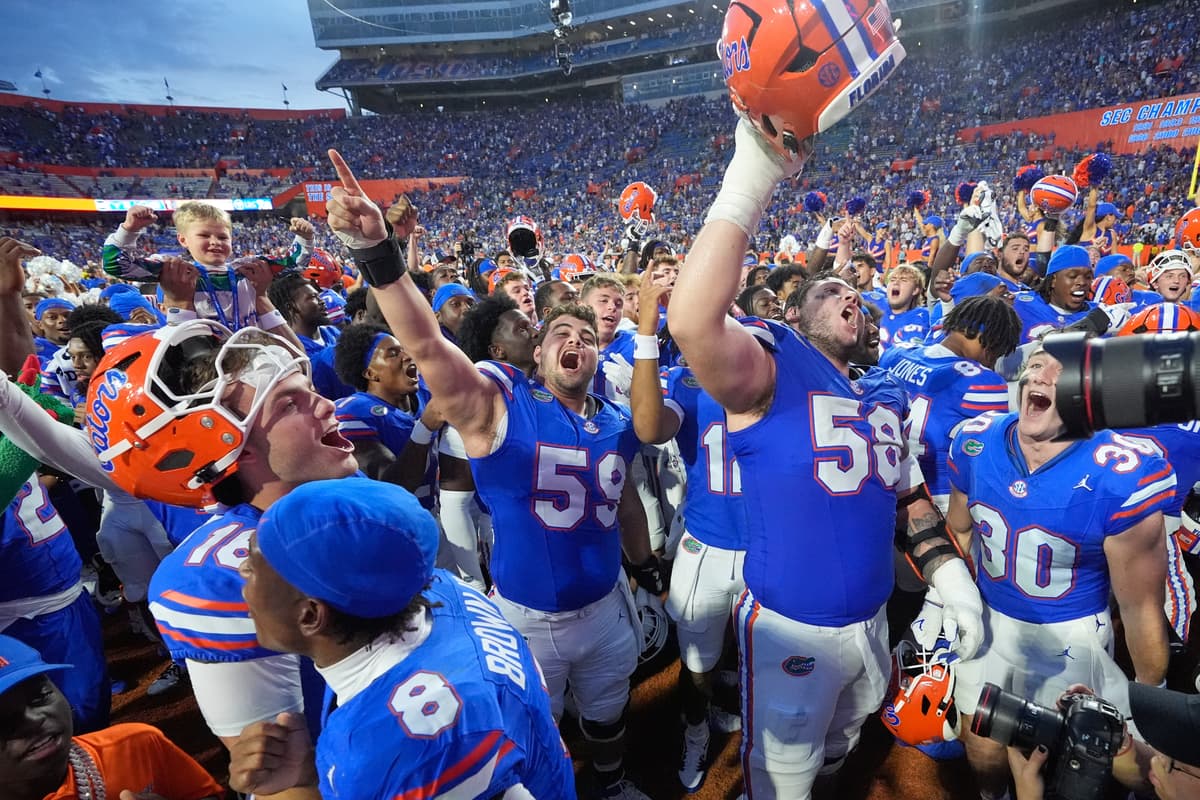
The University of Florida's Gators celebrate after defeating the University of Texas's Longhorns at Gainesville, Florida, in October 2025. AP/John Raoux

Until now, the most terrifying sight in the history of college football was Dick Butkus, the ferocious University of Illinois linebacker (1962-1964), flattening an opponent. Now, however, an even scarier sight is Senator Maria Cantwell carrying a letter.

The five-term Democrat from Washington has some hair-raising questions for the industrialists who run the college sports money machine. Her November 17 letter, addressed to the chief of staff of Congress’s Joint Committee on Taxation, seeks assistance as she develops “legislative proposals that address the tax implications associated with the future of college athletics.” 

Ms. Cantwell surely has noticed that lots of the news pertaining to college football in particular is more suited to CNBC than to ESPN.

The Big Ten football conference (which has 18 members; accurate labeling is optional in a business that talks about “student-athletes”), has been interested in “partnering” with private equity firms that would give member institutions immediate cash infusions in exchange for portions of the billions in future football earnings. 

Now the Big Ten has a new potential partner: UC Investments manages about $200 billion in endowments and pension plans of the schools in the University of California system. 

Although Michigan, Ohio State and the University of Southern California are among the schools that would get bigger up-front payouts than others, Michigan and USC think they might do even better for themselves with other arrangements. 

Does Michigan need the Big Ten Conference as an intermediary for its entrepreneurial activities?

The Big 12 (its 16 teams are dispersed from West Virginia to Utah, schools 1,675 miles apart) is negotiating business arrangements with RedBird Capital Partners and Weatherford Capital. (Utah already has its own nine-figure arrangement with the investment firm Otro Capital.)

RedBird is in a joint venture with International Media Investments, which is based in Abu Dhabi and also funds the Players Era Festival. This in-season college basketball tournament, each team is paid on average $1 million. In both major college sports, we have reached an agreeable absence of pretense about amateurism.

Ms. Cantwell’s letter mildly intimates dynamite: considering “the implications of no longer allowing the NCAA, member institutions, and their affiliated athletic conferences to operate as tax-exempt organizations.” 

And: “As athletes now have the right to earn compensation for their name, image, and likeness (NIL) and be compensated directly by the schools, how would the tax implications for the athletes differ depending on whether they ultimately are classified as employees or independent contractors for tax purposes?”

Employees? Heaven forbid. The locution “student-athlete” was concocted in the 1950s, before NIL payments, or the “transfer portal” through which athletes become free agents seeking, and sought by, the highest bidders.

A football player at the University of Denver was injured during a practice. In 1953, the Colorado Supreme Court ruled that he was eligible to receive workers’ compensation. This, said Walter Byers, the NCAA’s executive director from 1951 to 1987, was a “serious, external threat” to college sports.

Desperate times require desperate measures. The chosen measure was semantic applesauce. Byers later wrote:

“We crafted the term student-athlete, and soon it was embedded in all NCAA rules and interpretations as a mandated substitute for such words as players and athletes. We told college publicists to speak of ‘college teams,’ not football or basketball ‘clubs,’ a word common to the pros.”

Most courts swallowed the applesauce. They said that football players getting athletic scholarships were like violin players getting academic scholarships.

This month, Michigan State received a $401 million donation, with $290 million earmarked for sports. Ms. Cantwell might wonder: Will the $290 million be devoted to purposes too tenuously related to the social benefits that make donations to universities tax deductible?

Ignoring this question becomes embarrassing as the unembarrassed professionalization of major college sports accelerates. Congress, however, is a virtuoso ignorer of things. People who say Social Security is “the third rail of politics” — touch it and you die — underestimate the perils of interfering with American’s Saturday afternoons and evenings.

Two years ago, the college football playoffs featured four teams. This year, 12. Soon, perhaps 24. The calendar, however, will limit the excesses of the college sports industry: Each football season must end before spring practices begin.

The 2026 season will begin August 29, when North Carolina State plays Virginia. Wolfpack and Cavalier fans can savor those venerable traditions — tailgating and the rest — that make college football what it is. But only if they go where the game will be: Rio de Janeiro.

The Washington Post


The New York Sun

© 2025 The New York Sun Company, LLC. All rights reserved.

Use of this site constitutes acceptance of our Terms of Use and Privacy Policy. The material on this site is protected by copyright law and may not be reproduced, distributed, transmitted, cached or otherwise used.

The New York Sun

Sign in or  create a free account

or
By continuing you agree to our Privacy Policy and Terms of Use