


The Media Is Wrong: Meta’s Metaverse Play Worked

The $77 billion ‘failure’ of Meta’s metavision division has made the social-media company the dominant force in AR and VR hardware.
Courtesy of Meta
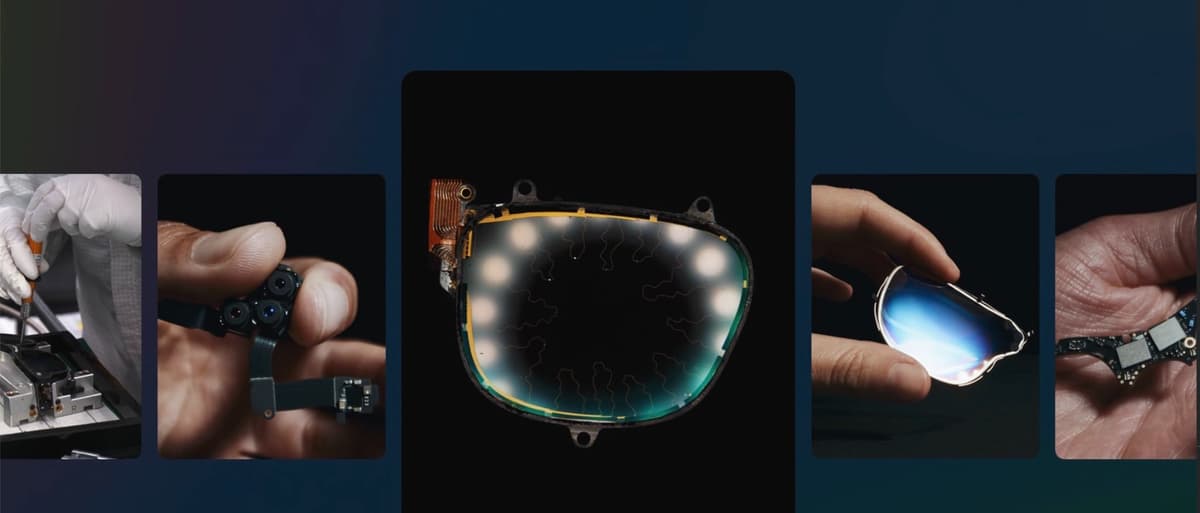
Meta Orion Prototype Displays. Courtesy of Meta

The Wall Street Journal frames Mark Zuckerberg’s investment in the “metaverse” as a colossal disaster. In its recent earnings call, Meta announced it was cutting to the metaverse—its virtual-reality social experiences, which the company used to market its hardware division as being built around. If you were to buy the framing, Zuckerberg has burned more than $77 billion since 2020 to get zilch from its Reality Labs division, and he’s finally cutting his losses.

But that’s simply wrong. Rather than being a failure, Reality Labs has put Meta at the forefront of the next wave of computing.

As it stands, Meta is the leading company for smart glasses, has the bestselling VR headsets on the market, and has the best pricing on both. It charges artificially low prices, which is partially responsible for those losses, but even if they were to sell their hardware at cost, no competitors could match it. They have the scale and expertise in this hardware that no other company can match, and though they’ve dropped the social VR pitch, they’re now extremely well prepared for a future of AI-enabled ambient computing; whether that’s laptop-replacing VR headsets, or more notably, phone-replacing smartglasses. The losses were intentional, and the strategy has worked.

The screenless version of their Ray-Ban smartglasses were pretty damn good in their first version, but are now superb in the second generation, and have sold astonishingly well. The company’s hardware partner, EssilorLuxottica — the owner of Ray-Ban — said on a call this year that it had sold more than two million pairs of Ray-Ban Meta smart glasses and expected to expand production capacity to 10 million pairs annually by the end of 2026.

Those glasses are basically just cameras and speakers connected to your phone as a Bluetooth device. But this year, Meta released the Meta Ray-Ban Display: *the* most advanced smart glasses on the market, with control through tiny hand gestures and a built-in display. Currently, these are expensive and have only been made in limited quantities, but the next generation will be far ahead, and nobody will get close to this. These will be smart glasses that display map directions and notifications in your vision, that you can control the interfaces of through tiny movements of your fingers, with an AI voice assistant attached. That’s a very compelling package.

Meta has also hired Alan Dye, Apple’s head of human interface design, as its new chief design officer, along with Billy Sorrentino, who led Apple’s work on VisionOS. Meta is not retreating from augmented reality. It is going further.

The Wall Street Journal is not wrong that Meta is cutting the social metaverse. But that was always a side project. The real play was hardware dominance, and Meta has won — and the next generation of hardware will extend that lead.


The New York Sun

© 2025 The New York Sun Company, LLC. All rights reserved.

Use of this site constitutes acceptance of our Terms of Use and Privacy Policy. The material on this site is protected by copyright law and may not be reproduced, distributed, transmitted, cached or otherwise used.

The New York Sun

Sign in or  create a free account

or
By continuing you agree to our Privacy Policy and Terms of Use