The Supreme Court, Hearing Campaign Spending Dispute Tuesday, Can Strike Another Blow Against Political Cynicism
Reformers nibble away at the First Amendment, an artichoke devoured leaf by leaf.
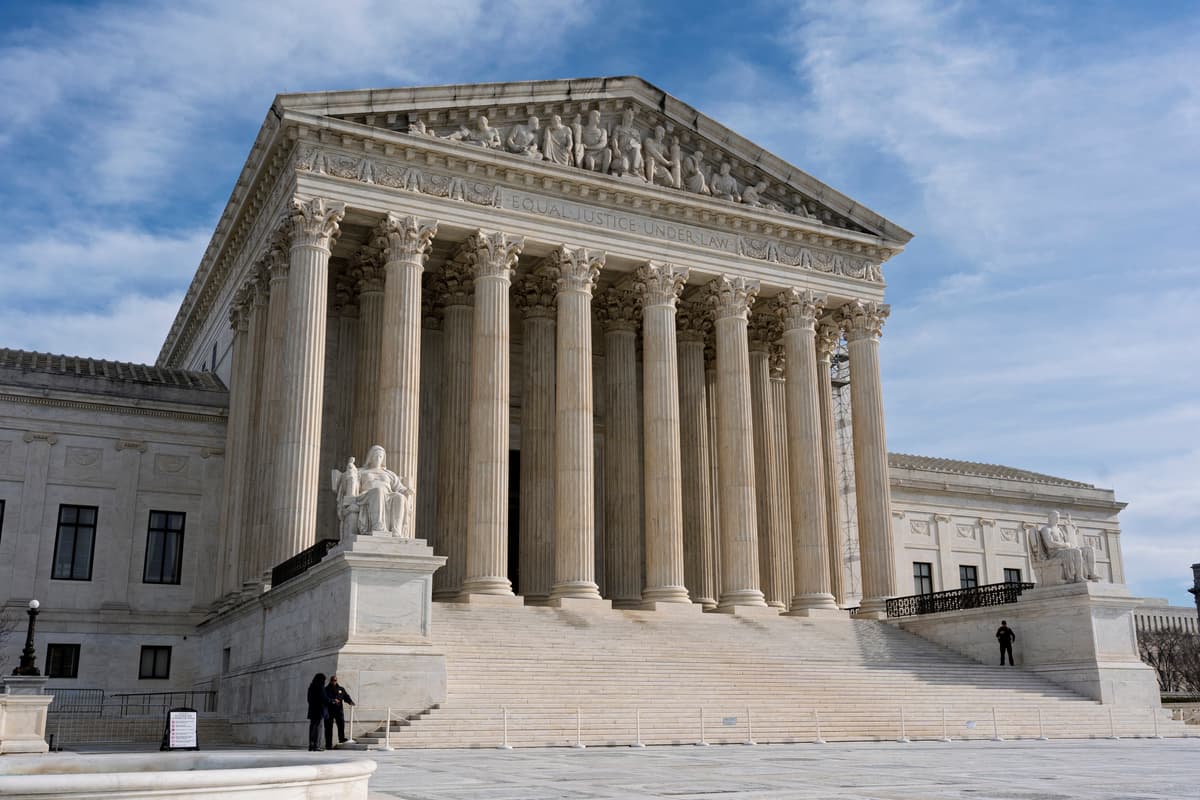
Some of the damage done by âcampaign finance reformsâ has been reversed. And Tuesday, the Supreme Court will hear arguments in a case that likely will continue the courtâs dismantling of measures the political class has enacted to control political speech about itself.
This case can extinguish an absurdity: a campaign regulation supposedly intended to prevent parties from corrupting their own candidates. The multiplication of, and subsequent unraveling of, reformersâ laws to ration political speech is a decades-long lesson about cynicism in the guise of idealism.
Here is a simplified history of the reformersâ priorities: beginning in the 1970s, to empower government to regulate âhardâ money â that given to particular candidates. Then to limit âsoftâ money given to parties for organizing and advocacy.
Next, to regulate âexpress advocacyâ â speech by independent groups advocating the election or defeat of an identifiable candidate.
Inevitably, to solve the âproblemâ of spending on issue advocacy by such groups, limiting this remnant of civic discourse unregulated by government. Reformers nibbled away at the First Amendment, an artichoke devoured leaf by leaf.
In 1976, the Supreme Court began to awaken. It overturned spending limits as impermissible speech rationing because money is indispensable to political communication, and all political spending directly or indirectly funds such communication.
The court was, however, slow to recognize that contributions, too, should be protected forms of political participation and expression.
At issue Tuesday, is this: Until now the court has regarded âcoordinatedâ party expenditures â those made in coordination with candidatesâ campaigns â as equivalent to contributions. Contributions can be corrupting, and hence can be limited.
The court has, however, held that the only permissible reason for regulating political activity is prevention of quid pro quo corruption (specific official acts taken in exchange for specific campaign contributions) or the âappearanceâ thereof.
Bribery, though, is already illegal. And the law prevents donorsâ contributions to parties from being âearmarkedâ to benefit particular candidates.
This eliminates the possibility of quid pro quo corruption by individual donors. So, would-be speech regulators have focused on the nonsensical worry about parties corrupting their candidates through âcoordination.â
Abundant social science demonstrates that almost all legislative behavior is explained by the legislatorsâ ideologies, party affiliations or constituentsâ desires.
So, to prove corruption requires proving that legislators are acting against their principles or their constituentsâ wishes. Contributions almost always move toward candidates with particular positions on issues; candidates rarely move their positions toward contributions.
Limits on coordination between parties and candidates makes parties less efficient. This causes contributions to flow to nonparty entities: super PACs.
Since the emergence of parties in the 1790s, parties have never been weaker. In the 2020 election cycle, parties raised only $2.5 billion of the $15.1 billion spent on federal races.
Parties prosper by building broad coalitions. The partiesâ anemia, and their eclipse by political action committees with narrower, hotter ideological agendas, has exacerbated political polarization, a legacy of campaign finance âreforms.â
Fortunately, the fever for âreformâ has subsided. Democratic senators in 2014 voted unanimously to amend the First Amendment to empower Congress to limit political speech by setting âreasonable limitsâ on contributions to, and expenditures by, candidates.
The political class deciding the âreasonableâ amount of permissible speech about itself? What could go wrong?
Such folly is a receding danger, though, because this is better understood: All laws regulating campaigns have one common attribute â they are written by incumbent legislators.
They invariably augment the substantial electoral advantages of incumbency, which is the best predictor of electoral success. Nationwide in 2024, 95 percent of incumbents seeking reelection won.
Senator Mitch McConnell has filed an amicus brief in Tuesdayâs case. He opposes limits on partiesâ coordinating with their candidates.
Normally phlegmatic, he employs exuberant language to describe how the court has âdemolishedâ and reduced to âruinsâ the âdilapidatedâ and âcrumblingâ statutory regime for government rationing of political speech.
Years ago, attempts were made to amend the Constitution to reverse the Supreme Courtâs sensible ruling that burning the American flag as a protest is protected political expression.
Mr. McConnell supported this amendment â until he decided it was discordant with his opposition to the governmentâs speech police limiting political advocacy.
By just one vote, the Senate blocked the flag burning foolishness from being sent to the states and becoming constitutional clutter. That vote was Mr. McConnellâs.
The court will almost certainly dismantle the misbegotten wall of separation that prevents coordination between parties and their candidates. As Mr. McConnell leaves the Senate, he leaves politics and the Constitution better for his having been there.
The Washington Post