Trump Bets on an Unproven Technology To Win Superintelligence Race
Industrial Revolution-sized energy demand from AI data centers is fueling competition to find a transformational power source, with the president having his dollars invested and his thumb on the scale.
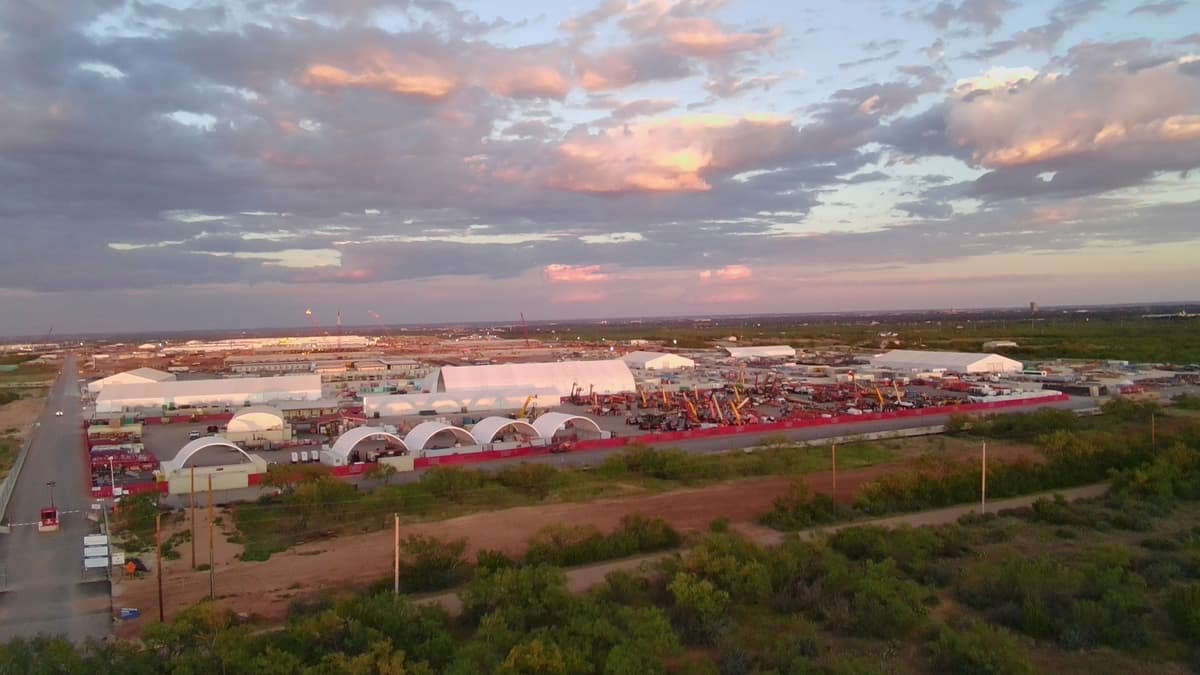

As AI data centers present major competition to consumers for energy from the existing electrical grid, the Federal Energy Regulatory Commission’s decision to allow data centers to connect directly to power plants presents a new opportunity for fuel producers to cash in on adding to the supply.
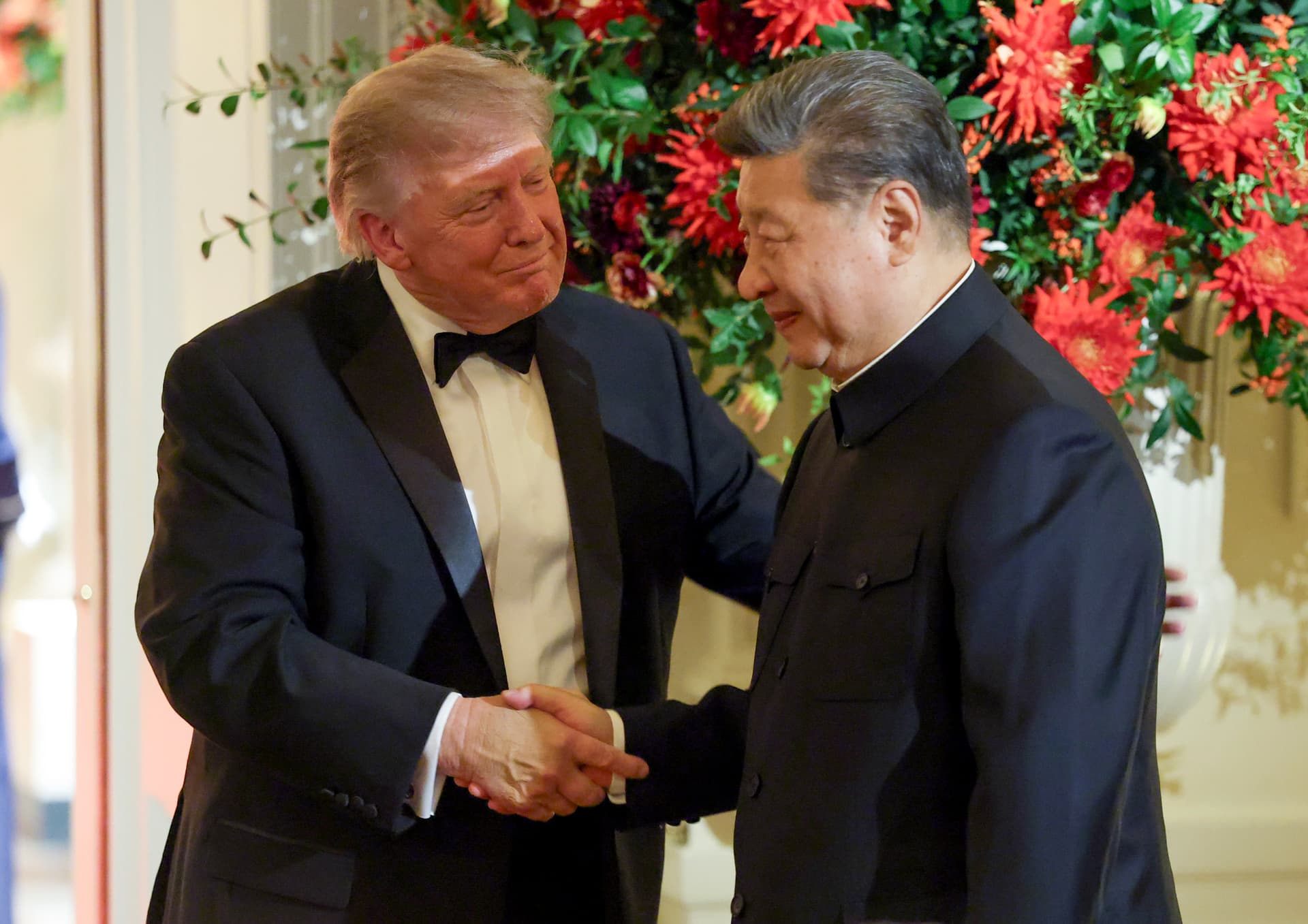
President Trump is betting on one of them in particular to prove transformational — for America and himself.
TAE Technologies and President Trump’s social media venture, Trump Media and Technologies Group, announced Thursday a 50-50 stake worth $6 billion. The deal would create the first publicly traded fusion company and comes as the company prepares to begin construction on the world’s first utility-scale fusion power plant in 2026.
“Fusion power will be the most dramatic energy breakthrough since the onset of commercial nuclear energy in the 1950s — an innovation that will lower energy prices, boost supply, ensure America’s A.I.-supremacy, revive our manufacturing base and bolster national defense,” said Trump Media’s CEO Devin Nunes.
Whether the mythology of fusion becomes a reality remains to be seen. As dramatized in “The Saint,” the 1997 film starring Val Kilmer and Elizabeth Banks about corporate espionage in the effort to make fusion energy abundant and free to all, fusion has been the unfulfilled promise of clean energy for decades.
“Maybe there is a tip now in the technology such that it is now getting demonstrated. I mean, I’ve heard that, but you know you always hear that. That’s the thing. It’s like who do you believe this time?” an attorney for a large energy company who asked not to be named tells the New York Sun.
If fusion is close to reality, it’s no doubt in part due to massive investment from government-sponsored laboratories as well as private technology, energy, and financial firms like Google, Chevron, Italy’s global energy firm Eni, and Goldman Sachs, among many others.
But it has yet to be proven. The longest fusion reactions only last for about a minute at a time, says the president of energy and emerging tech at the AI infrastructure company Maykr, John Cook. That is not long enough to reliably source AI data center needs, much less anything else.
“Humanity has not yet invented the necessary materials via material manufacturing at the subatomic level” to contain a fusion reaction, Mr. Cook tells the New York Sun. “What we’ve done is build massive magnets, like the size of one magnet being the size of your house’s first floor, maybe a little bigger than that, and then stacking multiple magnets — five or six — on top of one another. That is what is currently containing a fusion reaction. That is inadequate to contain a fusion reaction for any length of time, which is, of course, the trick of the trade.”
That trick is what TAE Technologies and its chief competitor, Commonwealth Fusion Systems, have been trying to solve for decades.
The key to fusion relies on stabilizing bonded high-temperature atoms in a plasma soup whose carbon-free heat can be captured and transformed to power a turbine. It’s akin to trying to bottle the sun.
While the technologies of competitors in the field are radically different, Commonwealth Fusion Systems — whose top expert, MIT scientist and professor Nuno Loureiro, was murdered just days ago — says it achieved the ultimate breakthrough of reducing the size and cost of tokamak reactors and external magnets.
Ironically, Commonwealth’s research leap was enhanced by the energy-sucking AI data centers its technology will feed. MIT’s Plasma Science and Fusion Research program, which Mr. Loureiro headed, announced in November that its data science center was set to accelerate “massive experimental and simulation data into predictive insight” to move its fusion program from experiment to pilot-plant transition.
TAE’s method was believed to be further away from commercialization; however, it claims its process of converting the plasma into a steam to power turbines is ready to go, a bet which if true, could be transformational, not only for energy demands but for the owners of the power source.
“What’s the coin of the realm? The coin of the realm is electricity.
Whoever has the electricity wins,” says Mr. Cook.
Assuming TAE gets regulatory approval — a not outlandish bet given its newest partner is the head of the federal government — TAE’s first plant is expected to produce 50 megawatts of electricity, enough to power up to 10,000 homes — or one data center.
That’s shy of the 1.5-2 gigawatts necessary to backstop a grid failure should AI data centers need to draw on the power company for its load. But it’s enough to participate in the race for superintelligence.
“Because of the astonishing speed with which AI builds itself, whoever’s there first leaves everybody else behind. There’s no catching up. That’s the race,” said Mr. Cook.
While many data centers are relying on traditional and abundant fuels like natural gas and coal, alternatives like fusion or small model nuclear reactors are quickly coming online.
And with all the moving parts required to get an energy source up and running, the president’s ability to put his thumb on the regulatory scale could prove favorable to his business partners.
“That great need is literally on the front doorstep, some of it’s already into the house,” the energy attorney said of AI’s power demands. “If you don’t already have a fusion plant built that’s giving you at least two gigawatts of energy, you’re behind.”
As for the high prices and lower reliability consumers are experiencing as a result of the pull on electricity from AI, Mr. Cook said the pain-now, payoff-later will eventually subside as data centers contribute back to the grid.
“The objective is to be behind the meter,” he said. “If you get in the back of the grid, you are in a better position to conduct the data activity that you want to be conducting.”