
Trump Is Keeping Open All His Options on Iran
Did Washington subtly broadcast its intention to strike on Wednesday in order to learn of the regime’s plans for when the real bombing begins?
President Trump, under pressure from Iran’s neighbors and amid internal debate, is keeping open all options on Iran, where an end to the Ayatollah regime could have ramifications beyond the Middle East.
America’s Arab allies, Saudi Arabia, Qatar, and Oman, have pleaded with Mr. Trump on Wednesday night, while all indications pointed to an imminent military action in Iran.
Some of the president’s advisers argue that striking Iran might turn into a more complex and protracted campaign than snatching the Venezuelan dictator, Nicolas Maduro. Israel, though, had plans last June for quick strikes on enforcers of the Revolutionary Guards and Basij camps across Iran.
Was a similar American attack planned for Wednesday night? Military personnel in Mideast facilities were evacuated, Iran’s skies were blockaded, and a passenger flight to Israel from Newark was turned around.
As a result, Iranian regime enforcers reportedly moved assets and personnel around. Did Washington subtly broadcast its intention to strike in order to learn of the regime’s plans for when the real bombing begins? Or did Mr. Trump indeed lost his nerve, as some reports insist?
“President Trump’s resolve is not the question,” Senator Lindsey Graham told reporters Thursday. “The question is, when we do an operation like this, should it be bigger or smaller? I’m in the camp of bigger. Time will tell. I’m hopeful and optimistic that the regime’s days are numbered.”
With a week-long internet blackout across Iran, it is hard to tell whether anti-regime protests are waning. State-owned media posted videos of motorcycle-riding, kalashnikov-carrying Basij enforcers patrolling empty streets. These postings seem designed to intimidate the citizens and tell outsiders that protests are dying down.
“That’s what the regime wants to put out, that they have the situation under control,” the policy director at United Against Nuclear Iran, Jason Brodsky, tells the Sun. “But they don’t. The fundamentals of what ails Iran have not changed. They’ve only become more aggravated, because this regime has no legitimacy.”
The 86-year-old supreme leader, Ali Khamenei, has not been seen in public in days and according to some reports he is hiding outside of Tehran. The foreign minister, Abbas Araghchi, told Fox News on Wednesday that the protest has all but ended. If so, though, why is the regime keeping a blackout of the internet, disabling cell phones, and restricting other forms of communication?
While reports of defections among officials are sketchy, indications are increasing that top regime members are preparing for any eventuality. “We can see millions, tens of millions of dollars being wired out of the country, snuck out of the country by the Iranian leadership,” Treasury Secretary Scott Bessent said Thursday. “So they are abandoning ship.”
President Trump says he received a message that Tehran decided to halt plans to execute up to 800 protesters at prisons across the country. “Their lives have been spared,” press secretary Karoline Leavitt said Thursday. “As a result of that, the President continues to closely monitor but also keep all of his options on the table.”
The Treasury Department announced new sanctions on Thursday, targeting 18 individuals and entities responsible for the brutal protest suppression and for evading the oil embargo. Among them is a top Khamenei adviser, Ali Larijani, who “was one of the first Iranian leaders to call for violence,” Treasury said in a statement. Last week Mr. Trump announced a 25 percent tariff on countries that conduct business with Iran.
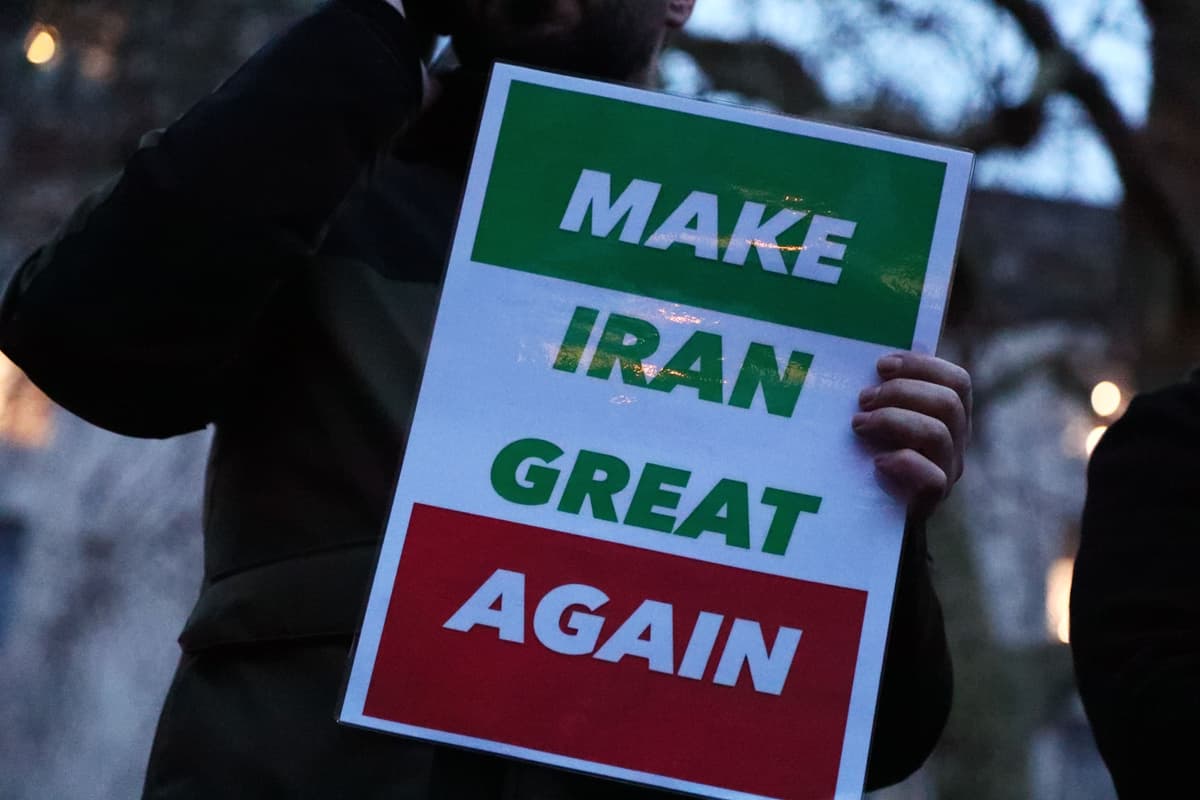
“Our message to the Iranian people is clear: Your demands are legitimate,” Mr. Bessent said. “You are protesting for a noble cause, and the United States supports you and your efforts to peacefully oppose the regime’s mismanagement and brutality.”
Beyond the liberation of the Iranian people, a regime change in Iran could have wide ramifications in the region and beyond. Following America’s tightened control of Venezuela’s oil exports, ending Iranian illicit oil sales could weaken Communist China, the top consumer of discounted oil from these countries.
The Venezuela operation and last year’s 12-day war in Iran also exposed Moscow and Beijing as weak allies. Neither rushed to aiding regimes that they have boosted to confront America.
Is Mr. Trump, for now, shelving the military option, though, and opting instead for tightening economic pressure on Iran? “It’s not either or,” Mr. Brodsky says. “Just because you’re doing sanctions doesn’t mean you can’t do kinetic strikes.”