Trump’s Social Media Warning to Tehran Could Help Protestors and Add to Regime Paranoia
‘No other American president has been willing to take the risks that President Trump has with respect to countering Iran,’ an Iran watcher says.
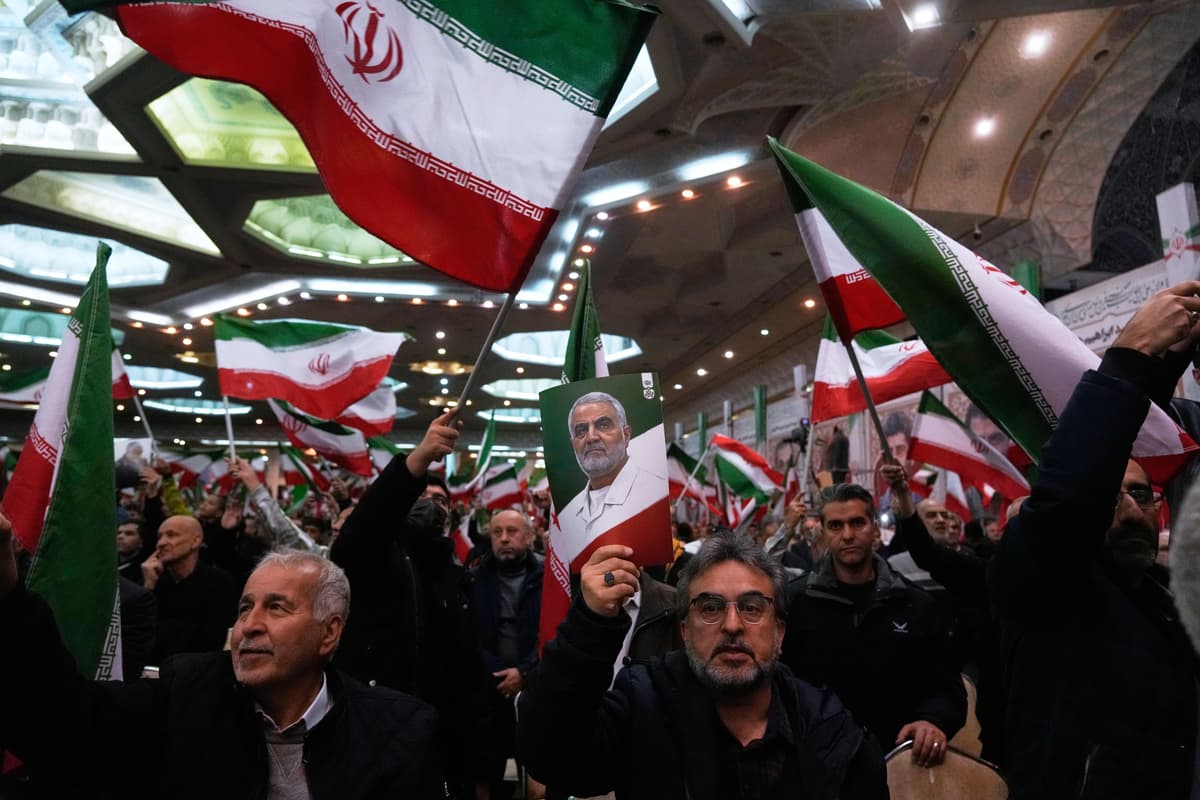
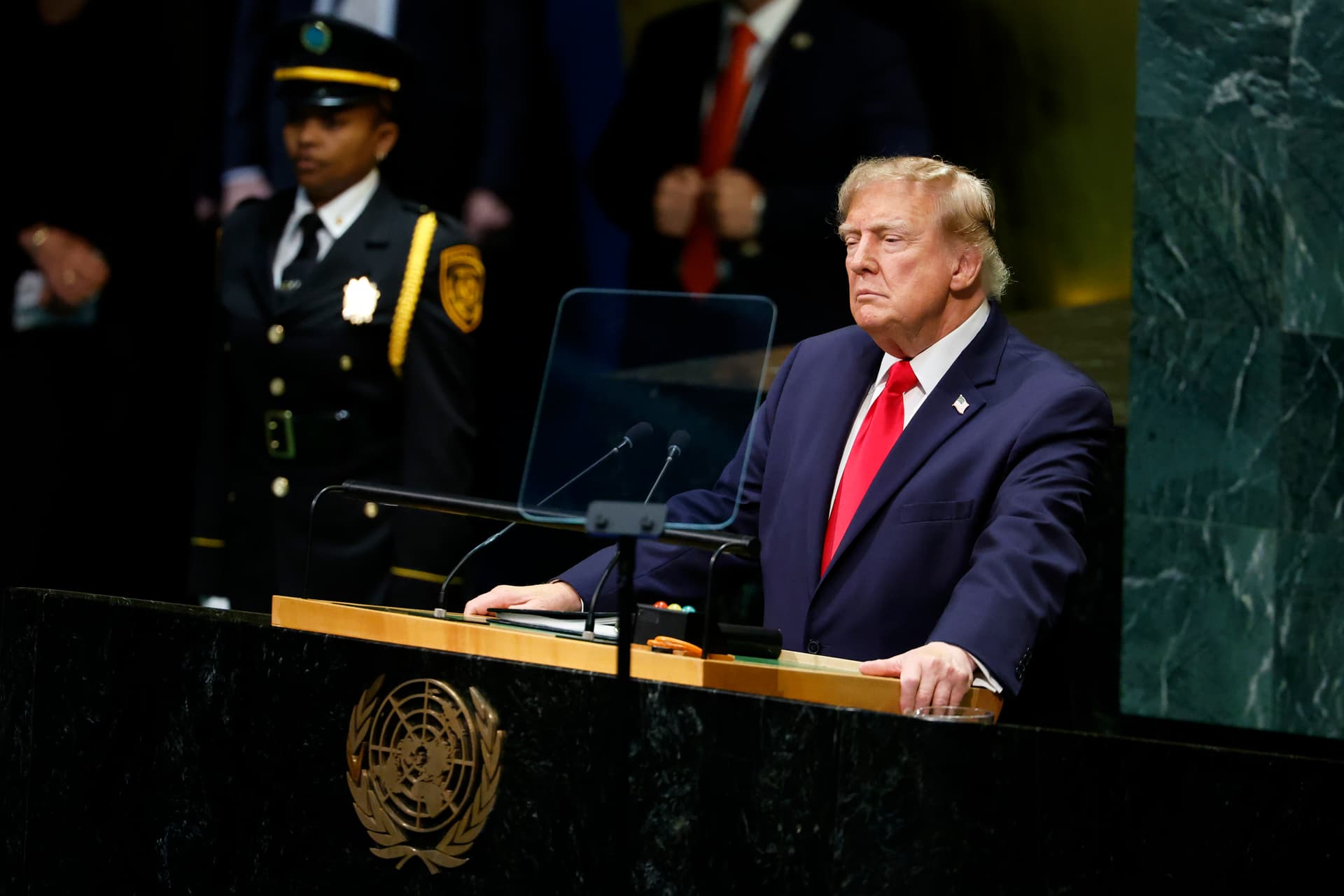
President Trump’s warning to Tehran against the use of live ammunition on protesters marks an unprecedented American response to the Islamic Republic’s brutal oppression. It could serve as a shot in the arm for the growing anti-regime movement spreading across the country.
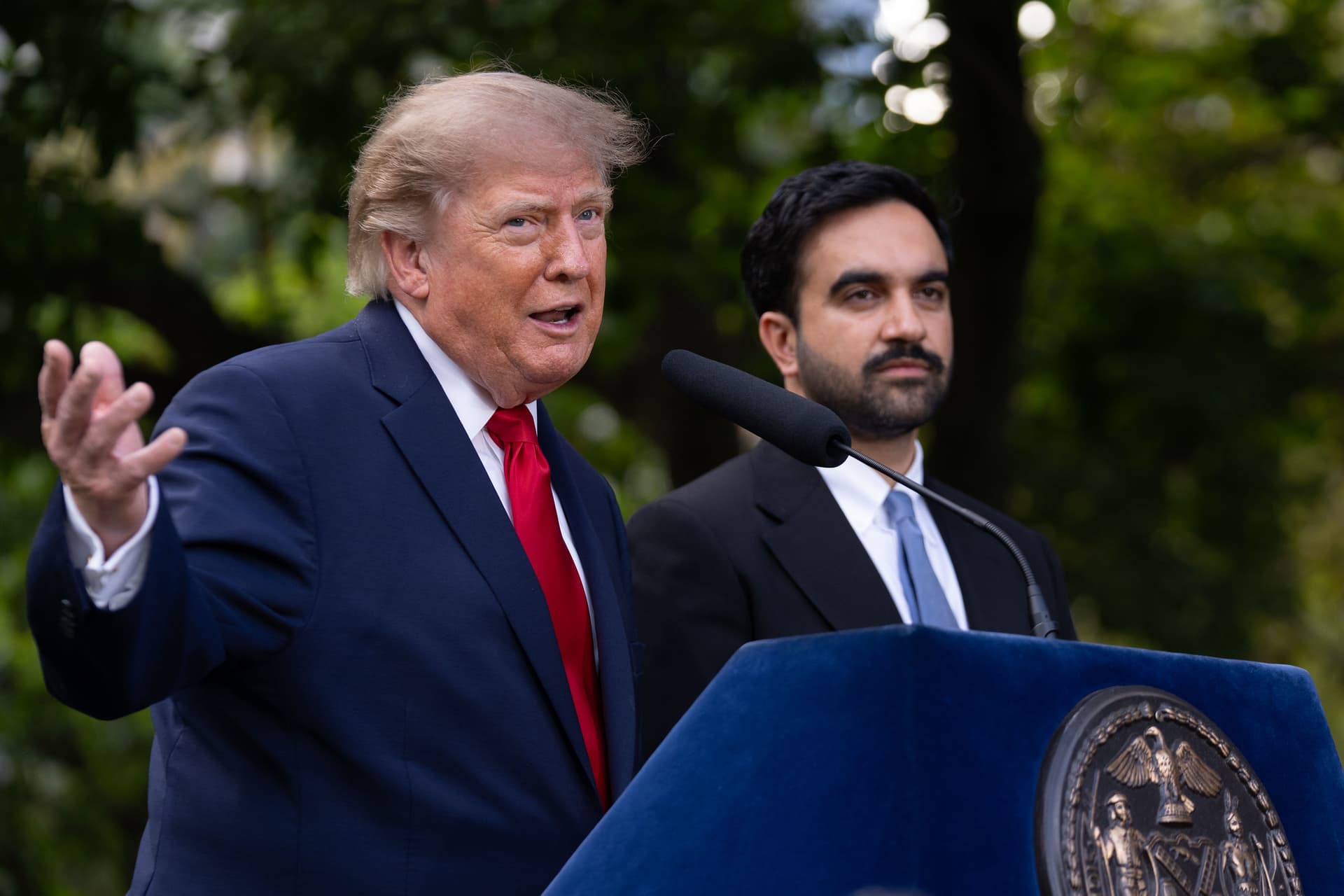
“If Iran shoots and violently kills peaceful protesters, which is their custom, the United States of America will come to their rescue. We are locked and loaded and ready to go,” Mr. Trump wrote on his social media accounts Friday, adding his signature “Thank you for your attention to this matter!”
Since the 1979 Khomeini revolution “No other American president has been willing to take the risks that President Trump has with respect to countering Iran,” the policy director at United Against Nuclear Iran, Jason Brodsky, tells the Sun. Mr. Trump’s Friday statement, he adds, “has the potential to energize the protesters” and “can increase paranoia and angst within the regime’s elite.”
Mr. Trump said recently that his January 2020 order that killed the general responsible for exporting the Iranian revolution, Qasem Soleimani, marked the beginning of the Islamic Republic’s weakening. On the eve of that American drone attack’s anniversary, protesters at Khuzestan province on Friday torched a Soleimani statue.

The 12-day-war, which was guided by deep intelligence penetration of the regime, raised fears in the ranks of the Islamic Revolutionary Guards Corps and other internal enforcement elites. As the veneer of regime invincibility dissipates, protesters were emboldened, and now are explicitly demanding an end to the regime.
In the early days of the June war, Israeli jets struck four bases housing elite enforcement units. An international lawyer, Gissou Nia, compiled a list of national-level members of the military, intelligence, police, and IRGC who were responsible for the crackdowns on the 2022 protest movement. Among national level officials on her list, “nearly one third had been killed in the 12-day war,” she writes on X.
Widely circulated reports claim the Mossad is now jamming street cameras to prevent spying on protestors. Legitimate doubts are raised about those reports, but they too are raising regime fears and divisions. “All the city cameras at our intersections are in the hands of Israel,” a member of parliament’s national security committee, Mahmoud Nabavian, said in November.
The Supreme Leader, Ali Khamenei, is yet to publicly respond to the current unrest, now in its sixth day. Street clashes across the country are widening. In some cases, especially in smaller communities, fatalities are reported as enforcers use live ammunition on protesters.
One of Mr. Khamanei’s top aides, former parliament speaker Ali Larijani, took to X to respond to Mr. Trump’s post. “With the statements by Israeli officials and @realDonaldTrump, what has been going on behind the scenes is now clear,” he writes.
As Iranians have no access to X and other social media, Mr. Larijani’s post seemed designed to convince outsiders that rather than organic, the anti-regime protest is fomented by America and Israel.
“Trump should know that U.S. interference in this internal matter would mean destabilizing the entire region and destroying America’s interests,” Mr. Larijani writes. “The American people should know — Trump started this adventurism. They should be mindful of their soldiers’ safety.”
Mr. Trump’s Friday statement contrasts sharply with President Obama’s feeble reaction in 2009 to the “green movement,” a nation-wide Iranian protest movement following a fraudulent election. In 2022, Mr. Obama acknowledged his meek response was a “mistake.” Some in his administration, he said, feared harming protesters who were accused of being “tools of the west.”
Mr. Obama, though, might have also been eager to promote what eventually became the nuclear deal with the Islamic Republic, which Mr. Trump left in 2020. Two years later, as protestors rose against oppression of women, President Biden imposed sanctions on regime members, but he too was less than forceful in public statements.
The last time an American threatened Iran with major action were it to amp up its oppression of protestors was in 1979. President Carter’s admonition to the regime of the shat at the time hastened Khomeini’s return to Tehran that year, which gave rise to the regime that today’s protesters seek to unseat.
“This is an evil, anti-American, repressive regime, one of the worst in the world, and it is fundamentally in America’s interest for this regime to be gone,” Mr. Brodsky says.