United Nations Security Council To Meet Monday on Request To Condemn Israel for Recognizing Somaliland Independence

A group of Arab and African nations unironically argue that Israel doesn’t have the right to mess with the territorial integrity of a sovereign nation.

AP/Evan Vucci
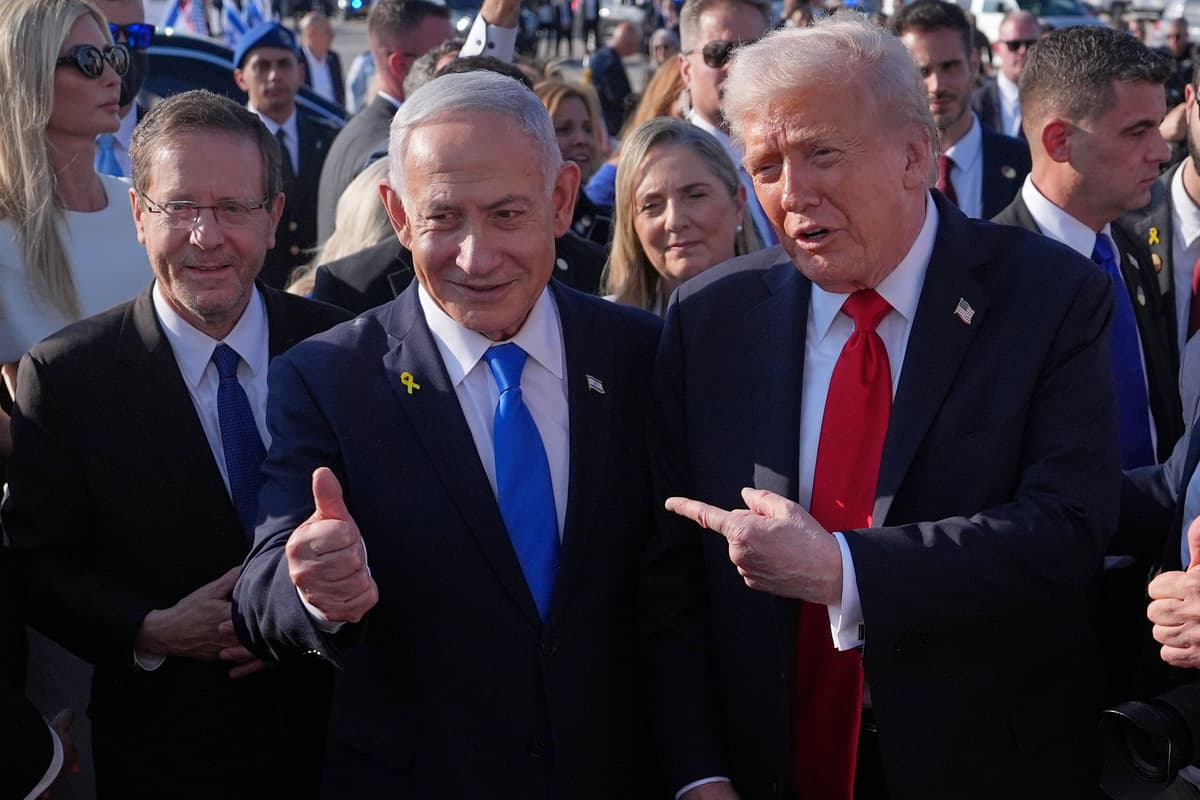
President Trump with Prime Minister Benjamin Netanyahu at Ben Gurion International Airport, October 13, 2025. AP/Evan Vucci

As Israel’s Prime Minister, Benjamin Netanyahu, meets Monday with President Trump at Mar-a-Lago, the United Nations Security Council will be meeting on whether to condemn Israel for recognizing the independent state of Somaliland.

On Monday, the Security Council will hold an emergency meeting at the request of Somalia, which assumes the presidency of the Security Council on January 1.

“The illegal aggression of PM Netanyahu in recognising a part of Somalia’s Northern region is against international law,” wrote Somalia’s president, Hassan Sheikh Mohamud. “Meddling with Somalia’s internal affairs is contrary to established legal & diplomatic rules. Somalia & its people are one: inseparable by division from a far.”

The move comes after Israel on Friday became second to Taiwan to officially recognize the democratic territory, which broke away from Somalia in 1991 amid a civil war, but is still not recognized by most nations. Somaliland will join the Abraham Accords and its president, Abdirahman Mohamed Abdallah, is planning to visit Israel. 

“The State of Israel plans to immediately expand its relations with the Republic of Somaliland through extensive cooperation in the fields of agriculture, health, technology, and economy,” Mr. Netanyahu said in his recognition. “I wish the people of Somaliland success, prosperity, and freedom.”

Twenty Arab and African nations and the Palestinian government led by Mahmoud Abbas responded by criticizing Israel for doing exactly what dozens of nations did regarding a state for Palestine earlier this year — recognize it as a separate state. The condemnation was released as a shared statement by Saudi Arabia, Qatar, Turkey, Jordan, Iran, Iraq, Kuwait, Libya, Pakistan, Yemen, and others. 

The nations stressed their “unequivocal rejection” of Israel’s support for Somaliland, saying that such recognition has “serious effects on international peace and security as a whole” and “constitutes a grave violation of the principles of international law and the United Nations charter, which explicitly stipulates the imperative of protecting the sovereignty of states and their territorial integrity.”

Syria did not originally join the statement but issued its own criticism later. The UAE and Lebanon also did not join the collective condemnation.

Unified with Somalia in 1960 after Italy and Britain evacuated the two regions formerly known as British and Italian Somaliland, Somaliland declared its independence in 1991 in an attempt to depend itself from the clan warfare that resulted in more than 200,000 Isaaq clan members dying. During that time, Somaliland’s capital city of Hargeisa was destroyed in what Somali records refer to as a “final solution.” 

In 2001, a statewide referendum reinforced support for Somaliland’s independence from Somalia. It has had four presidential elections since then and had a multi-party parliamentary election in 2024.

Sharing in its isolation, Israel has long been a supporter of Somaliland, asking the United Nations in 1990 to address the human rights violations taking place during what the international community called a genocide.

In a series of posts over the weekend, the Somaliland Republic reinforced its relationship with Israel and panned the condemnations. 

“Doha has no business meddling in Somaliland’s affairs while bankrolling Muslim Brotherhood proxies to prop up Mogadishu’s failed regime,” it said of the Qatari kingdom. “This is also a moment for Hargeisa to seriously reevaluate the purpose and presence of the Turkish office on our soil. True partnership respects independence, not undermines it,” it added in another statement.

The Republic of Somaliland government also suggested its roots with Israel may be traced back to the lost tribes. “The Yibir community — often associated with ‘Hebrew ’— is believed by some to descend from ancient Jewish roots, possibly tied to the Lost Tribes of Israel, and they remain part of Somaliland society today. In Berbera’s old town, standing structures are identified as a former synagogue once used by Jewish merchants until the mid-20th century — living traces of enduring Red Sea-era ties,” the republic’s X handle posted.


The New York Sun

© 2025 The New York Sun Company, LLC. All rights reserved.

Use of this site constitutes acceptance of our Terms of Use and Privacy Policy. The material on this site is protected by copyright law and may not be reproduced, distributed, transmitted, cached or otherwise used.

The New York Sun

Sign in or  create a free account

or
By continuing you agree to our Privacy Policy and Terms of Use