
A Movie That Details the Consequences of Alcoholism, Billy Wilder’s ‘The Lost Weekend’ Can Be Found at Film Forum
The trouble with ‘The Lost Weekend’ is that its immaculate crafting places too smooth of a veneer over its tale of human misery.
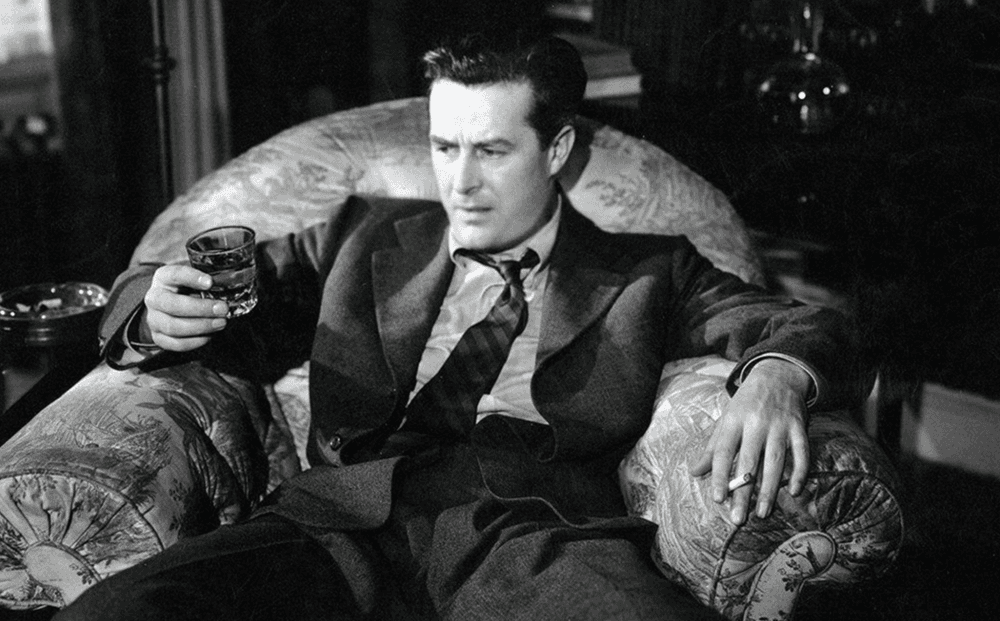
Heading into a month that many practice as “Dry January,” the person at Film Forum responsible for programming Billy Wilder’s “The Lost Weekend” (1945) did so either as a good-natured caution or a sour joke. The reconsiderations that come with a new calendar year almost invariably involve changes in behavior or, at least, a nod to them. A movie that details the consequences of alcoholism in mortifying and sometimes nightmarish detail is a gauntlet thrown down.
Wilder, working with a longtime collaborator, Charles Brackett, adapted Charles R. Jackson’s 1944 novel of the same name. “The Lost Weekend” was a lightly fictionalized autobiography about one of many “poor bedeviled guys on fire with thirst.”
Jackson’s book struck a chord and became a best-seller, though its lessons were, in the end, lost on the author. Success didn’t sit lightly on his shoulders: Jackson fell off the wagon and took to pills. His death at age 65 from barbituate poisoning was ruled a suicide.
One has to wonder what Jackson made of the final minutes of “The Lost Weekend.” How much of a happy ending it truly is has been mooted by audiences since the movie opened in theaters. The picture takes on a moralistic fervor that runs contrary to its dominant tone. Did the studio bosses at Paramount strong-arm Wilder and Brackett into a denouement that takes a whiplash-inducing narrative loop?
“The Lost Weekend” was the first serious cinematic exploration into the deleterious effects of addiction. As with most works of art that were, in their day, unprecedented, the lustre of innovation has since diminished. What was one-of-a-kind has become a lodestar for a genre marked by pictures both notable (“The Days of Wine and Roses”) and run-of-the-mill (any number of made-for-TV melodramas). The conventions Wilder set into motion are now well-trod. Viewers will be able to follow and predict the beats of the film.

How well does “The Lost Weekend” succeed on its own terms? During the year of its release, the film racked up impressive reviews — though James Agee at the Nation found it “easy to overrate” — and received seven nominations from the Academy of Motion Picture Arts and Sciences, winning Oscars for Best Adapted Screenplay, Best Actor, Best Director, and Best Picture.
It was a historic feat, but how did Miklós Rózsa get stiffed for Best Original Score? Without his stirring, theremin-inflected music, early audiences laughed at Milland’s sweaty, hollow-eyed performance as a Manhattan-based writer on the skids. Reports have it that studio execs were so rattled by the initial responses to “The Lost Weekend” that they wanted to shelve it. Rózsa’s contribution righted these reactions and, as such, proved transformative.
The trouble with “The Lost Weekend” is that its immaculate crafting places too smooth of a veneer over its tale of human misery. Wilder’s sharp eye for narrative detail and symbolic counterpoint, as well as the sometimes florid dialogue he contrived with Brackett, privileges the artifice of form at the expense of gravity.
There are haunting passages during the picture — watching Milland’s character steal a woman’s purse and then be publicly shamed for it is as painful as it’s intended to be — but the movie, while notable, is, on the whole, more stylish than gritty.