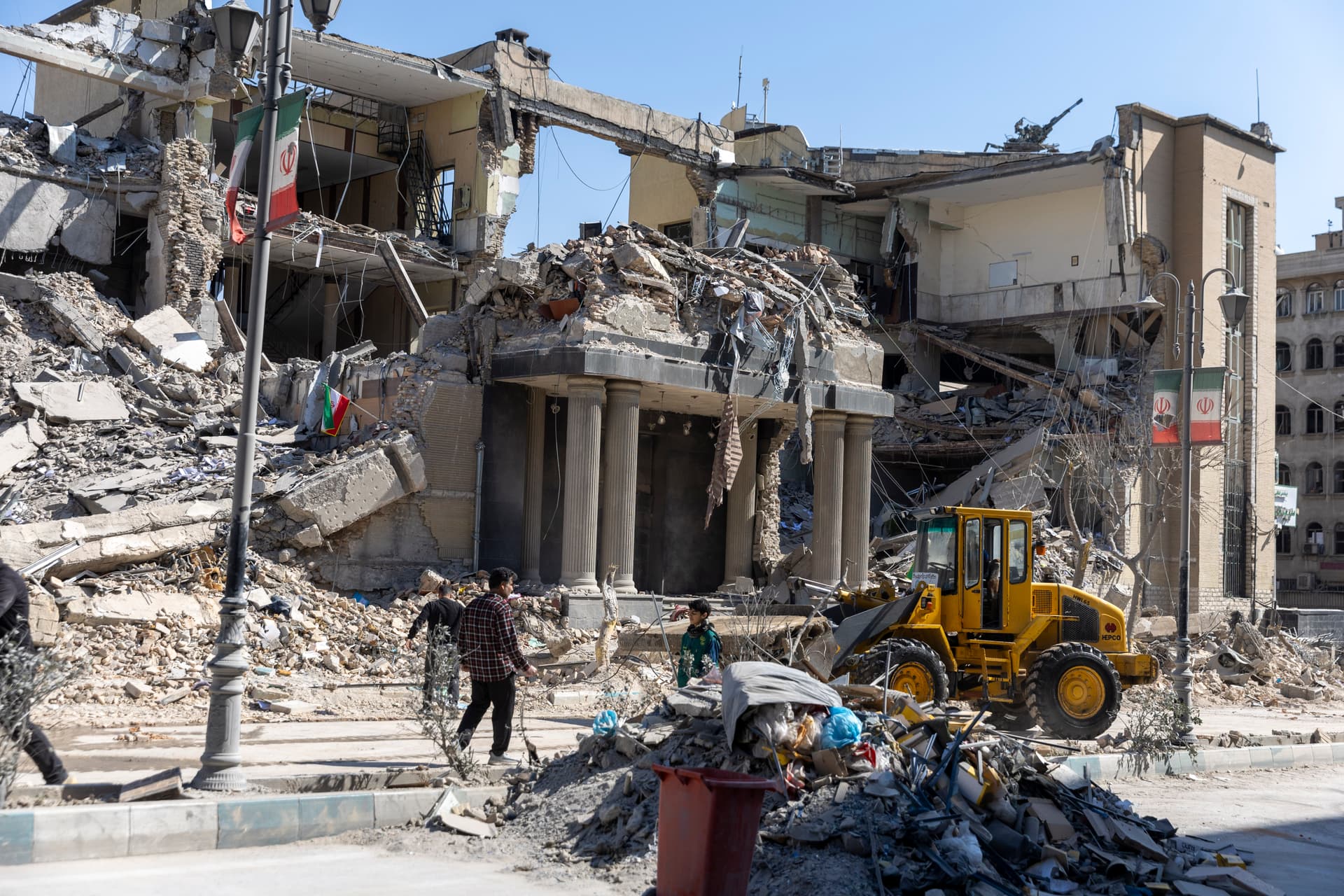

Iran’s Economic Crisis

This article is from the archive of The New York Sun before the launch of its new website in 2022. The Sun has neither altered nor updated such articles but will seek to correct any errors, mis-categorizations or other problems introduced during transfer.

The New York Sun

Iran’s civil society is experiencing major breakdowns, the country’s reformist press and Web loggers are reporting. Signs of growing economic instability include high inflation, rising prices, food shortages, and long lines at gas stations.

In the first week of January, 150 deputies at the Majlis, Iran’s Parliament, openly criticized President Ahmadinejad’s handling of such issues. The same week, a group of 54 influential Iranian professors wrote an open letter to the government about its agricultural policies.

The professors discussed Iran’s “rapidly depleted” natural resources, such as water, and criticized the country’s growing reliance on imported grains and rice, as well as the deterioration of its farms and ranches. They said many Iranians, in particular the young, elderly, and poor, have begun to “suffer from severe nutritional deficiencies, which threaten Iran’s public nutritional security.”

The January 20 edition of the Iranian reformist daily Rooz included an interview with an economist, Saeed Leilaz. “Iran is on the verge of economic collapse,” he said. “A large portion of the economic turn for the worse is due to Ahmadinejad’s policies and management style … [which] have prompted many to publicly criticize [him]. … The administration has increased government expenditures so much that we will face an enormous budget deficit in the coming year.”

Mr. Leilaz also said Iran’s deep economic crisis could “ultimately lead to the disintegration of the government.”

Gas shortages throughout the country, as well as news of Iranians “waiting in lines for hours to purchase gas cylinders to heat their homes or cook food,” were detailed in a report in Rooz on January 14. In some towns, lines of people were three miles long, and citizens were upset about the rising prices of produce, dairy, rice, eggs, cereal, and grains, the paper reported.

The Arab press has been watching Iran’s economic crisis closely. An editorial in the Saudi daily Arab News of January 24, “Frustrations in Iran,” focused on Tehran’s economic travails and “the growing criticism of Ahmadinejad’s presidential performance.”

“The problem for the president is that the economy is weak,” the editorial said. “Despite its oil wealth, life is hard for ordinary Iranians. … There is therefore a groundswell of frustration because of the president’s economic neglect.”

A Saudi columnist, Ahmed Al-Rabei, wrote in the January 29 issue of Asharq Al-Awsat about the Iranian economic crisis. “Instead of attempting to solve the unemployment and poverty problems of its people, the new revolutionaries decided instead to ‘export the revolution,'” he wrote. “After all, a revolution is not a commodity to import but rather the creation of a new regime that sets an example to others. What the revolutionaries did in Tehran was a disaster rather than an example.”

Mr. Rabei criticized Iran for spending money on spreading war rather than helping its needy. “Iran is actively involved in Lebanon,” he wrote. “They are the real motivators of war and chaos through the ‘clean money'” — Iran’s funding of Hezbollah — “that they appropriated from their poor. They are also involved in both Iraqi and Palestinian affairs. They are involved in acts of violence in Yemen and are nauseatingly active in Syria, Egypt, Pakistan and other nations while at home their unemployment and poverty problems worsen and their oil revenues are channeled into the development of nuclear weapons technology and the building of its military arsenal.”

American policy-makers should take advantage of Iran’s dire economic situation. Targeted financial measures could lead to the ousting of Mr. Ahmadinejad, who is walking and talking like the leader of a superpower and openly challenging America at every step.

His most recent provocation, creating a $2 billion social investment fund with Venezuela this month “to challenge America,” is not going over well with the average Iranian, who is waiting in long lines for food and gas.

Many in Iran would be happy to see a regime change. The American government needs to reach out to these people.

Mr. Stalinsky is the executive director of the Middle East Media Research Institute.


The New York Sun

© 2025 The New York Sun Company, LLC. All rights reserved.

Use of this site constitutes acceptance of our Terms of Use and Privacy Policy. The material on this site is protected by copyright law and may not be reproduced, distributed, transmitted, cached or otherwise used.

The New York Sun

Sign in or  create a free account

or
By continuing you agree to our Privacy Policy and Terms of Use