For Putin, ‘War Has Become an Ideology,’ Making a Ukraine Peace Deal More Elusive

What the Russian tyrant calls ‘the root causes of the conflict’ are really one cause: Ukraine’s existence as a sovereign nation.
Sergei Bobylev/RIA Novosti via AP
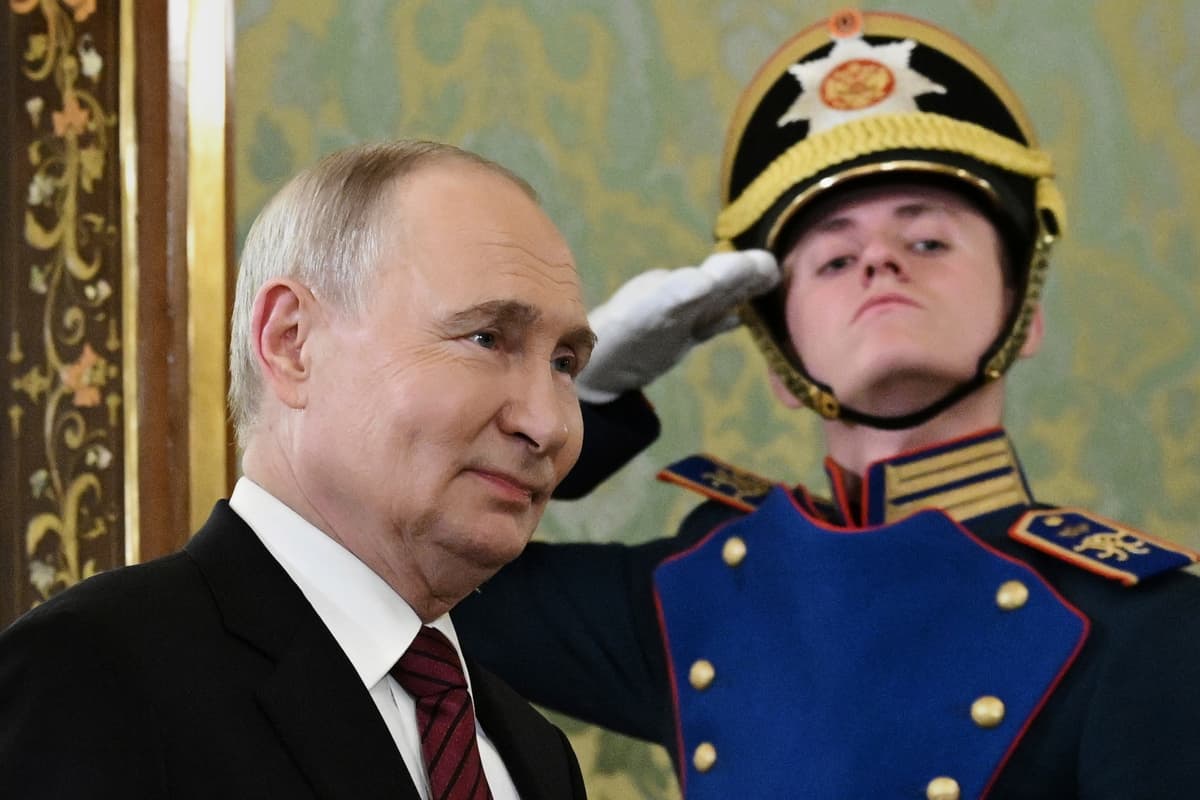
President Putin at the Grand Palace at the Kremlin, May 10, 2025. Sergei Bobylev/RIA Novosti via AP

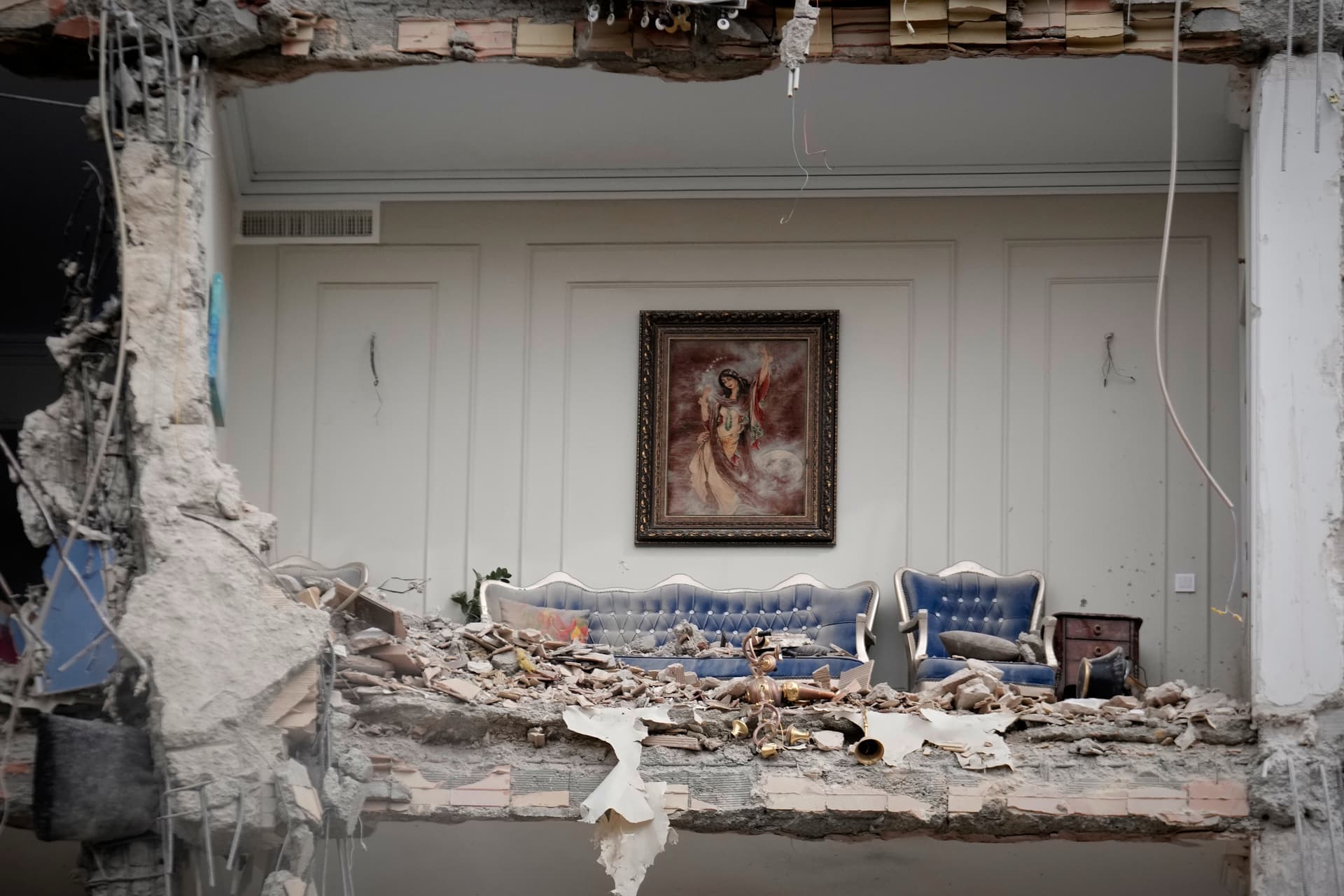
Recently, 20,000 people were evacuated from the center of the German city of Cologne because of a timely reminder from the past: three unexploded bombs dropped on the pulverized city during World War II. A thousand miles to the east, reverberations from explosions in Ukraine are part of Europe’s present. And of its foreseeable future, in part because of past misjudgments.

Consider 1994. That was three years after the disintegration of the Soviet Union. And five years after American political scientist Francis Fukuyama’s influential essay argued that humanity’s ideological evolution had culminated in “the end of history”: the exhaustion of all social systems hitherto considered plausible alternatives to open, liberal societies.

In 1994, Ukraine surrendered the Soviet-era nuclear weapons it possessed, receiving in exchange American, British, French, Russian, and Communist Chinese security guarantees. Twenty years later, Russia seized Crimea. And began supporting insurrections aimed at dismembering Ukraine.

Ukraine’s minister of foreign affairs from 2020 to 2024, Dmytro Kuleba, writing in Foreign Affairs, says, “The stark reality is that neither Russia nor Ukraine has much of an incentive to stop the fighting.” What President Putin calls “the root causes of the conflict” are really one cause: Ukraine’s existence as a sovereign nation.

Although there is no excuse for it, there is a reason for the failure of American leaders to understand Mr. Putin. He is an open book who has been reading himself to the world since long before he published his 2021 essay “On the Historical Unity of Russians and Ukrainians.” 

This farrago of ethnic mysticisms and history seen through a pseudo-theological lens is Putin’s “Mein Kampf.” His resentments and revenge aspirations are all there. Yet are largely ignored or disbelieved by the West’s statesmen and publics who complacently believe that the end of history meant the end of toxic nonsense such as this:

Mr. Putin believes Russia is a “civilization-state” with cultural-cum-religious significance, rights and responsibilities that justify the erasure of other nations. Which is why the Economist correctly says that for Mr. Putin “war has become an ideology.”

What Johns Hopkins University’s Hal Brands describes as Mr. Putin’s “quasi-genocidal barbarities” are committed in the name of a totalizing, uncompromisable objective: the political and cultural extinction of Ukraine. Russia has kidnapped, for the purpose of “Russification,” uncountable thousands of Ukrainian children. Their return is, President Zelensky says, Kyiv’s “number one” priority in negotiations. Try explaining that to Steve Witkoff.

This real estate developer, Mr. Trump’s designated war-ender, says he and Mr. Putin have developed a “friendship.” Witkoff echoes President Carter’s secretary of state, Cyrus Vance, saying that Soviet leader Leonid Brezhnev shares similar “dreams and aspirations” Mr. Witkoff wonders, “Why would [Russia] want to absorb Ukraine?” Mr. Putin explained in his 2021 essay, which shows that peace is impossible.

In 1991, Crimea, like the rest of Ukraine, voted for independence. In 2018, the first Trump administration’s Crimea Declaration said “the United States reaffirms as policy its refusal to recognize the Kremlin’s claims of sovereignty over territory seized by force in contravention of international law.” 

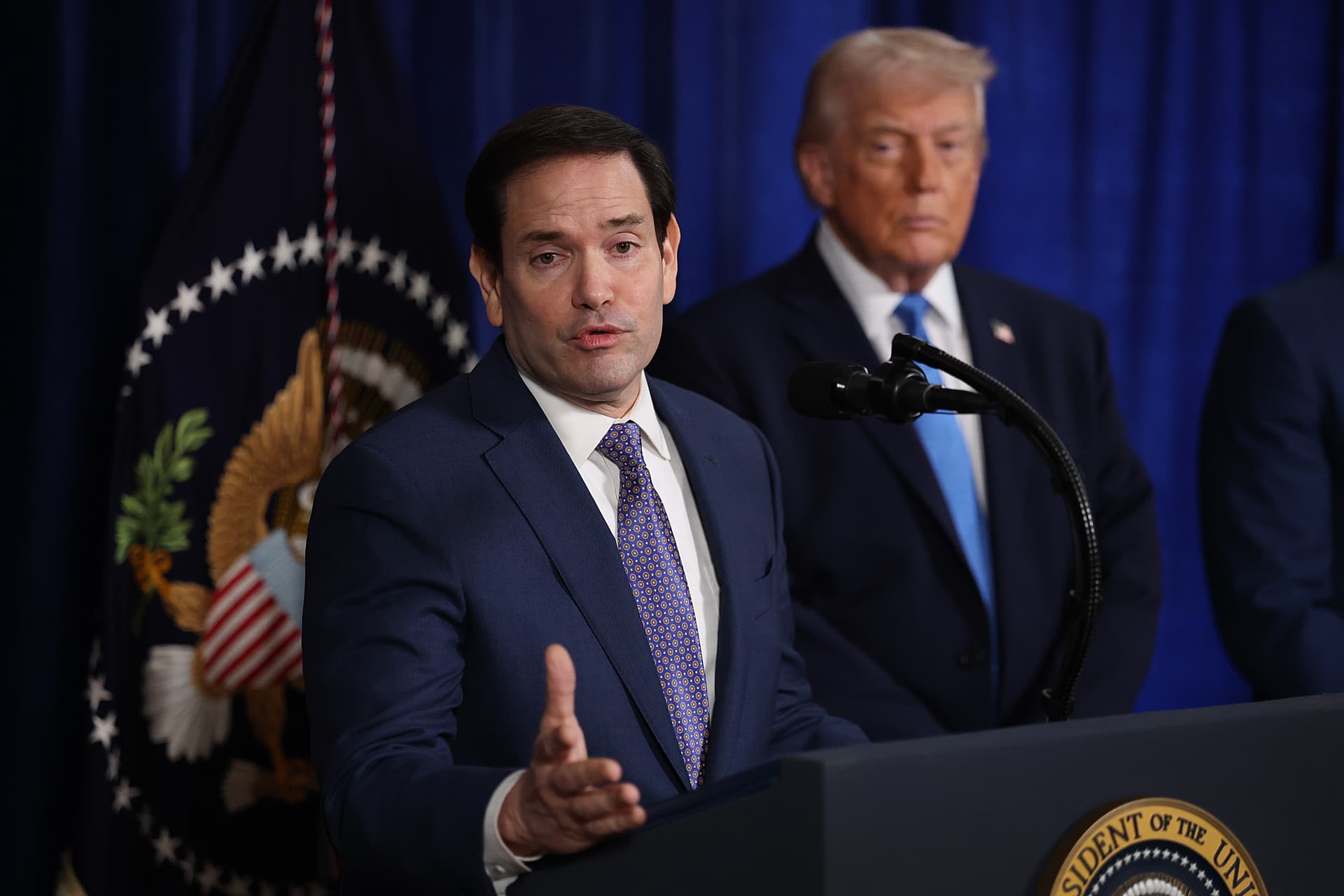
Mr. Trump’s State Department said this would be U.S. policy “until Ukraine’s territorial integrity is restored.” In 2022, Senator Rubio sponsored a bill that would have forbidden American acknowledgment of Russian sovereignty over seized Ukrainian territory. Recently, however, the elastic Mr. Trump breezily said Crimea was “lost years ago.”

The end of history has not yet reached Europe. Writing in Foreign Affairs, Theodore Bunzel and Elina Ribakova recall a prophecy from a founder of the European Union, Jean Monnet: “Europe will be forged in crises, and will be the sum of the solutions adopted for those crises.” 

Unintended beneficial consequences of Mr. Putin’s catastrophic blunder in Ukraine include NATO’s enlargement (Finland and Sweden), revitalization of the American defense industrial base and renewed seriousness about Europe’s self-defense.

In a 1951 letter to a friend, an American contemporary of Monnet said that the challenge then was “how to inspire Europe to produce for itself those armed forces that, in the long run, must provide the only means by which Europe can be defended.” So wrote someone with firsthand experience of European dangers, General Dwight Eisenhower, later to be elected president.

Today, the American Enterprise Institute’s Dalibor Rohac writes: “The good news is that we know for a fact, based on the experience of the past three years, that even a relatively small and poor country such as Ukraine — never mind the top-shelf militaries of Poland or Finland — can stop Russia in its tracks, with what has been modest U.S. and international support.” This reality has escaped the notice of “realists” who think Ukraine is flimsy.

The Washington Post


The New York Sun

© 2025 The New York Sun Company, LLC. All rights reserved.

Use of this site constitutes acceptance of our Terms of Use and Privacy Policy. The material on this site is protected by copyright law and may not be reproduced, distributed, transmitted, cached or otherwise used.

The New York Sun

Sign in or  create a free account

or
By continuing you agree to our Privacy Policy and Terms of Use