


Execution of Fort Hood Killer Nidal Hasan Will Be Public, Pete Hegseth Says
By DAVID MASTIO
|Sentimentality — a specialty of Longfellow — is over-criticized these days, when it is, at its best, an extravagant gesture toward true emotion.
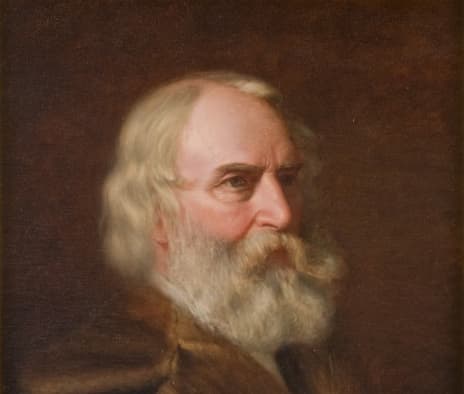
Somewhere in the middle decades of the 20th century, advanced poetic taste decided that sentimentalism in general, and the sentimentalism of Henry Wadsworth Longfellow (1807–1882) in particular, was unbearable. Before that, Longfellow’s 1860 poem “The Children’s Hour” had been widely taught to schoolchildren in America — a somewhat strange choice, admittedly, since it is a poem more about children than for children. The emotion is a father’s, not his daughters’, and the references are not within a child’s range: the Franco-Italian naming of an old bandit as a “mustache,” for example, or the gesture toward the German folk tale of a wicked ruler, the bishop of Bingen, being devoured by mice — a legend that Longfellow almost certainly learned from Robert Southey (1774–1843).
The dismissal of the poem from the schoolbook canon, however, probably had more to do with a growing sneer at Longfellow as just too maudlin and sappy a poet. I mean, a poem about a father wrestling his daughters into a hug and vowing to keep them forever “In the round-tower of my heart”? Ick, his modern critics thought, and so they taught us to think. But sentimentality is over-criticized these days, when it is, at its best, an extravagant gesture toward true emotion. And there have not been many better light-hearted attempts to express a father’s love than “The Children’s Hour.”
By DAVID MASTIO
|
By MARIE POHL
|
By CAROLINE DOWNEY
|
By A.R. HOFFMAN
|
By LUKE FUNK
|
By MATTHEW RICE
|
By BENNY AVNI
|
By ALEXANDER LARMAN
|Somewhere in the middle decades of the 20th century, advanced poetic taste decided that sentimentalism in general, and the sentimentalism of Henry Wadsworth Longfellow (1807–1882) in particular, was unbearable. Before that, Longfellow’s 1860 poem “The Children’s Hour” had been widely taught to schoolchildren in America — a somewhat strange choice, admittedly, since it is a poem more about children than for children. The emotion is a father’s, not his daughters’, and the references are not within a child’s range: the Franco-Italian naming of an old bandit as a “mustache,” for example, or the gesture toward the German folk tale of a wicked ruler, the bishop of Bingen, being devoured by mice — a legend that Longfellow almost certainly learned from Robert Southey (1774–1843).
The dismissal of the poem from the schoolbook canon, however, probably had more to do with a growing sneer at Longfellow as just too maudlin and sappy a poet. I mean, a poem about a father wrestling his daughters into a hug and vowing to keep them forever “In the round-tower of my heart”? Ick, his modern critics thought, and so they taught us to think. But sentimentality is over-criticized these days, when it is, at its best, an extravagant gesture toward true emotion. And there have not been many better light-hearted attempts to express a father’s love than “The Children’s Hour.”
Cancel anytime
By continuing you agree to our Privacy Policy and Terms of Service.
Cancel anytime