

Historic Suspensions Imposed on Argentina May Be Lifeline for FIFA’s Embattled President
By GEORGE WILLIS
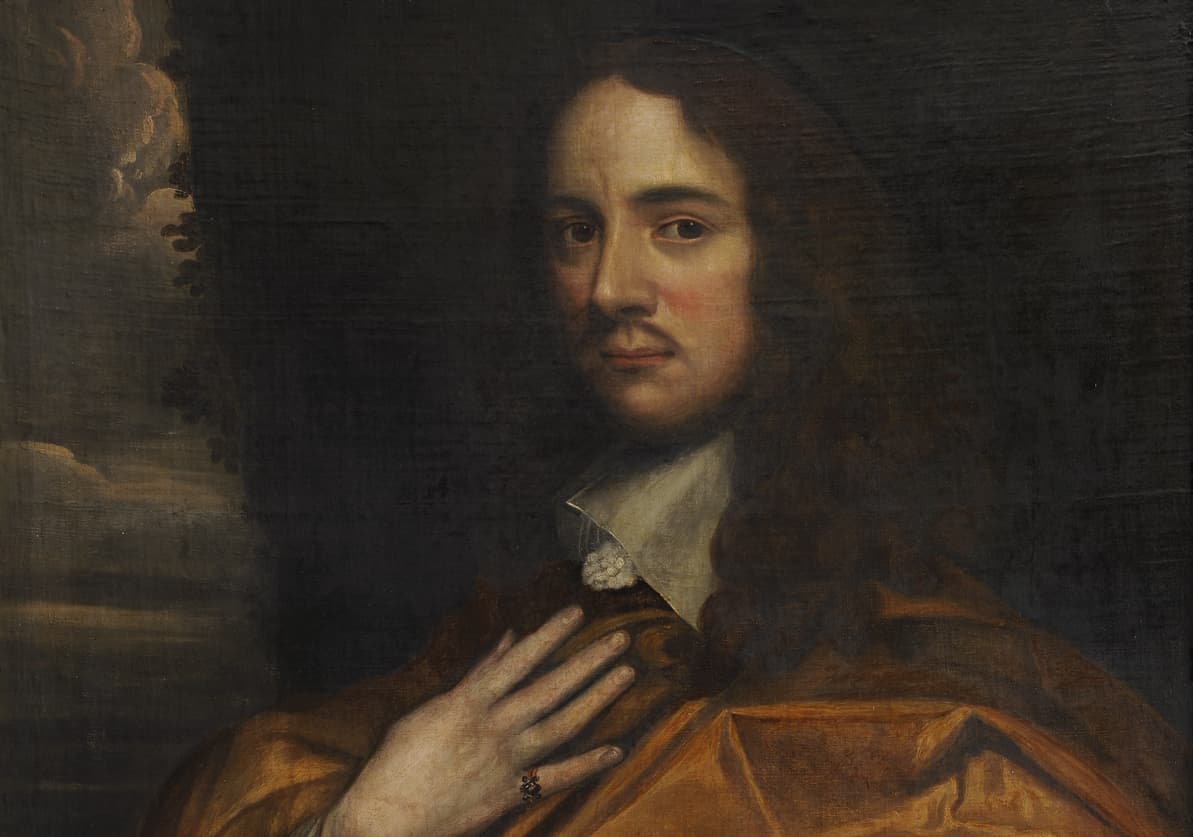
|A generation behind those metaphysical greats, John Donne and George Herbert, Andrew Marvell seems, like the era itself, more chameleonic than they were — more the sort of man to survive his century’s upheavals.

Published:
Updated:
Andrew Marvell (1621–1678), whose birthday we commemorate today, numbers among the English metaphysical poets active throughout the seventeenth century. A generation behind those metaphysical greats, John Donne and George Herbert, Marvell seems, like the era itself, more chameleonic than they were — more the sort of man to survive that century’s upheavals.
He might, for a start, almost have been a Cavalier. Among his first poems, written during his undergraduate days at Cambridge, was a celebration of the birth of a child to King Charles I. Later, during the Protectorate, Marvell served as tutor to Oliver Cromwell’s ward and as Latin Secretary to Cromwell’s Council of State, a position he shared with the blind John Milton. Upon the Restoration, he became an apologist for his friend Milton, helping to avert Milton’s execution for his writings against monarchy. Marvell’s own satirical poems, meanwhile, criticizing the corruption of the court of Charles II, were published anonymously during his lifetime. Following a turn in Parliament, during which he wrote and circulated those politically sensitive verses, Marvell retired to a relatively quiet and prosperous existence as agent for a shipmasters’ guild.
Marvell’s poems demonstrate the same chameleonic range as his personal and political affiliations. “A Dialogue Between the Soul and the Body,” for example, demonstrates his metaphysical capacity for knotty theological idea-smithing. On the other hand, his most famous poem, “To His Coy Mistress,” belongs in the standard Cavalier playbook, with its theme that there’s never enough time for all the sex you want to have. Today’s Poem of the Day, meanwhile, ticks along like time itself, in regular tetrameter abab quatrains. Although its pastoral speaker’s path is lit by glow worms, he has, alas, fallen in love and fumbles hopelessly in the dark.
By GEORGE WILLIS
|
By LUKE FUNK
|
By BRADLEY CORTRIGHT
|
By A.R. HOFFMAN
|
By CARL ROLLYSON
|
By THE NEW YORK SUN
|
By BRADLEY CORTRIGHT
|
By ROSS ANDERSON
|Andrew Marvell (1621–1678), whose birthday we commemorate today, numbers among the English metaphysical poets active throughout the seventeenth century. A generation behind those metaphysical greats, John Donne and George Herbert, Marvell seems, like the era itself, more chameleonic than they were — more the sort of man to survive that century’s upheavals.
He might, for a start, almost have been a Cavalier. Among his first poems, written during his undergraduate days at Cambridge, was a celebration of the birth of a child to King Charles I. Later, during the Protectorate, Marvell served as tutor to Oliver Cromwell’s ward and as Latin Secretary to Cromwell’s Council of State, a position he shared with the blind John Milton. Upon the Restoration, he became an apologist for his friend Milton, helping to avert Milton’s execution for his writings against monarchy. Marvell’s own satirical poems, meanwhile, criticizing the corruption of the court of Charles II, were published anonymously during his lifetime. Following a turn in Parliament, during which he wrote and circulated those politically sensitive verses, Marvell retired to a relatively quiet and prosperous existence as agent for a shipmasters’ guild.
Marvell’s poems demonstrate the same chameleonic range as his personal and political affiliations. “A Dialogue Between the Soul and the Body,” for example, demonstrates his metaphysical capacity for knotty theological idea-smithing. On the other hand, his most famous poem, “To His Coy Mistress,” belongs in the standard Cavalier playbook, with its theme that there’s never enough time for all the sex you want to have. Today’s Poem of the Day, meanwhile, ticks along like time itself, in regular tetrameter abab quatrains. Although its pastoral speaker’s path is lit by glow worms, he has, alas, fallen in love and fumbles hopelessly in the dark.
Already have a subscription? Sign in to continue reading
Cancel anytime
By continuing you agree to our Privacy Policy and Terms of Service.