‘Superman’ Shows How Far Liberals in Hollywood and Politics Have Veered From Ideal of ‘the American Way’

In the film’s bland, demoralizing vision, America is nothing special — and neither, for that matter, is Superman.
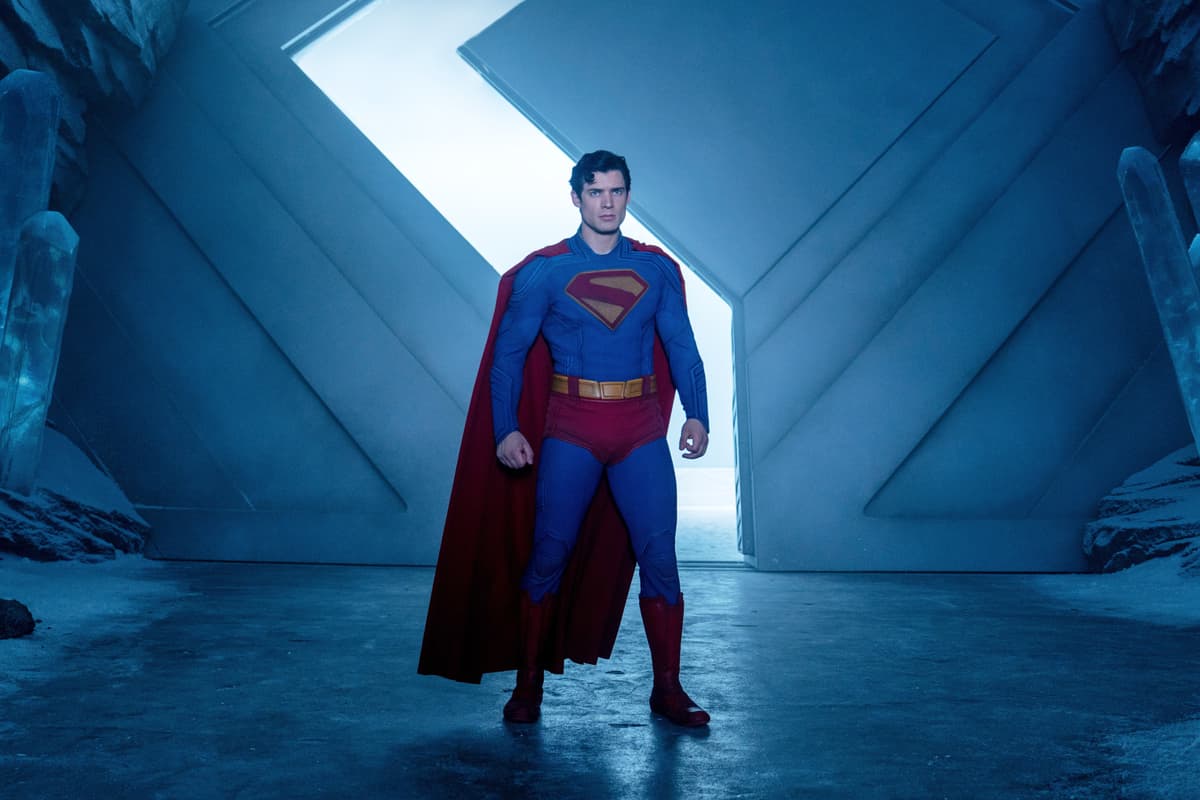

Warner Bros. Pictures via AP
David Corenswet in a scene from 'Superman.' Warner Bros. Pictures via AP

The new “Superman” movie isn’t an attack on President Trump’s immigration policies, but it shows how alienated from America many liberals in Hollywood and politics now feel.

Every youth used to know Superman fights for “truth, justice, and the American way.”

That slogan has been around since the “Superman” radio show of the early 1940s and was featured in the 1978 blockbuster starring Christopher Reeve that inaugurated the modern comic-book movie.

The director of the latest flick, James Gunn, has his own take: “‘Superman’ is the story of America. An immigrant that came from other places and populated the country, but for me it is mostly a story that says basic human kindness is a value and is something we have lost,” he told the Times of London.

Conservatives feared this hinted Mr. Gunn would pit the hero from Krypton against Mr. Trump’s immigration crackdown.

It turns out the bigger problem is the rest of what Mr. Gunn said: his Superman is a man from nowhere, whose creed is simple sentimentality not “the American way.”

In Mr. Gunn’s film, America is nothing special — neither, for that matter, is Superman.

This bland, demoralizing vision isn’t just the director’s, however; it’s rather typical on the left side of politics today.

Mr. Gunn declared on Twitter during Mr. Trump’s first term: “we’re in a national crisis with an incompetent President forging a full-blown attack on facts and journalism in the style of Hitler and Putin.”

Perhaps it’s good he directs comic-book movies when his politics are at such a stereotypical comic-book level: He might as well have likened Mr. Trump to Superman’s archenemy, Lex Luthor.

In the movie, he does. 

Luthor colludes with Russia — sorry, “Boravia” — and runs a social-media troll farm dedicated to smearing Superman, who gets sent to a super-Gitmo when the American government authorizes Luthor to take the hero into custody.

That’s about the extent of parallels between Luthor and Mr. Trump, or George W. Bush, however.

Despite the villain’s constant references to Superman as an alien, immigration isn’t a theme of the movie.

Indeed, assimilation is more of a theme than immigration is — but assimilation into what?

Superman is sent as a child from the dying planet Krypton in a rocket that crashes in Kansas, where this ungodly powerful alien is brought up with good Midwestern values.

That’s where his devotion to “the American way” comes from. 

Last year, Governor Walz, as Vice President Harris’s running mate, demonstrated how hard it is for progressives to seem appealing to Midwesterners even when they’re from the region.

The new movie portrays Superman’s adoptive parents, Jonathan and Martha Kent, as cornball stereotypes that would give a Hallmark movie a bad name.

After Superman is disillusioned to learn his Kryptonian biological parents might not have had benign intentions toward earth, Pa Kent’s advice amounts to “be yourself,” no matter your family’s origins or beliefs.

There’s nothing necessarily wrong with that — except this Superman has no self, and he’s no more a Kansan or an American than he is an invader from outer space.

This Superman doesn’t utter a word about “the American way,” and when he confronts Luthor at the film’s climax, he insists what makes him human are his failings.

Are failings really the main or only thing that make us human? 

The movie reflects several unconscious beliefs that many liberals nowadays hold:

First, no one is extraordinary — Superman is just one of a crowd of superbeings in this film, and he’s not even the only “Superman”: there are three other iterations of the character on the screen, one of them a dog.

Second, sentimentality takes the place of patriotism — Superman hasn’t assimilated to America, he’s assimilated to an unplaceable idea of niceness and self-affirmation.

Third, and ironically, liberalism’s own ideals are doomed — the thing that distinguishes Superman from other superhumans in this crowded film is his refusal to kill; violence, if necessary, must not be lethal.

Maybe this Superman wouldn’t defund the police, but he might take away their guns and certainly wouldn’t support the death penalty.

Yet Superman gets humiliated at every turn for adhering to this code: Other heroes have to put down a Godzilla-scale monster terrorizing the city and the Boravian warlord Superman roughed up but left alive to start more wars; worst of all, Superman watches powerless as Luthor shoots a man in the head.

Mr. Gunn’s defenders claim “Superman” isn’t a cynical film, but it is — it’s a mixture of cynicism and denial rather like what the Democratic Party has become.

What viewers want in Superman is a hero who knows why he stands for America, who doesn’t kill not because he’s weak but because he’s so strong he never has to.

Mr. Trump made a joke with a serious point by putting his own face on the movie poster.

He understands Superman better than Mr. Gunn.

Creators.com


The New York Sun

© 2025 The New York Sun Company, LLC. All rights reserved.

Use of this site constitutes acceptance of our Terms of Use and Privacy Policy. The material on this site is protected by copyright law and may not be reproduced, distributed, transmitted, cached or otherwise used.

The New York Sun

Sign in or  create a free account

or
By continuing you agree to our Privacy Policy and Terms of Use