
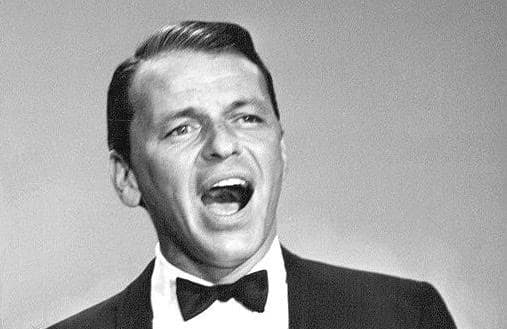
Sinatra Sang Bacharach—But Only Twice
By WILL FRIEDWALD
|This article is from the archive of The New York Sun before the launch of its new website in 2022. The Sun has neither altered nor updated such articles but will seek to correct any errors, mis-categorizations or other problems introduced during transfer.

Published:
Updated:
The New Year is often a time for looking both backward and forward, and some of the city’s best art galleries have similarly divided their attentions. Group exhibitions mounted this month either look to the past, featuring shows of historical interest, or focus on the future, showcasing new talent and new directions for art. Currently on view at the Peter Freeman Gallery in SoHo, “The Hand-drawn Negative: Clichés-Verre by Corot, Daubigny, Delacroix, Millet, and Rousseau (1854–1862)” is the first visit to America of this private collection of highly unusual 19th-century master drawings. Cliché-verre images were among the earliest artistic experiments with the still novel medium of photography. Artists would draw with an etching needle on a chemically treated glass plate, creating a negative that would then be reproduced or “photographed” by being placed against light-sensitive paper and exposed to the sun. Realist painter Jean-Baptiste-Camille Corot was one of the medium’s most enthusiastic experimenters. His landscape drawings demonstrate the cliché-verre’s capacity to produce fluid, animated surfaces. Charles-Frances Daubigny’s drawings are similarly striking.
By WILL FRIEDWALD
|
By MARIO NAVES
|
By GARY GASTELU
|
By ROSS ANDERSON
|
By JOSEPH CURL
|
By DAVID JONES
|
By A.R. HOFFMAN
|
By GEORGE WILLIS
|The New Year is often a time for looking both backward and forward, and some of the city’s best art galleries have similarly divided their attentions. Group exhibitions mounted this month either look to the past, featuring shows of historical interest, or focus on the future, showcasing new talent and new directions for art. Currently on view at the Peter Freeman Gallery in SoHo, “The Hand-drawn Negative: Clichés-Verre by Corot, Daubigny, Delacroix, Millet, and Rousseau (1854–1862)” is the first visit to America of this private collection of highly unusual 19th-century master drawings. Cliché-verre images were among the earliest artistic experiments with the still novel medium of photography. Artists would draw with an etching needle on a chemically treated glass plate, creating a negative that would then be reproduced or “photographed” by being placed against light-sensitive paper and exposed to the sun. Realist painter Jean-Baptiste-Camille Corot was one of the medium’s most enthusiastic experimenters. His landscape drawings demonstrate the cliché-verre’s capacity to produce fluid, animated surfaces. Charles-Frances Daubigny’s drawings are similarly striking.
Already have a subscription? Sign in to continue reading
Cancel anytime
By continuing you agree to our Privacy Policy and Terms of Service.
Cancel anytime