


Extended Range Electric Trucks Are the Next Big Thing

Automakers are adding gas engines to their all-electric pickups.
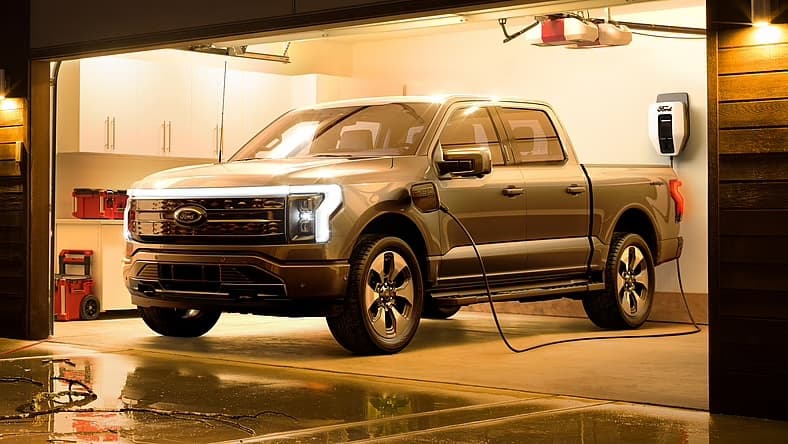
Ford
The Ford F-150 Lightning is the best-selling electric pickup in the U.S. Ford

Ford has hit the brakes on its once-heralded electric F-150 Lightning pickup and discontinued the model.

Production was suspended in October due to a shortage of aluminum needed for its body, which Ford redirected toward building its more popular and profitable internal combustion engine trucks, but it will not be restarted.

It made this decision despite the fact that the F-150 Lightning is the best-selling electric pickup in the U.S., which is a relatively unimpressive claim to fame. Out of the 685,777 F-Series trucks that Ford delivered through November, just 28,313 were F-150 Lightnings. It represents hardly more than a rounding error on the F-Series sales charts.

The Ram 1500 REV is an extended range electric pickup. Ram

The electric vehicle market quickly contracted with the end of federal incentives, and the large pickup segment never grew as large as many had hoped for when they were available. At the time the F-150 Lightning debuted in 2022, Ford expected annual deliveries to reach 150,000 by 2024. But high prices, short driving ranges and long charging times made it a tough sell for many traditional truck customers.

Ford has also canceled plans to launch an all-new full-size electric pickup that it was developing for 2028, but did say that the F-150 Lightning will return one day. Next time around, with a gasoline engine on board.

The second-generation F-150 Lightning will be what’s known as an extended range electric vehicle, or EREV. These are essentially electric vehicles equipped with gasoline engines that work as generators when the battery is low.

While most hybrids have a transmission that allows the internal combustion engine to drive the wheels directly when needed, EREVs only send electricity to the motors. Diesel-electric locomotives fuction in a similar way, which delivers more consistent power and torque than an engine shifting through gears and promises better overall efficiency. The battery holds a small charge in reserve to act as a buffer when bursts of full power are needed.

The Ram 1500 REV is equipped with two electric motors and a V6 gas engine. Ram

A major benefit of this design is that you can build a truck with a smaller, less expensive battery pack that provides enough electric range for typical daily use — say 100-150 miles — while giving it the ability to go on longer trips with quick fill-ups at gas stations, instead of time-consuming charging sessions.

Ford has never offered an EREV vehicle before, let alone a pickup, but it won’t be the first in the U.S. with one in showrooms. Ram, which has canceled its own electric truck program for the same reasons as Ford, is launching an EREV in the first half of 2026.

The Ram 1500 REV has an electric motor for each axle and a V6 engine-based generator installed under the hood. Ram estimates that it will have an electric range of 145 miles per charge and a combined range of 690 miles with a full tank of gasoline. It is a tremendously powerful truck that can tow up to 14,000 pounds, but doing so could reduce the range by half or more. You can fill the gas tank roughly 10 times in the amount of time it takes to charge the battery once. It can haul a substantial 2,625 pounds onboard, in part because the battery is at least a ton lighter than the larger one that would be needed for an electric truck with a similar range.

The extended range Scout Harvester models are the most popular among reservation holders. Scout

This is also Ram’s first EREV powertrain, but it is so confident in it that it is sharing it with its corporate cousin, Jeep, for a version of the Grand Wagoneer SUV that is scheduled to go on sale next year. It will be the most powerful and efficient version of the full-size, three-row utility vehicle, which is Jeep’s flagship model.

Ram and Jeep aren’t the only competition the F-150 Lightning will be facing when it returns, however. The revived Scout brand is on track to start selling its South Carolina-built Terra pickups and Traveler SUVs in 2027, and they can be ordered with an optional Harvester range-extender option. Scout is flipping the formula by mounting a four-cylinder engine behind the rear axle.

The Scouts are primarily designed to be used as adventure vehicles, rather than commercial trucks, which means long road trips are expected to be more the rule than the exception. This has been reflected in the reservations submitted so far, of which 80 percent are for the Harvester versions.

All of these trucks are heading into uncharted territory, of course, much like the all-electric vehicles before them. Their success is far from guaranteed.


The New York Sun

© 2025 The New York Sun Company, LLC. All rights reserved.

Use of this site constitutes acceptance of our Terms of Use and Privacy Policy. The material on this site is protected by copyright law and may not be reproduced, distributed, transmitted, cached or otherwise used.

The New York Sun

Sign in or  create a free account

or
By continuing you agree to our Privacy Policy and Terms of Use