
Fans of Director Jim Jarmusch Likely To Welcome His Latest Venture, ‘Father Mother Sister Brother’
As with all of Jarmusch’s projects, ‘Father Mother Sister Brother’ has been cast with an eclectic eye, featuring, as it does, movie stars, TV actors, screen legends, outliers, and oddballs.
Taste is as variable as the individual sitting next to you at the movies. The critic with whom I attended the press screening of “Father Mother Sister Brother” has little patience for its writer and director, Jim Jarmusch. The auteur’s signature blend of long takes, awkward longueurs, discomfiting comedy, and repeating narrative aperçus are, according to this colleague, mannerisms the 72-year-old filmmaker should’ve long outgrown.
To which I couldn’t help but respond: “Bob’s your uncle!” This Britishism is among the leitmotifs of “Father Mother Sister Brother,” and though a movie review isn’t the best place to parse the etymology of Uncle Bob, the phrase connotes a task readily or easily accomplished — like “voilà” or “piece of cake.” My companion wasn’t familiar with it, and responded to my inappropriately applied bon mot with the requisite opprobrium.
Her skeptical take on the movie did rankle this Jarmusch fan, not least because it contained a modicum of, if not truth, then something close to it. Making the distinction between consistency and formula can sometimes feel as niggling as counting angels on the head of a pin, but there can (and should) be a line drawn to distinguish when idiosyncrasies descend into cultivated habits and when they are honed to empower a vision. Mr. Jarmusch is all about honing.
The press kit accompanying “Father Mother Sister Brother” is of a piece with the oeuvre, being as terse as a bumper sticker. The word “minimalist” is absent, as it is a term that has dogged Mr. Jarmusch since his debut feature, “Permanent Vacation” (1980). The tag has never quite fit, particularly given how obdurately Mr. Jarmusch’s films explore the underpinnings of human interaction. Still, we get it: The dynamism of a typical Jarmusch venture is more akin to a glacier than a motorcycle.
And so it is with “Father Mother Sister Brother,” a picture divided into three distinct narratives set within three different locales: the U.S., France and the U.K. This isn’t the first time Mr. Jarmusch has given us an anthology, and if it isn’t as funny as “Mystery Train” (1989) or as cartoonish as “A Night On Earth” (1991), its emotional locus is more weighted and maybe less equivocal. The final segment, “Sister and Brother,” dares to be heartwarming. A doctrinaire minimalist wouldn’t allow himself such an indulgence.
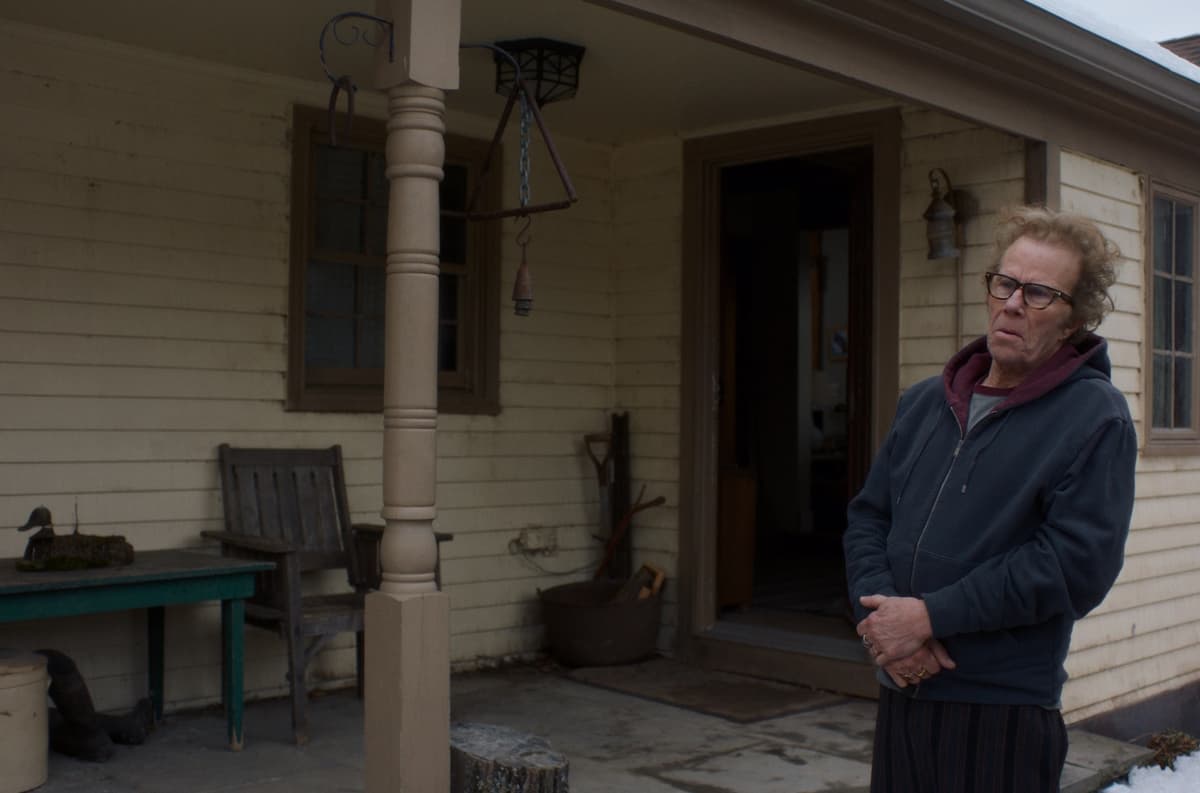
As with all of Mr. Jarmusch’s projects, “Father Mother Sister Brother” has been cast with an eclectic eye, featuring, as it does, movie stars, TV actors, screen legends, outliers, and oddballs. The singer-songwriter Tom Waits is the father, the actress Charlotte Rampling is the mother, and sister and brother are played by Indya Moore and Luka Sabbat, both of whom divide their time between modeling and acting. Cate Blanchett is paired with Vicky Kreps, an actress whose fluency with languages has her working all over the globe.

Mr. Jarmusch’s movie trades in vignettes — “stories” is too strong a word — in which families are tenuously held in check by secrets kept at arm’s length. Mr. Waits’s character busily clutters his rural outpost upon expecting a rare visit from his straitlaced son and daughter (Adam Driver and Mayim Bialik). Ms. Rampling’s stern mater invites her daughters (Mses. Blanchett and Krieps) to a formal lunch, but keeps her career as an author of sultry romances on the downlow. Billy (Mr. Sabbat) and Skye (Ms. Moore) mourn their recently deceased parents by visiting the family’s empty Parisian apartment and begin to question what, exactly, mom and dad were up to during their lives.
In typical Jarmuschian fashion, nothing much gets resolved even as depths of feeling are simultaneously stifled and plumbed. Our auteur is deft with actors, allowing them the requisite space to establish intimacies of character through posture, gesture and the telling sidelong glance.
The humor here is drier than usual and, as a result, truer to life: We smile at the awkward tete-a-tetes because most of us have, to one degree or another, been there. How much you enjoy “Father Mother Sister Brother” will depend on whether you consider Mr. Jarmusch’s mannerisms too coy by half or hard-won and droll. Either way, he’s come up with something unshakable and convincing.