

High School Athletes Getting a Crash Course in Business as States Allow Earnings From Name, Image, and Likeness

‘It’s an opportunity to educate using real practical information that’s happening real time,’ says an attorney who sued Ohio on behalf of a star student football player.
 Sean P. Twomey via Pexels.com
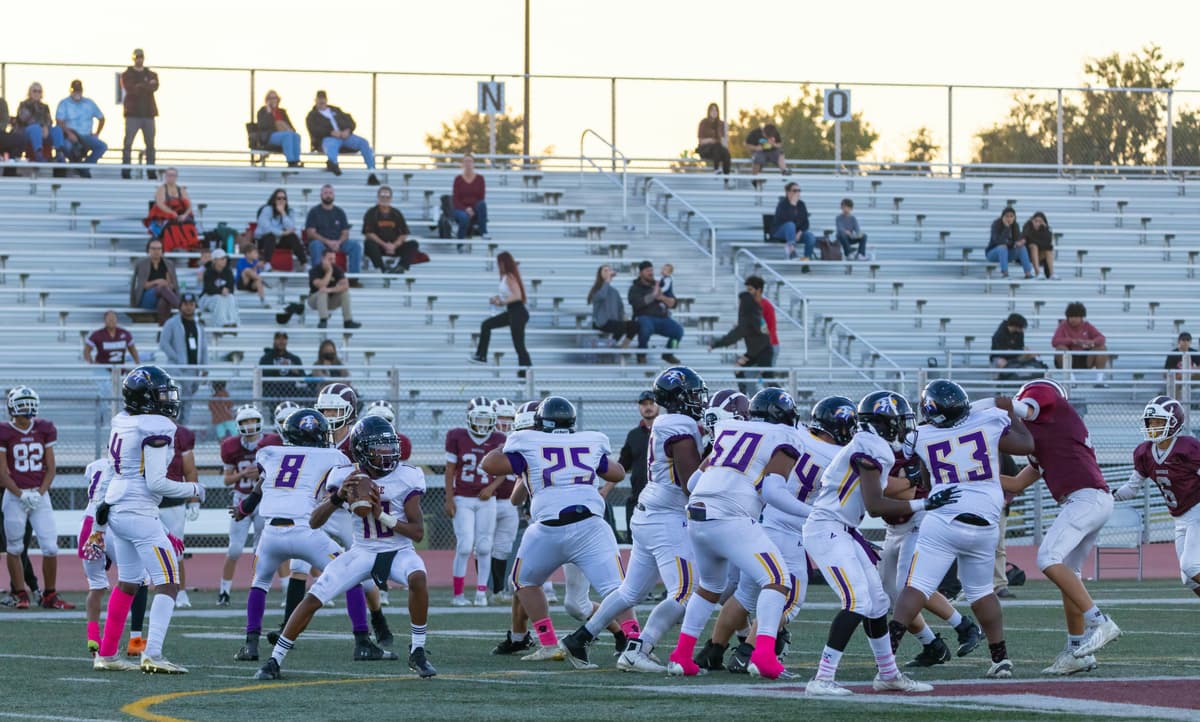
High school football players in 45 states are now allowed to earn from their name, image, and likeness, making financial literacy education all the more relevant. Sean P. Twomey via Pexels.com

Name, image, and likeness rules for high school athletes are shaping a new reality for young students — and often their parents — as the prospect of six-figure endorsement offers forces them to take crash courses in financial literacy.

The no. 1-ranked wide receiver in the state of Ohio for the Class of 2027, Jamier Brown, is the latest student athlete facing the challenge of learning money management — after the Ohio High School Athletic Association caved this week to a lawsuit filed by Mr. Brown’s attorney, Luke Fedlam. 

Mr. Fedlam, of Amundsen Davis, sued the athletic association last month, saying Mr. Brown was missing out on endorsement offers worth more than $100,000 thanks to the state’s “outdated and unlawful” rules banning students from capitalizing on their name, image, and likeness, known as NIL. 

The lawsuit prompted an emergency bylaw referendum among the state’s athletic associations, with 447 schools voting in favor of athletes earning off their names, images, and likeness, 121 voting against, and 247 abstaining. The bylaw is effective immediately, allowing high school student athletes to enter into agreements and be compensated for their NIL though appearances, licensing, social media, endorsements, and other branding based on their recognition and notoriety. 

The implications could be life-changing in terms of both practical education and future wealth.

“The best part about name, image, likeness, especially at the high school level, is that you have the opportunity to expose young people to the business of sports while they’re still in the protection of their parents and guardians,” Mr. Fedlam tells The New York Sun in an exclusive interview. 

“From a financial perspective you have the opportunity to start teaching a young person about how to think about money, budgeting, taxes and all that comes with the financial side that comes with name, image and likeness in a way that can be a bit more controlled and, in a way, a high school athlete can develop the right habits about money,” he says.

NIL deals in high school aren’t usually the money grab witnessed in college sports, where a football quarterback or a top-scorer in basketball makes six figures or even millions. High school deals are predominantly a mix of local endorsements and income through social media content. Whether it’s for $500 or $5,000, however, student athletes and their families have a vested interest in learning basic financial skills that have not typically been appreciated at the high school level until recently.

“It’s an opportunity to educate using real practical information that’s happening real time,” Mr. Fedlam says. “If they go to the college level where the dollars are larger, they’ve now developed the right habits and gained skills.”

The lessons are just as valuable for those who don’t ultimately compete at the collegiate level, Mr. Fedlam says, noting that learning “certain things like budgeting and effective money management are skills that will be helpful for them regardless of playing sports” in college. 

Mr. Fedlam, who is based in Columbus, Ohio, points out that states that have approved NIL have put student athletes on the same level as their counterparts who don’t play sports but can make money on social media and in other ventures. As an example, he said a high school social media influencer can be paid for their large following, but prior to NIL approval, student athletes could not.

“If you’re on the girls’ basketball team and you happen to be a social media influencer on makeup, then you wouldn’t be able to profit off both,” Mr. Fedlam said. “Why wouldn’t we allow student athletes to earn compensation as well?”

Allowing NIL money for high school students is also a way for parents to recoup training, travel, and even medical expenses incurred during the athlete’s young career. 

Mr. Fedlam expects popular high school athletes to be a coveted resource for businesses wanting to do local marketing to younger demographics. “You’re going to have a lot of student athletes that are going to do deals with local brands, local companies in their communities,” he says. “It might be for a few dollars, it might be a few hundred dollars, or it might be for some free pizza. We’re going to see a lot of those creative types of deals.”

The new considerations are forcing conversations not just at kitchen tables and athletic offices, but also inside classrooms, where financial literacy programs are the latest requirements being imposed by state education departments. In 2025, 29 states have financial literacy high school graduation requirements, up from six in 2019. 

Most states mandate a semester-long course worth a half credit. The percent of high school graduates who will take a financial literacy course is expected to rise to 73 percent in 2029. For athletes and other young income earners, these classes now reflect a current, real-world application.

Ohio’s move this week makes it the 45th state since June 2024 to approve name, image, and likeness compensation for high school athletes. The move leaves Alabama, Indiana, Michigan, Wyoming, and Mississippi as the only states that prohibit NIL deals at the high school level.


The New York Sun

© 2025 The New York Sun Company, LLC. All rights reserved.

Use of this site constitutes acceptance of our Terms of Use and Privacy Policy. The material on this site is protected by copyright law and may not be reproduced, distributed, transmitted, cached or otherwise used.

The New York Sun

Sign in or  create a free account

or
By continuing you agree to our Privacy Policy and Terms of Use