

Lindsay Clancy’s Attorney Asks Trump To Pardon His Client After Mistrial Declared
By MATTHEW RICE
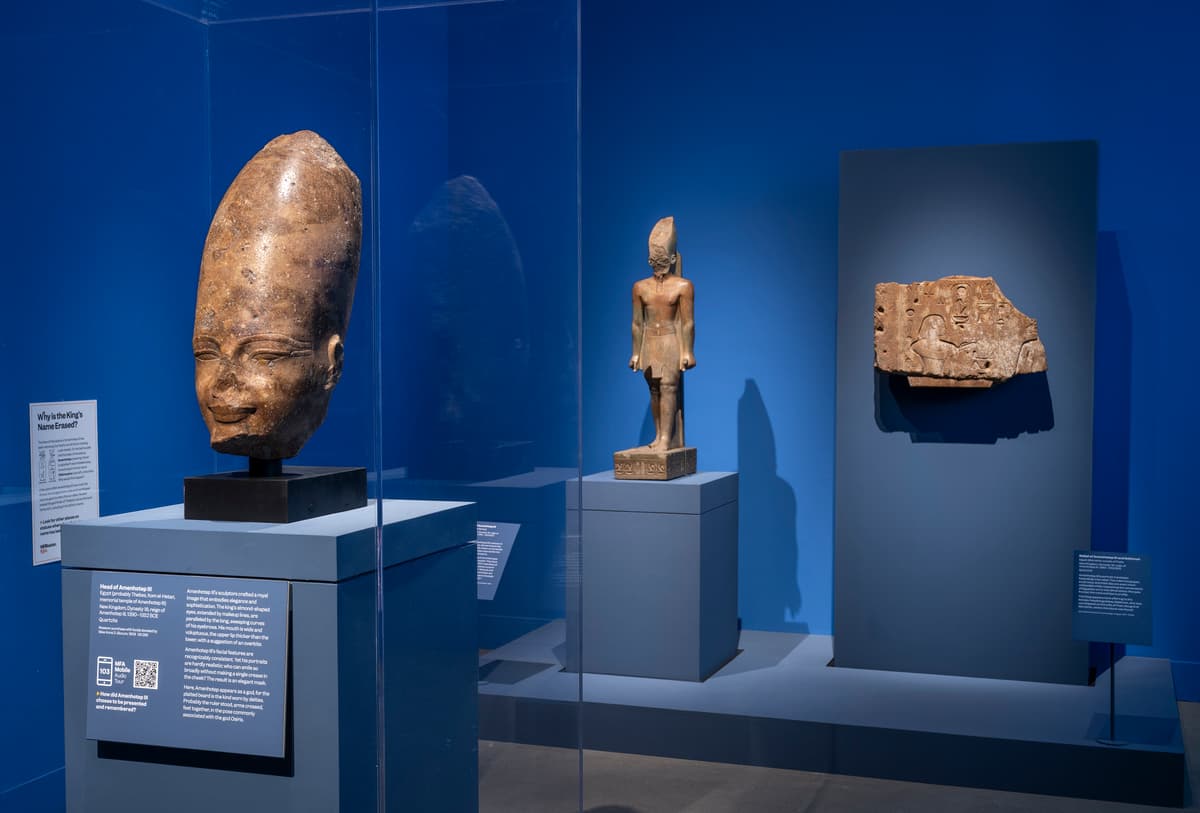
|MFA’s remarkable Egyptian exhibition shows that gender politics and power plays were as potent in the age of the pharaohs as they are today.

Published:
Updated:
Among the virtues of an exhibition at the Museum of Fine Arts Boston, “Maverick Kings: Three Visionary Pharaohs of Egypt’s Golden Age,” is the emphasis on connoisseurship. Sounds old-fashioned, don’t you think? Attending to the wall labels, a museumgoer will encounter hints of the ideological throat-clearing we’ve become accustomed to in recent years from our cultural institutions. There’s a mild apologia for colonialism here, a tolerable soupçon of gender-bending there, and an unnecessary sop to contemporary sensibilities with the inclusion of Awol Erizku’s neon elegy, “Nefertiti (Black Power),” from 2018.
By MATTHEW RICE
|
By CARL ROLLYSON
|
By MATTHEW RICE
|
By A.R. HOFFMAN
|
By HOLLIE McKAY
|
By LUKE FUNK
|
By BENNY AVNI
|
By CONRAD BLACK
|Among the virtues of an exhibition at the Museum of Fine Arts Boston, “Maverick Kings: Three Visionary Pharaohs of Egypt’s Golden Age,” is the emphasis on connoisseurship. Sounds old-fashioned, don’t you think? Attending to the wall labels, a museumgoer will encounter hints of the ideological throat-clearing we’ve become accustomed to in recent years from our cultural institutions. There’s a mild apologia for colonialism here, a tolerable soupçon of gender-bending there, and an unnecessary sop to contemporary sensibilities with the inclusion of Awol Erizku’s neon elegy, “Nefertiti (Black Power),” from 2018.
Already have a subscription? Sign in to continue reading
Cancel anytime
By continuing you agree to our Privacy Policy and Terms of Service.