Pam Bondi Demands New York Court Throw Out Trump’s Hush Money Convictions, Denounces ‘Encroachment’ by Alvin Bragg

The Department of Justice files a brief in support of the 47th president’s push to undo his status as a convicted felon.

Win McNamee/Getty Images
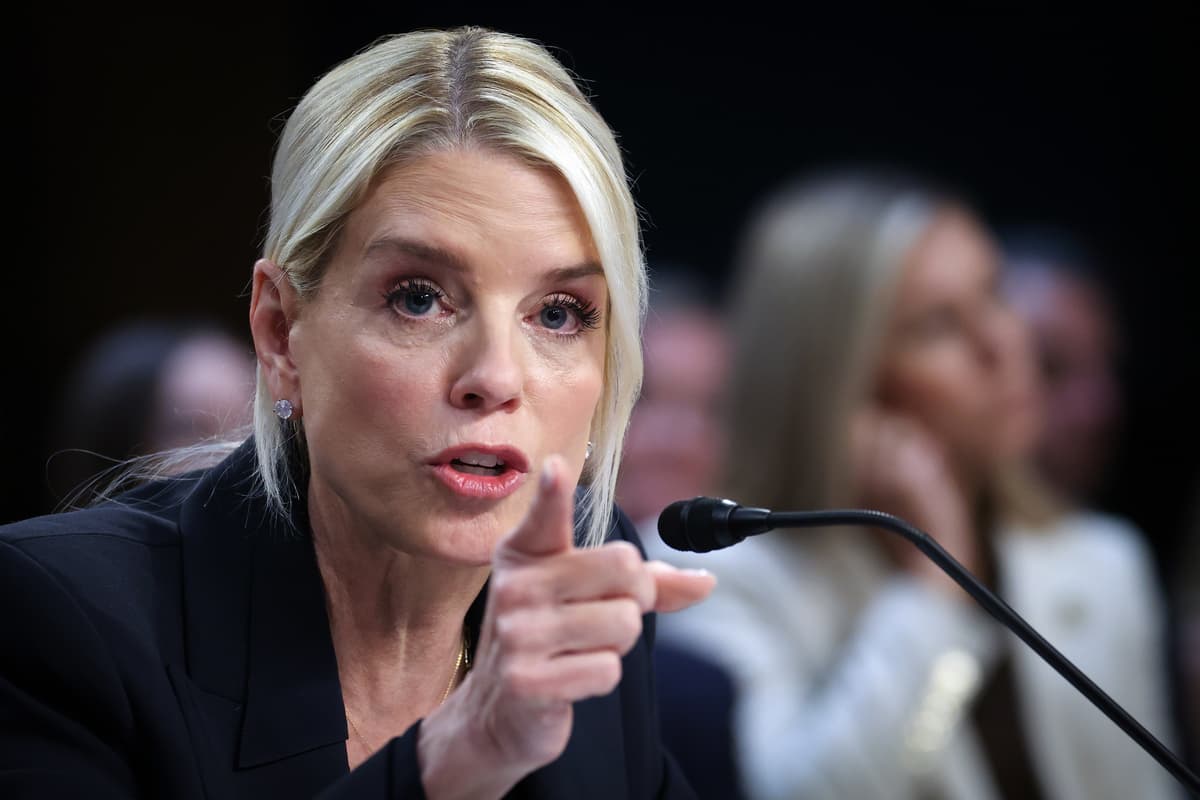
Attorney General Pam Bondi testifies before the Senate Judiciary Committee in the Hart Senate Office Building on Capitol Hill on October 7, 2025. Win McNamee/Getty Images

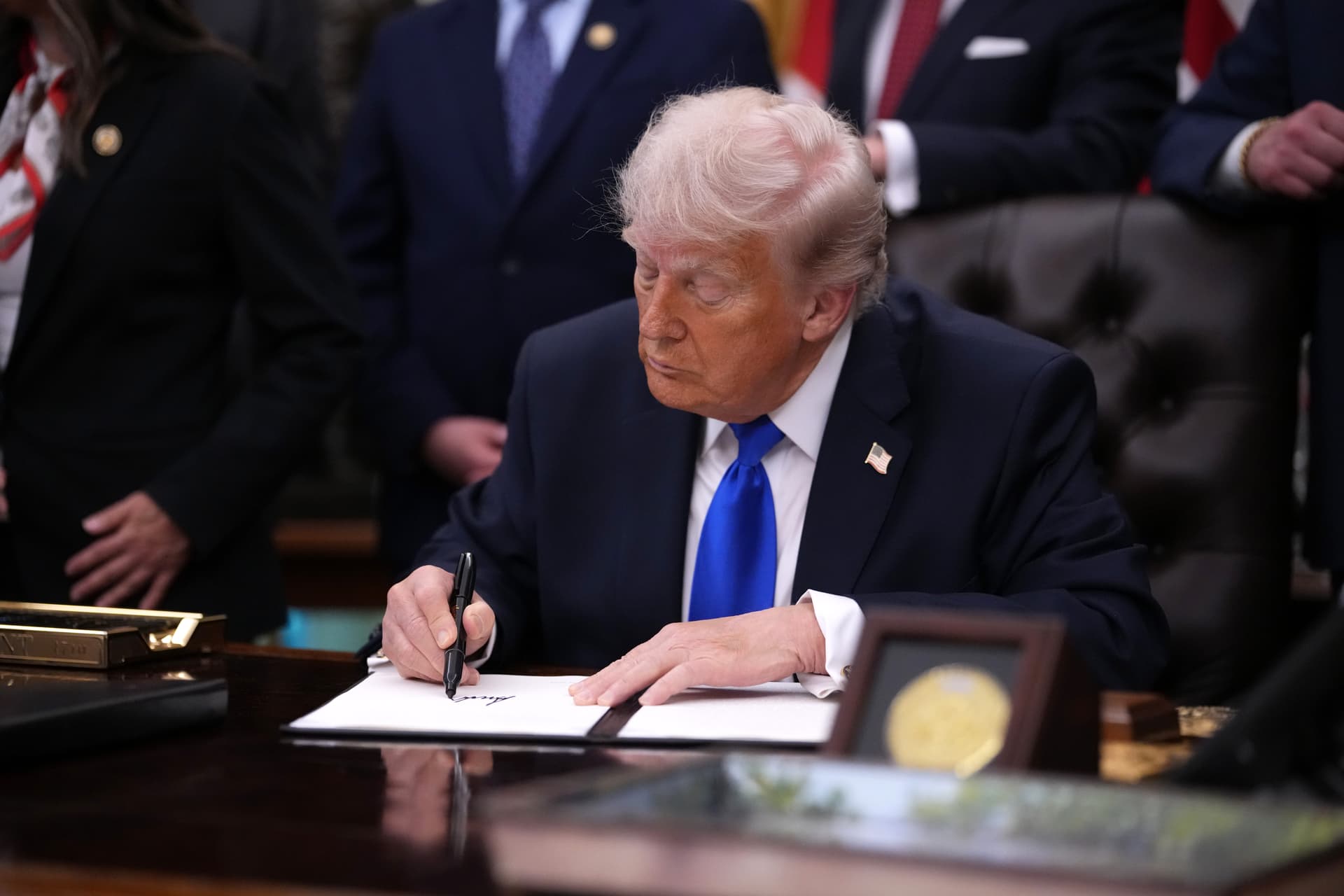
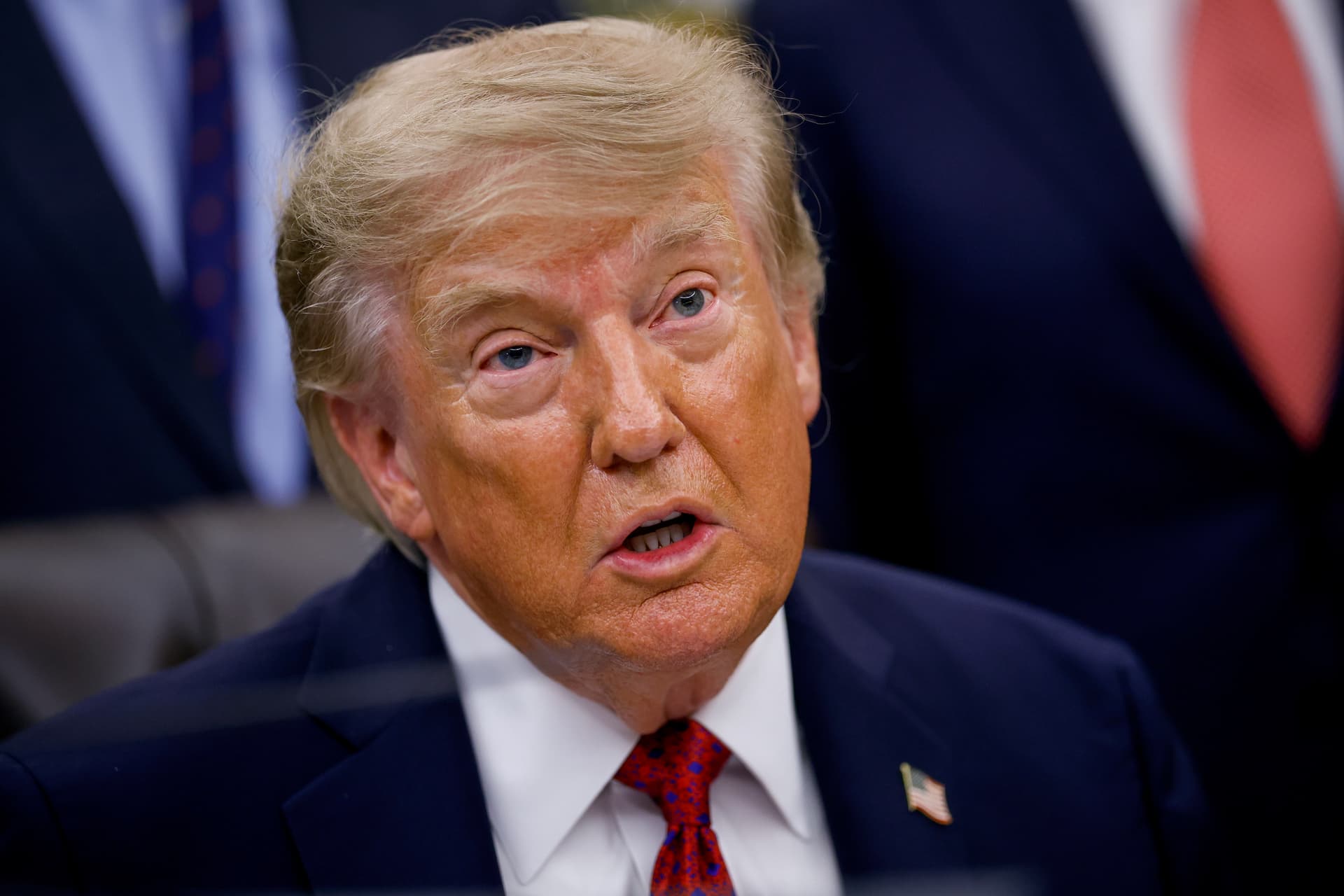
The filing by the Department of Justice led by Attorney General Pam Bondi of a brief to New York’s state appellate court in support of President Trump’s appeal of his criminal hush money convictions is a landmark in the argument for a more powerful presidency.

The DOJ — which has no power over the New York courts — signaled its support, in an amicus brief, for Mr. Trump’s request to have his 34 convictions in the Stormy Daniels case dismissed on the basis of presidential immunity. The government writes that the “United States has a substantial interest in protecting the autonomy and independence of the Office of the President from encroachment by State authorities” — like Manhattan’s district attorney, Alvin Bragg.

Washington also notes that Mr. Trump’s appeal to New York’s intermediate appellate court is the “first appeal on the merits from a criminal conviction of a President in the Nation’s history” and the first to “consider the scope and effect of a President’s evidentiary immunity” under the Supreme Court’s ruling in Trump v. United States. The Supreme Court in that case held that official presidential acts are presumptively immune from prosecution — and from being introduced into evidence.

Chief Justice Roberts writes in Trump that America “has always demanded an energetic, independent Executive,” and the DOJ reckons here that allowing “any of the Nation’s more than 2,300 prosecutors’ offices to indict a former President for his official conduct would risk chilling every President in the vigorous discharge of the duties of his office.” The high court also ruled that allowing official acts into evidence would “eviscerate the immunity” guaranteed by the Constitution to presidents.

One conservative on the court, Justice Amy Coney Barrett, wrote in a separate concurrence that the court’s majority had gone too far in protecting presidents. She reckoned that “The Constitution does not require blinding juries to the circumstances surrounding conduct for which Presidents can be held liable.” Her hesitation, though, did not carry the day. 

Here, the DOJ argues, the trial judge, Juan Merchan, “allowed the prosecution to present evidence of President Trump’s official acts to the jury. That error requires reversal.” Mr. Trump himself made that argument to Judge Merchan, who rejected it and reasoned that the hush money case related “entirely to unofficial conduct” and “poses no danger of intrusion on the authority and function of the Executive Branch.”

The case brought by Mr. Bragg turned on a series of payments Mr. Trump made, through his erstwhile attorney Michael Cohen, to the adult film performer Stormy Daniels, whose real name is Stephanie Clifford. Those payments totalled some $130,000. Ms. Clifford claims that they were intended to buy her silence regarding a sexual encounter between her and Mr. Trump at a celebrity golf tournament at Lake Tahoe in 2006. Mr. Trump denies that they ever had sex.

Mr. Trump has also argued that the case belongs in federal court on account of his invocation of presidential immunity — a federal defense. Judge Alvin Hellerstein twice denied that request, reasoning that “hush-money payments were private, unofficial acts, outside the bounds of executive authority.” Last week, though, the Second United States Appeals Court ordered Judge Hellerstein, 91, to take another look at the issue.

The DOJ insists that Judge Merchan greenlit prohibited evidence. This contraband included “testimony from Michael Cohen concerning a conversation President Trump allegedly had with the Attorney General about a potential Federal Election Commission investigation.” Judge Merchan also erred, the government argues, in allowing “former White House Communications Director Hope Hicks to testify about how the White House would respond to a negative Wall Street Journal article.” 

Mr. Trump, in his own appeal, argues that Judge Merchan made a litany of other mistakes as well. The president argues that the jurist should have recused himself on account of small sums he donated to Democratic politicians in 2020 — including then-candidate Biden. More significant to the defense was the political persuasion of  the judge’s adult daughter, Loren, who works at a consulting firm with high-profile Democratic clients, including the former vice president, Kamala Harris, and Senator Adam Schiff. Mr. Trump and his lawyers argued that Ms. Marchan’s work created a miasma of bias that hung over the trial. The judge then gagged Mr. Trump, fined him and threatened to jail him if he didn’t comply.  

Mr. Trump is also asking the appellate court to vacate his convictions on account of the jury instructions issued by Judge Merchan. The orders from the bench allowed Mr. Trump to be convicted of a felony if the jury unanimously agreed that he had falsified business records — normally a misdemeanor — in the service of a second crime. The jurors need not agree on the nature of that second crime, only that one was intended.

The 47th president argues that those instructions violated the Supreme Court’s ruling, in Ramos v. Louisiana, that all criminal defendants, in both state and federal court, can be convicted only by a unanimous jury. When that ruling was handed down in 2022 two states — Oregon and Louisiana — allowed for convictions with something other than unanimity.           


The New York Sun

© 2025 The New York Sun Company, LLC. All rights reserved.

Use of this site constitutes acceptance of our Terms of Use and Privacy Policy. The material on this site is protected by copyright law and may not be reproduced, distributed, transmitted, cached or otherwise used.

The New York Sun

Sign in or  create a free account

or
By continuing you agree to our Privacy Policy and Terms of Use