


Populists on Left and Right, Animated by Dangerous Pessimism, Find Common Cause
Both ends of the political spectrum imagine a nation crushed by a rigged system that can be fixed only through a radical redesign of government.
Spend five minutes listening to the American leftâs most theatrical tribunes â Senators Bernie Sanders and Elizabeth Warren or Congresswoman Alexandria Ocasio-Cortez â and youâll probably hear tales of a country on the verge of collapse, crushed by a rigged system that can be fixed only through a radical redesign of government.
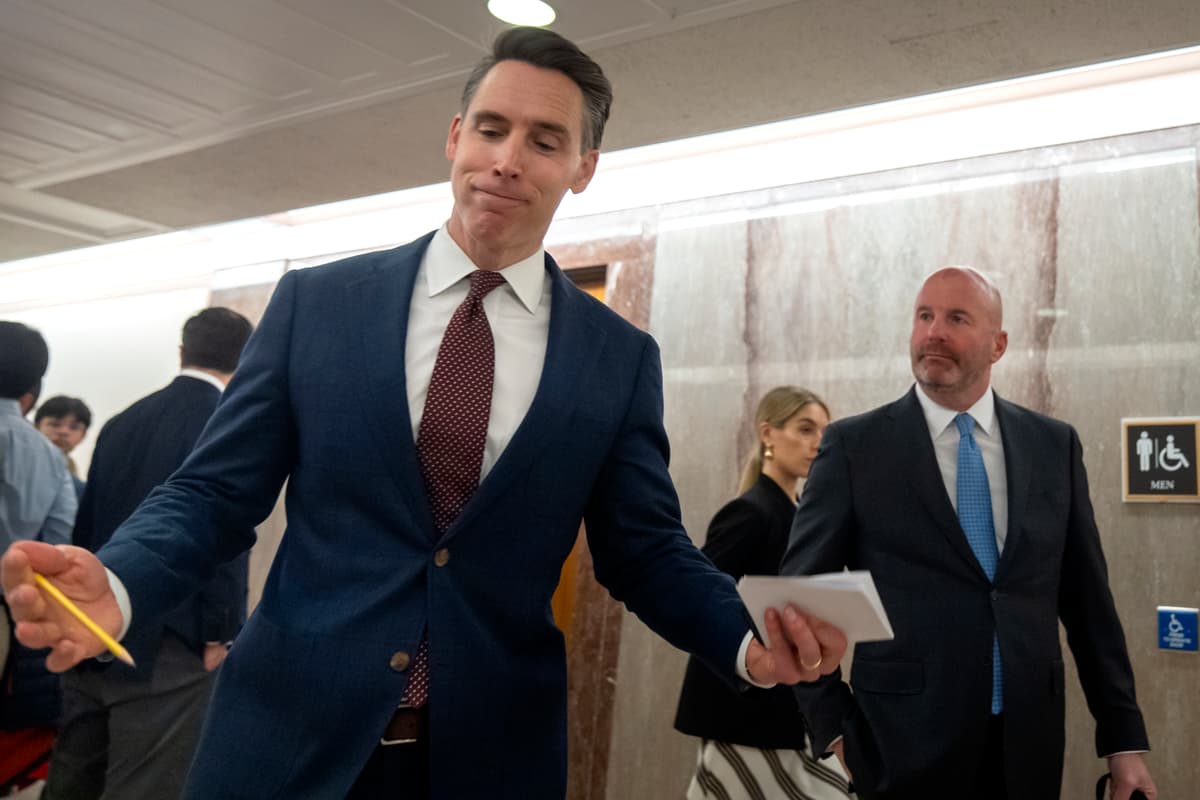
Then spend five minutes with the so-called new right â including Vice President Vance, Senator Josh Hawley and any number of nostalgists yearning to restore an idealized 1950 America â and youâll hear much the same.
The American experiment is failing, they say. The economy is broken. Our society is in decay. Only sweeping power exercised by government can save us. For two camps that claim to despise one another, their worldviews are actually quite aligned.
The populist poles of the left and right are now linked in what political scientists call the âhorseshoe.â As each gets further from the center, it bends closer toward its counterpart on the other side.
Both distrust markets, both want to micromanage industry, both are protectionist, both romanticize manufacturing work and resent the disruptions that come from open global competition. Both, in other words, are hostile to the core tenets of the liberal economic order that made America prosperous.
Each side blames a different villain. For the left, itâs corporations and rich people; for the right, itâs immigrants and trade. Yet both sides insist that a brighter future is possible only through top-down political control, and neither wants to confront the real risk: a government already too large, spending money it doesnât have and drifting toward fiscal crisis.
Over at the Dispatch, Kevin Williamson captured something important: Nostalgia is manufactured as easily as plastic trinkets, and it distracts adults who should know better. The 1950s, mythologized by the new right in its push for a more traditional social and economic order, were not an idyll.
Instead it was an era of shorter life expectancy, of higher poverty by todayâs standards, of legal and de facto discrimination, of limited economic opportunity for women and minorities, of gay Americans often being persecuted, and of far fewer consumer goods, technologies and comforts. Implying that it was a golden age overlooks economic facts and the individuals whose rights and opportunities were sharply constrained.
The leftâs narrative â that America remains fundamentally unjust and economically stacked against working families â is equally disconnected from empirical reality. As Michael Strain and Cliff Asness recently detailed at the Free Press, we live in the wealthiest mass-affluent society in human history. Working Americansâ real wages are dramatically higher than they were two generations ago.
Post-tax incomes for the bottom fifth of the scale have more than doubled since 1990. Wealth for the poorest quarter of U.S. households has tripled. Consumption, the best measure of a lived-in well-being, is hitting record highs.
These data do not deny that some people struggle, but they show that the dominant narrative of national economic decline is false.
Pessimism is dangerous.
When voters believe theyâre living through an economic apocalypse, theyâre willing to embrace the very policies that would create one: price controls, industrial planning, more trade barriers, more centralized economic management and political control over our lives generally.
History books and contemporary accounts can tell you that these policies have failed everywhere theyâve been tried. Americaâs flirtation with them is part of the reason so many people find fault with todayâs economy.
Thereâs no denying that, for all its long-term strength, many Americans could be doing much better. Housing costs are high and rising. Child care and health care are too expensive. Energy infrastructure is inadequate. Immigration is mismanaged. These issues are real, but the cause isnât capitalism, markets or global competition â itâs often the barriers created by the government itself, at the state and local levels and in Washington.
Local zoning laws that prohibit building where homes are most needed are widespread. Energy is expensive because permitting rules block pipelines, transmission lines and modern generation capacity. Child care costs soar because of regulations unrelated to safety or quality.
Health care is convoluted because federal and state policies layer on mandates, distort prices and limit competition, all while massively subsidizing demand. Domestic products cost more because tariffs, embraced by the New Right and segments of the Left, raise the price of the inputs American firms need to produce things competitively.
Itâs much simpler than the far left-new right narrative would have us believe. If we want lower prices and greater opportunity, we must scale back the size and scope of government, build more housing, reform permitting, expand energy capacity, liberalize child care regulations, remove tariffs and open the door to more working Americans.
These are supply-oriented solutions, grounded in evidence and consistent with a free and dynamic society. They require humility, not the grandiose visions of populists who want to redesign the American economy in their own image.
Creators.com