Protests Supporting Palestinian Arabs Sweep American College Campuses Following Arrests at Columbia
Schools struggle with where to draw the line between allowing free expression while maintaining safe and inclusive campuses.
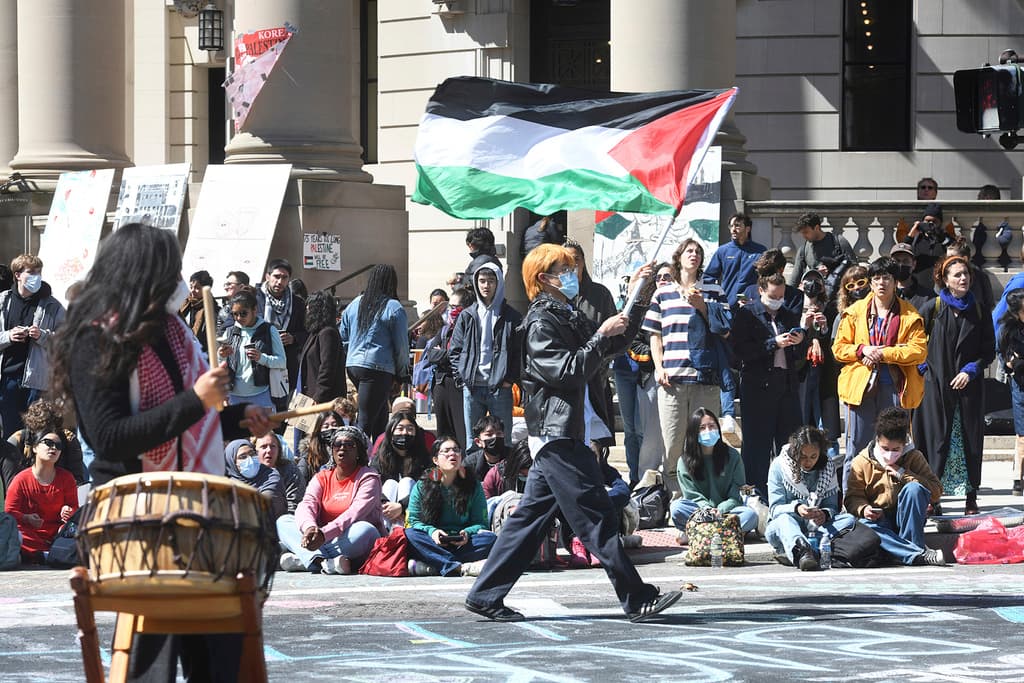

Columbia canceled in-person classes, dozens of protesters were arrested at New York University and Yale, and the gates to Harvard Yard were closed to the public Monday as some of the most prestigious American universities sought to defuse campus tensions over Israelâs war with Hamas.
More than 100 pro-Palestinian demonstrators who had camped out on Columbiaâs green were arrested last week, and similar encampments have sprouted up at universities around the country as schools struggle with where to draw the line between allowing free expression while maintaining safe and inclusive campuses.
At New York University, an encampment set up by students swelled to hundreds of protesters throughout the day Monday. The school said it warned the crowd to leave, then called in the police after the scene became disorderly and the university said it learned of reports of âintimidating chants and several antisemitic incidents.â Shortly after 8:30 p.m., officers began making arrests.
The protests have pitted students against one another, with pro-Palestinian students demanding that their schools condemn Israelâs assault on Gaza and divest from companies that sell weapons to Israel.
Some Jewish students, meanwhile, say much of the criticism of Israel has veered into antisemitism and made them feel unsafe, and they point out that Hamas is still holding hostages taken during the groupâs October 7 invasion.
Tensions remained high Monday at Columbia, where the campus gates were locked to anyone without a school ID and where protests broke out both on campus and outside.
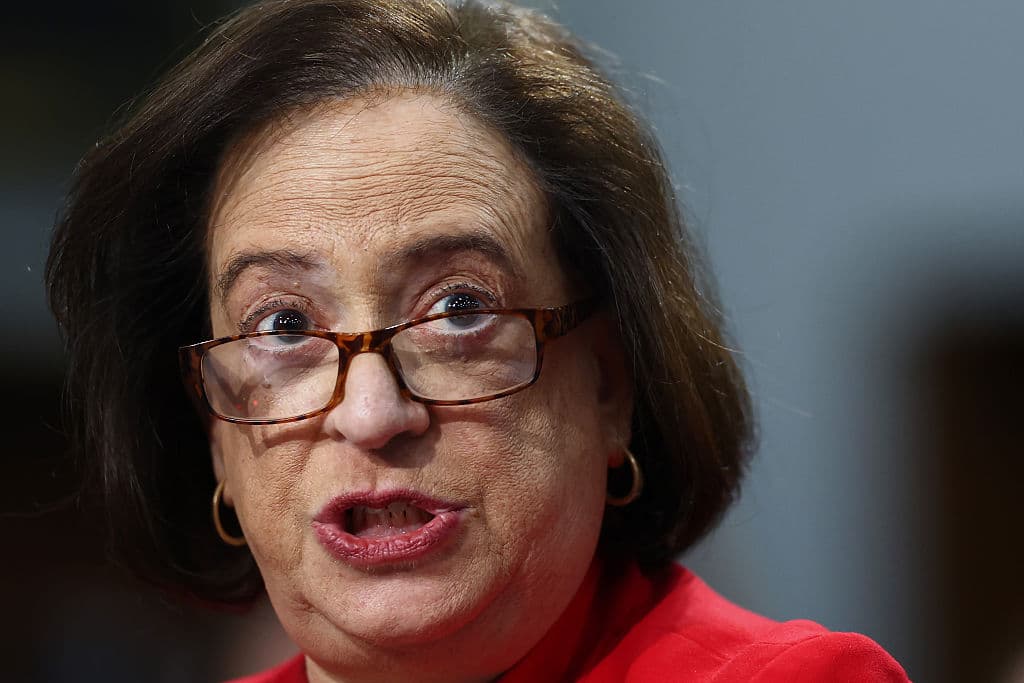
Congresswoman Kathy Manning, a Democrat from North Carolina who was visiting Columbia with three other Jewish members of Congress, told reporters after meeting with students from the Jewish Law Students Association that there was âan enormous encampment of peopleâ who had taken up about a third of the green.
âWe saw signs indicating that Israel should be destroyed,â she said after leaving the Morningside Heights campus. Columbia announced Monday that courses at the Morningside campus will offer virtual options for students when possible, citing safety as their top priority.
A woman inside the campus gates led about two dozen protesters on the street outside in a chant of, âFrom the river to the sea, Palestine will be free.â A small group of pro-Israel counter demonstrators protested nearby.
President Nemat âMinoucheâ Shafik said in a message to the school community Monday that she was âdeeply saddenedâ by what was happening on campus.
âTo deescalate the rancor and give us all a chance to consider next steps, I am announcing that all classes will be held virtually on Monday,â Ms. Shafik wrote, noting that students who donât live on campus should stay away.
Protests have roiled many college campuses since Hamasâ deadly attack on southern Israel, when militants killed about 1,200 people, most of them civilians, and took roughly 250 hostages.
On Sunday, a rabbi for the Orthodox Unionâs Jewish Learning Initiative at Columbia, Elie Buechler, sent a WhatsApp message to nearly 300 Jewish students recommending they go home until itâs safer for them on campus.
The latest developments came ahead of the Monday evening start of the Jewish holiday of Passover.
A 19-year-old Jewish freshman, Nicholas Baum, who lives in a Jewish theological seminary building two blocks from Columbiaâs campus, said protesters over the weekend were âcalling for Hamas to blow away Tel Aviv and Israel.â He said some of the protesters shouting antisemitic slurs were not students.
âJews are scared at Columbia. Itâs as simple as that,â he said. âThereâs been so much vilification of Zionism, and it has spilled over into the vilification of Judaism.â
The protest encampment sprung up at Columbia on Wednesday, the same day that Ms. Shafik faced criticism at a congressional hearing from Republicans who said she hadnât done enough to fight antisemitism.
Two other Ivy League presidents resigned months ago following widely criticized testimony they gave to the same committee. In her statement Monday, Ms. Shafik said the Middle East conflict is terrible and that she understands that many are experiencing deep moral distress.
âBut we cannot have one group dictate terms and attempt to disrupt important milestones like graduation to advance their point of view,â Ms. Shafik wrote.
Over the coming days, a working group of deans, school administrators and faculty will try to find a resolution to the university crisis, noted Ms. Shafik, who didnât say when in-person classes would resume.
House Republicans from New York urged Ms. Shafik to resign, saying in a letter Monday that she had failed to provide a safe learning environment in recent days as âanarchy has engulfed the campus.â
In Massachusetts, a sign said Harvard Yard was closed to the public Monday. It said structures, including tents and tables, were only allowed into the yard with prior permission.
âStudents violating these policies are subject to disciplinary action,â the sign said. Security guards were checking people for school IDs.
The same day, the Harvard Undergraduate Palestine Solidarity Committee said the universityâs administration had suspended their group.
In the suspension notice provided by the student organization, the university wrote that the groupâs April 19 demonstration had violated school policy and that the organization failed to attend required training after they were previously put on probation.
The Palestine Solidarity Committee said in a statement that they were suspended over technicalities and that the university hadnât provided written clarification on the universityâs policies when asked. âHarvard has shown us time and again that Palestine remains the exception to free speech,â the group wrote in a statement. Harvard did not respond to an email request for comment.
At Yale, police officers arrested about 45 protesters and charged them with misdemeanor trespassing, said Officer Christian Bruckhart, a New Haven police spokesman. All were being released on promises to appear in court later, he said.
Protesters set up tents on Beinecke Plaza on Friday and demonstrated over the weekend, calling on Yale to end any investments in defense companies that do business with Israel.
In a statement to the campus community on Sunday, Yaleâs president, Peter Salovey, said university officials had spoken to the student protesters multiple times about the schoolâs policies and guidelines, including those regarding speech and allowing access to campus spaces.
School officials said they gave protesters until the end of the weekend to leave Beinecke Plaza. The said they again warned protesters Monday morning and told them that they could face arrest and discipline, including suspension, before police moved in.
A large group of demonstrators regathered after Mondayâs arrests at Yale and blocked a street near campus, Mr. Bruckhart said. There were no reports of any violence or injuries.
A graduate student studying electrical engineering at MIT, Prahlad Iyengar, was among about two dozen students who set up a tent encampment on the schoolâs Cambridge, Massachusetts, campus Sunday evening.
The protesters are calling for a cease-fire and are protesting what they describe as MITâs âcomplicity in the ongoing genocide in Gaza,â he said. âMIT has not even called for a cease-fire, and thatâs a demand we have for sure,â Mr. Iyengar said.